

The History and Legacy of Cuong’s Motorbike Adventure in Hanoi, Vietnam
The History and Legacy of Cuong’s Motorbike Adventure in Hanoi, Vietnam
Part 1: From Minsk Mechanic to the Man Who Helped Build Vietnam Motorbike Touring
Introduction: A Hanoi Motorbike Legend
Long before Vietnam became one of the world’s great adventure motorbike destinations, long before the Ha Giang Loop appeared on travel blogs, and long before modern Honda CRF trail bikes became common on mountain roads, there was the Minsk. And behind many of those old two-stroke Minsk motorbikes in Hanoi was one man: Cuong.
Cuong’s Motorbike Adventure began not as a polished travel company, but as a working mechanic’s life built around problem solving, honesty, grit, and the difficult art of keeping Soviet-era motorcycles alive on Vietnam’s roughest roads.
In the early days of motorbike travel in Northern Vietnam, riders did not have GPS apps, luxury support vehicles, imported riding gear, or perfectly prepared adventure bikes. They had paper maps, local advice, muddy roads, mountain passes, and a Minsk that could either carry them into the wild or leave them stranded beside a remote track. For many of those riders, the difference between adventure and disaster was Cuong.
Operating first from a humble garage south of Hanoi and later from a shop in Hanoi’s Old Quarter, Cuong became known as the best Minsk mechanic in Vietnam. Travellers, expats, film crews, backpackers, and serious adventure riders all found their way to him. His reputation spread because he could fix what others could not, explain what riders needed to know, and prepare a bike for the mountains instead of just the city streets.
That mechanical foundation became the root of something much bigger. Cuong was vital to the growth of the Hanoi Minsk Club, one of the most important early communities in Vietnam motorbike travel. From that culture of old Minsk bikes, dirt roads, breakdowns, mountain villages, and shared adventure came the foundation of modern guided motorbike touring in Northern Vietnam.
Today, Cuong is known as one of Vietnam’s most experienced and trusted adventure motorbike guides. Many companies now sell motorbike tours in Vietnam, and many try to copy the routes, the language, and the image of real adventure riding. But Cuong’s story is different. He did not enter the industry after it became popular. He helped create it.
The History of the Minsk Motorbike in Vietnam
To understand Cuong’s legacy, you first have to understand the Minsk motorbike itself.
The Minsk was never glamorous. It was not fast, refined, or elegant. It was noisy, smoky, simple, stubborn, and almost impossible to forget. Built in the former Soviet sphere and widely used across Vietnam, the Minsk became one of the defining motorcycles of early independent travel in the north of the country.
For Vietnamese riders, the Minsk was practical. It was affordable, strong, and easy to repair with basic tools. For foreign travellers in the 1990s and early 2000s, it became something more romantic: a machine that represented freedom, risk, and access to places beyond the normal tourist map.
In Northern Vietnam, the Minsk found its natural home. The mountains demanded a bike that could survive bad roads, steep climbs, river crossings, broken bridges, deep mud, loose rock, and long days far from professional workshops. The Minsk was basic enough to be repaired in a village, but tough enough to keep going when treated with respect.
Its two-stroke engine had character. Riders learned to listen to it. They learned when it was happy, when it was struggling, when it was about to foul a plug, and when it needed a mechanic who truly understood it. The Minsk did not reward careless riding. It rewarded patience, mechanical sympathy, and local knowledge.
That is why a great Minsk mechanic was so important. A rider could buy a cheap bike in Hanoi, but buying the bike was only the beginning. Was the frame straight? Was the engine healthy? Was the clutch ready for mountain roads? Were the brakes good enough for wet descents? Was the bike prepared for hundreds or thousands of kilometres through remote terrain?
For many riders, Cuong became the answer to those questions.
The Minsk helped open Northern Vietnam to a generation of adventure travellers. It took riders to Mai Chau, Moc Chau, Sapa, Bac Ha, Ha Giang, Cao Bang, Ba Be, the Chinese borderlands, and the remote valleys of the northwest. It gave travellers a way to move slowly, meet people, sleep in local towns, and experience Vietnam at road level.
But the Minsk also created its own problems. These bikes required constant care. A poorly prepared Minsk could turn a dream ride into a mechanical nightmare. This is where Cuong’s skill became legendary. He was not just repairing motorcycles; he was making adventure possible.
Cuong: Hanoi’s Best Minsk Mechanic
Cuong’s early reputation was built in the most honest way possible: riders trusted him because his bikes worked.
In the early 1990s, he operated from a modest garage on Highway 1 south of Hanoi. It was not a luxury showroom. It was a working mechanic’s space, the kind of place where knowledge mattered more than decoration. Riders came with broken bikes, strange noises, cracked parts, weak brakes, bad wiring, tired engines, and travel plans that depended on one thing: getting the bike ready for the road.
Cuong became known for three things: mechanical ability, straight advice, and reliability. In a travel world where many visitors did not speak Vietnamese and did not understand local bikes, that combination was rare. Riders needed someone who would tell them the truth, fix the real problem, and prepare the machine properly.
As more travellers began exploring Vietnam by motorbike, word spread quickly. Cuong was the man to see before heading north. If you were riding a Minsk into the mountains, you wanted Cuong to check it first. If your bike broke down after a hard ride, you wanted Cuong to bring it back to life.
His skill was not only technical. He understood what riders were trying to do. A city mechanic might make a motorcycle run around Hanoi, but Cuong knew what a bike needed for the mountains. He understood the punishment of long climbs, rough tracks, wet clay, river crossings, and days without proper repair facilities.
That made his work different. He was preparing bikes for adventure before “adventure motorbike touring” became a polished travel product in Vietnam.
His workshop became a place where travellers gathered, shared routes, exchanged warnings, compared stories, and planned journeys. It was a practical hub, but also a cultural one. For many early riders, Cuong’s shop was the real starting point of their Vietnam motorbike adventure.
In time, his name became closely connected with the Minsk itself. To talk about riding a Minsk in Northern Vietnam was often to talk about Cuong. He was the person riders trusted with the machine, the route, and the advice that could make the journey safer and better.
The Minsk Club and the Birth of Northern Vietnam Motorbike Adventure
The Hanoi Minsk Club was more than a motorcycle group. It was one of the early forces that shaped motorbike adventure culture in Vietnam.
Formed in the late 1990s, the Minsk Club brought together riders who wanted more than ordinary travel. They wanted to leave Hanoi, cross mountain passes, explore ethnic minority regions, ride dirt roads, and see Vietnam in a raw, direct, and independent way.
But the Minsk Club depended on the Minsk motorbike, and the Minsk depended on people who could keep it alive. This is where Cuong’s importance cannot be overstated. His mechanical support helped make the club possible. Without reliable repairs, practical advice, and properly prepared bikes, many of those early journeys would not have happened.
Cuong was not simply a mechanic standing outside the culture. He was part of the foundation underneath it. The riders had the hunger for adventure, but Cuong had the knowledge to keep the machines moving.
Those early rides helped prove something important: Northern Vietnam was one of the greatest motorbike regions in Asia. The roads were dramatic. The landscapes were enormous. The riding was technical, unpredictable, and rewarding. The culture was rich, with remote villages, local markets, mountain hospitality, and roads that changed with every season.
At that time, this was not mainstream tourism. It was real exploration. Riders had to accept uncertainty. Roads could disappear into mud. Weather could change a route completely. A minor mechanical issue could become a major problem. Local knowledge was not a luxury; it was essential.
The Minsk Club helped build the mythology of Vietnam motorbike adventure, and Cuong helped keep that mythology on the road.
From those early days came a deeper understanding of what riders truly needed: not just a bike, but support; not just a route, but judgment; not just enthusiasm, but experience. These lessons became central to Cuong’s later transition from mechanic to full adventure motorbike guide.
The Old Hanoi Workshop That Became an Adventure Hub
By 2000, Cuong had opened a shop in Hanoi’s Old Quarter where he repaired, bought, and sold Minsk motorbikes. For international travellers, the Old Quarter was the natural base before heading into the mountains. For motorbike riders, Cuong’s shop became one of the most important addresses in the city.
It was the kind of place that built trust through action. Riders arrived with questions and left with bikes, repairs, advice, or a better understanding of what they were about to attempt. Some were experienced motorcyclists. Others were backpackers with more courage than skill. Cuong had to understand both the machine and the rider.
This became one of his great strengths. He could judge what people needed. Some riders needed a bike. Some needed a repair. Some needed a warning. Some needed a guide. Some needed to be told that the mountains were not a game.
That combination of mechanical experience and road wisdom became the DNA of Cuong’s Motorbike Adventure. The company did not grow from a marketing idea. It grew from years of solving real problems for real riders in real conditions.
As Vietnam changed, the bikes changed too. The Minsk slowly gave way to more modern and reliable motorcycles. Today, riders are more likely to choose Honda CRF250L, Honda CRF300L, Honda XR150, Honda CB500X, or other better-equipped adventure bikes. But the original spirit remains the same: real roads, remote country, careful preparation, mechanical backup, and a guide who knows what can happen when the map becomes useless.
This is why Cuong’s legacy is not only about nostalgia for the Minsk. It is about the standards he helped create. A true Vietnam motorbike tour is not just riding from one hotel to another. It is route knowledge, risk management, mechanical preparation, cultural understanding, rider assessment, and the ability to adapt when the road changes.
Cuong learned those lessons before Vietnam motorbike tours became a popular search term. He learned them when riders came back muddy, exhausted, sunburned, broken down, thrilled, and already dreaming of the next ride.
That is the beginning of the Cuong story: a mechanic, a Minsk, a workshop in Hanoi, and a generation of riders who discovered that Vietnam’s northern mountains were made for motorbike adventure.
From Mechanic to Adventure Motorbike Guide

Cuong’s move from mechanic to professional motorbike guide was not a sudden business decision. It was a natural evolution. Riders were already coming to him for bikes, repairs, advice, route suggestions, and rescue support. The next step was obvious: instead of simply preparing riders for the mountains, Cuong would lead them there himself.
This transition changed everything. A mechanic understands the machine. A guide understands the road. Cuong understood both. That combination made him different from ordinary tour operators. He knew how to choose the right bike for the rider, how to prepare it for rough terrain, how to judge the condition of a mountain road, and how to make safe decisions when conditions changed.
In Northern Vietnam, this matters. Roads can change overnight. A dry clay track can become a slippery red-clay trap after rain. A route that looks easy on a map can turn into a full day of slow technical riding. A broken clutch cable, puncture, or flooded carburettor can stop an inexperienced group completely. Cuong’s background meant he could manage these problems calmly and professionally.
That mechanical confidence became one of the foundations of Cuong’s Motorbike Adventure. The tours were never designed as simple sightseeing loops. They were built around real riding, real places, and real experience. Cuong knew that the best motorbike journeys in Vietnam were not always on the most famous roads. They were often found on back roads, village tracks, old mountain routes, river valleys, and remote passes known only to people who had spent years riding them.
Building Real Vietnam Motorbike Routes
As motorbike tourism in Vietnam began to grow, many operators followed the obvious roads. Cuong took a different approach. His knowledge came from decades on the ground, not from copying an itinerary. He understood the difference between a road that looks good online and a road that gives riders a true adventure.
The great riding regions of Northern Vietnam became central to his work: Mai Chau, Pu Luong, Moc Chau, Nghia Lo, Mu Cang Chai, Sapa, Bac Ha, Ha Giang, Dong Van, Meo Vac, Bao Lac, Cao Bang, Ba Be, and the remote borderlands near China and Laos. These places are now famous among adventure riders, but Cuong was guiding riders through many of them long before they became mainstream travel names.
His tours connected landscapes, cultures, and roads into complete journeys. Riders did not simply pass through the mountains. They experienced them properly: the heat of the lowlands, the cool air of the passes, the rice terraces of the northwest, the limestone karst of the northeast, the ethnic minority markets, the family homestays, and the long days where the road itself became the story.
This is where experience matters most. A good Vietnam motorbike guide must know when to push forward and when to change the plan. Weather, roadworks, landslides, rider fatigue, and mechanical issues all affect the day. Cuong’s advantage was not only that he knew many routes. It was that he knew how those routes behave in real life.
Safety, Trust, and Customer Satisfaction
Cuong’s reputation has always been built on trust. In adventure motorbike touring, trust is not a marketing word. It is the difference between a good trip and a dangerous one.
Riders trust the guide to choose appropriate routes. They trust the mechanic to prepare safe bikes. They trust the company to provide honest information before the tour. They trust the leader to manage the group on difficult roads. They trust the team to help when something goes wrong.
Cuong’s decades of experience shaped a simple philosophy: adventure should be exciting, but it should never be careless. Northern Vietnam offers some of the best riding in Asia, but it also demands respect. Mountain roads can be narrow, wet, broken, steep, or crowded with local traffic. Buffalo, trucks, buses, dogs, children, landslides, and blind corners are part of the riding environment. A professional tour must account for all of this.
That is why Cuong’s Motorbike Adventure has always placed strong emphasis on preparation, suitable bikes, local knowledge, and realistic route planning. The goal is not to pretend the riding is easy. The goal is to manage the challenge properly so riders can enjoy the adventure with confidence.
This dedication to safety and customer satisfaction is one reason Cuong has remained respected for so long. Many companies can sell a tour. Far fewer can deliver a difficult mountain ride smoothly, day after day, across changing terrain and mixed rider abilities.
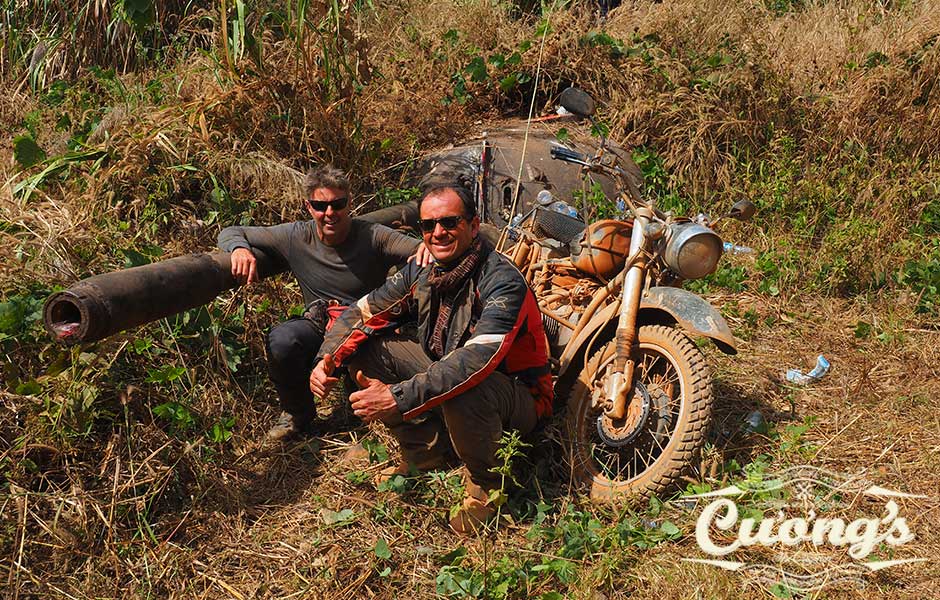
A Trailblazer in Vietnam Adventure Motorbike Touring
Today, Vietnam has many motorbike tour companies. Some are professional. Some are new. Some try to copy the language, routes, photos, and style of the original adventure operators. But Cuong’s place in the history of Vietnam motorbike touring is different because he was there before the industry became crowded.
He was not following a trend. He helped create the trend.
From the Minsk era to modern adventure bikes, from rough paper-map journeys to today’s GPS-supported tours, Cuong has remained part of the real riding culture of Vietnam. His experience was earned through years of breakdowns, rescues, route scouting, filming support, customer care, mechanical preparation, and guiding riders through some of the country’s most demanding terrain.
That is why many riders consider him a legendary figure in Vietnam motorbike travel. His legacy is not only that he runs tours. It is that he helped define what a proper Vietnam motorbike adventure should be: authentic, well-supported, safe, challenging, personal, and deeply connected to the roads and people of the country.
From Minsk Motorbikes to Modern Adventure Bikes
The Minsk will always be part of Cuong’s story, but the company did not remain trapped in the past. As riders’ expectations changed and better motorcycles became available, Cuong’s Motorbike Adventure moved toward more modern, reliable, and capable bikes.
Today, riders may choose bikes such as the Honda CRF250L, Honda CRF300L, Honda XR150, and Honda CB500X, depending on the route and riding style. These motorcycles offer better suspension, stronger brakes, improved reliability, and greater comfort for long-distance touring.
This transition reflects Cuong’s practical approach. The romance of the Minsk is important, but rider safety and tour quality are more important. A modern adventure tour through Vietnam’s mountains requires motorcycles that can handle rough roads, long distances, and mixed conditions with fewer mechanical interruptions.
Still, the old Minsk spirit remains alive. The sense of exploration, the respect for mechanical preparation, the love of remote roads, and the belief that the best Vietnam is found beyond the main highway all come from those early days.
Why Decades of Experience Cannot Be Copied
Motorbike touring in Vietnam has become popular, and popularity always brings imitation. New operators can copy a route name, borrow a photo style, or write similar tour descriptions. But they cannot copy decades of lived experience.
Cuong’s knowledge was built slowly: one repair, one rider, one mountain pass, one difficult day, one successful tour at a time. He knows the hidden tracks because he rode them before they were famous. He knows the safe guesthouses because he has used them for years. He knows the dangerous corners because he has seen what happens there. He knows which roads are suitable for beginners, which are better for experienced riders, and which should be avoided in bad weather.
This is the difference between selling adventure and understanding adventure.
For riders coming to Vietnam, especially those planning serious trips into the northern mountains, experience should be one of the most important factors in choosing a tour company. A good guide does more than lead the way. A good guide protects the rhythm of the tour, reads the group, manages risk, handles local communication, maintains the bikes, and keeps the adventure enjoyable even when conditions become difficult.
That is why Cuong’s reputation has lasted. It is based not on a single famous moment, but on decades of consistent work.
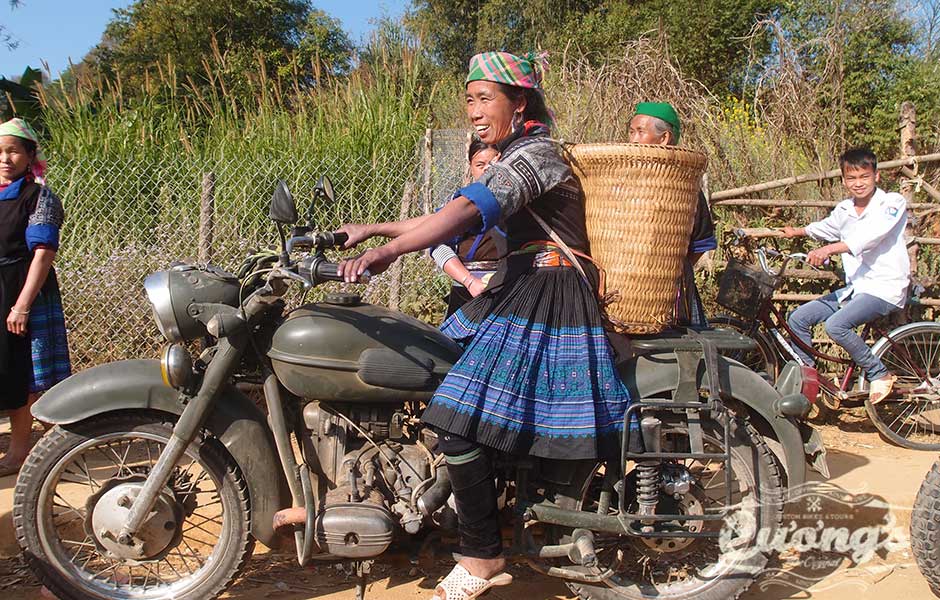
Cuong’s Legacy on the Road
The real legacy of Cuong’s Motorbike Adventure is found on the road: in the riders who discovered Vietnam from the saddle, in the film crews who trusted his team, in the old Minsk riders who still remember his workshop, and in the many travellers who returned home with stories from the mountains.
His story is part of the wider history of adventure travel in Vietnam. It connects the Minsk motorbike era with the modern guided tour industry. It connects the rough early days of independent riding with today’s professional adventure operations. It connects mechanical skill with guiding experience, and local knowledge with international reputation.
Most importantly, it shows that true expertise takes time. Cuong’s standing as one of Vietnam’s most trusted adventure motorbike guides was not created by advertising. It was earned on broken roads, in workshops, on mountain passes, beside damaged bikes, in remote villages, and through years of taking care of riders.
For anyone interested in the history of Vietnam motorbike touring, Cuong’s story is not a side note. It is one of the central chapters.
The story continues with Cuong’s role in international filming projects, including the BBC Top Gear Vietnam Special, Charley Boorman’s By Any Means, and Gordon Ramsay’s Vietnam food journey, along with his lasting legacy as one of the most important figures in Vietnam motorbike adventure.
Cuong and Vietnam’s Most Famous Motorbike Film Productions
Cuong’s reputation did not stay inside Hanoi’s rider community. As Vietnam became a dream location for television crews, documentary producers, travel presenters, and adventure filmmakers, Cuong became one of the trusted names for motorbike logistics, mechanical preparation, guiding, and road support.
Film crews need more than a good story. They need people who can make the story possible. In Vietnam, that means bikes that work, routes that can be filmed, backup plans, local communication, permits, timing, repairs, and a guide who understands both the road and the pressure of production. Cuong had already spent years solving these problems for riders. For television crews, that experience was invaluable.
The BBC Top Gear Vietnam Special
The most famous example is the legendary BBC Top Gear Vietnam Special. First broadcast in 2008, the episode followed Jeremy Clarkson, Richard Hammond, and James May as they travelled across Vietnam by motorbike, from Ho Chi Minh City toward Ha Long Bay.
For many international viewers, this was the first time they saw Vietnam as a motorbike adventure destination. The episode captured the chaos, humour, beauty, and challenge of riding through the country. It also helped introduce millions of people to the idea that Vietnam is best experienced from two wheels.
Behind the scenes, Cuong played an important role in making the motorbike journey work. His team helped prepare bikes, support the ride, and guide the filming logistics. Cuong’s mechanical knowledge and Vietnam road experience were exactly what a production like Top Gear needed.
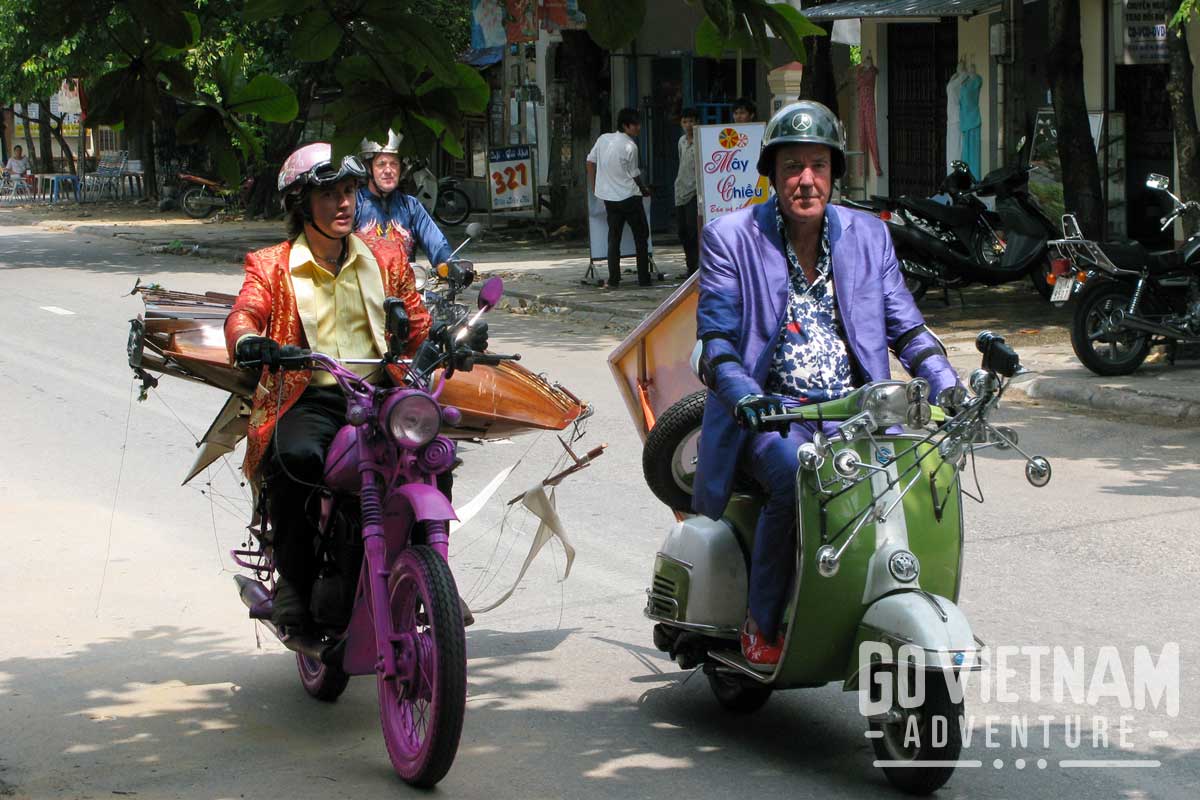
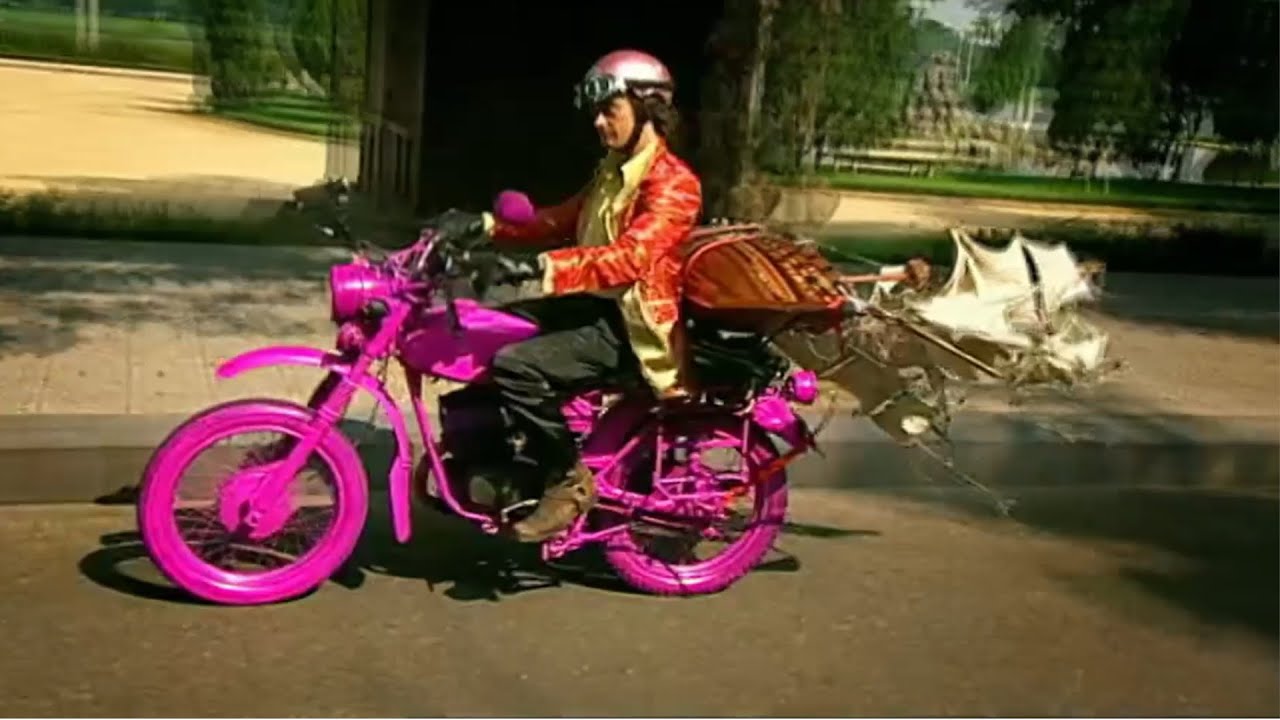
One of the most memorable machines from the episode was Richard Hammond’s Minsk, later painted pink during the journey. The Minsk was the perfect symbol of old Vietnam motorbike travel: smoky, stubborn, full of character, and impossible to ignore. For Cuong, the Minsk was not a television prop. It was part of his life’s work.
Cuong also supported the final watercraft section toward Ha Long Bay, where the bikes were transformed for the last challenge. The Top Gear Vietnam Special became one of the most loved travel episodes in the show’s history, and Cuong’s contribution remains part of that story.
Charley Boorman and By Any Means
Cuong’s film work also connects to Charley Boorman’s By Any Means, the adventure travel series that followed Boorman across countries using many forms of transport.
Charley Boorman was already known to adventure riders through Long Way Round and Long Way Down. When a presenter with that background comes to Vietnam, the motorbike support must be credible. Cuong’s deep knowledge of the Minsk, border roads, Hanoi logistics, and northern riding conditions made him a natural choice for this type of production support.
Television adventure looks spontaneous on screen, but successful filming requires serious preparation. A route must be realistic. Bikes must be ready. The crew must move safely. The presenter must be able to ride, film, stop, restart, and repeat scenes without losing the journey’s rhythm. Cuong understood how to keep that balance between real adventure and professional production.
Gordon Ramsay’s Vietnam Food Journey
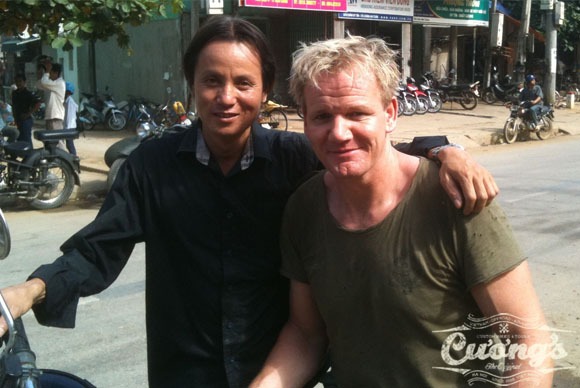
Cuong’s reputation reached beyond motorbike shows. He was also involved in supporting Vietnam filming for Gordon Ramsay’s food travel work, including Gordon’s Great Escape.
Food television in Vietnam often requires travel into markets, villages, mountain areas, and rural communities. The production needs local knowledge, mobility, timing, and a team that can keep the crew moving through real Vietnamese environments. Cuong’s experience as a guide and fixer made him valuable because he understood both the roads and the culture around them.
Whether the subject was motorbikes, food, local life, or adventure travel, the requirement was the same: dependable support on the ground. Cuong earned that trust over decades.
Why Cuong Became a Legendary Vietnam Motorbike Guide
Cuong’s legendary status is not based on one television episode. It comes from consistency. Riders trust him because he has been there from the beginning. He was part of the Minsk era, part of the rise of the Hanoi Minsk Club, part of the early exploration of Northern Vietnam by motorbike, and part of the development of professional guided adventure tours.
Many operators now sell Vietnam motorbike tours. Some copy routes. Some copy language. Some copy photographs and ideas. But experience cannot be copied. Cuong’s advantage comes from decades of real road knowledge, mechanical skill, customer care, and safety-first decision making.
He knows when a road is worth riding and when it is too risky. He knows which bikes suit which riders. He knows how weather changes the mountains. He knows how to manage a mixed group. He knows when to push forward and when to change the plan.
That is what separates a true guide from a tour seller.
Cuong’s Logo on the Archer TV Series
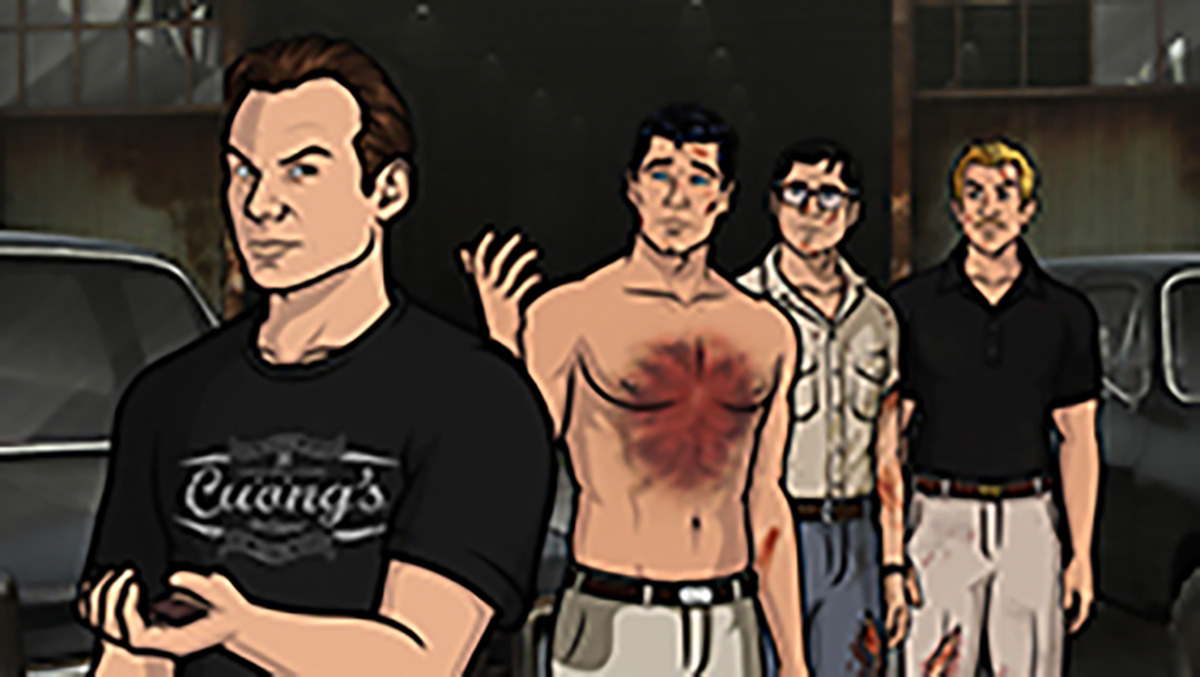
Cuong’s Motorbike Adventure has also appeared in an unexpected place: the animated TV series Archer. In the show, the character Slater is seen wearing a black T-shirt featuring the Cuong’s Motorbike Adventure logo, turning a real Hanoi motorbike tour company into a small but memorable pop-culture reference.
The appearance of the shirt shows how far Cuong’s reputation travelled beyond Vietnam’s riding community. What began as a Hanoi workshop for Minsk motorbikes became a name recognised by adventure riders, film crews, and even fans of international television.
For long-time customers, the Archer reference is more than a novelty. It reflects the authenticity of the brand. Cuong’s logo was not created as a fictional design for television; it came from a real adventure motorbike company with deep roots in Vietnam’s riding history.
The shirt appeared prominently in Archer Season 5 and Season 6, creating interest from fans who wanted to know more about the company behind the logo. Cuong’s team later wrote about the appearance and the demand for the shirt on their website.
Read more here: Cuong’s Archer T-shirts.
The Legacy of Cuong’s Motorbike Adventure
The legacy of Cuong’s Motorbike Adventure is the history of Vietnam motorbike touring itself. From a mechanic’s workshop in Hanoi to international television productions, from old Minsk bikes to modern adventure motorcycles, from rough early routes to professionally guided tours, Cuong has helped shape the way riders experience Vietnam.
His company remains one of the most respected names in the industry because it is built on real foundations: mechanical expertise, local knowledge, honest guiding, safety, and customer satisfaction.
For riders who want a genuine Vietnam motorbike adventure, Cuong’s story matters. It proves that the best tours are not created by marketing. They are earned through years on the road.
FAQ: Cuong’s Motorbike Adventure
Who is Cuong?
Cuong is one of Hanoi’s original adventure motorbike figures, known first as a top Minsk mechanic and later as one of Vietnam’s most experienced motorbike tour guides.
Why is the Minsk motorbike important in Vietnam?
The Minsk was one of the classic motorcycles used by early adventure riders in Northern Vietnam. It was simple, tough, repairable, and closely linked to the rise of independent motorbike travel from Hanoi.
Was Cuong involved with the BBC Top Gear Vietnam Special?
Yes. Cuong and his team are closely associated with the motorbike support, bike preparation, and guiding work behind the famous BBC Top Gear Vietnam Special.
What makes Cuong’s Motorbike Adventure different?
The company is built on decades of experience, not copied routes. Cuong combines mechanical knowledge, route expertise, rider safety, and deep local understanding.
Where can I book a tour?
You can learn more at Cuong’s Motorbike Adventure.

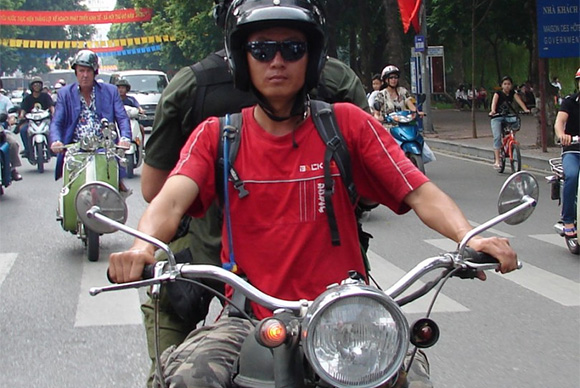
BBC Top Gear Vietnam Special: Cuong’s Motorbike Adventure Behind the Scenes
BBC Top Gear Vietnam Special: Cuong’s Motorbike Adventure Behind the Scenes
Table of Contents
- The Top Gear Vietnam Special
- Cuong’s Role Behind the Cameras
- Richard Hammond’s Legendary Minsk
- Jeremy Clarkson’s Vespa Breakdown
- James May’s Indestructible Honda Cub
- Cuong, The Stig, and the Abandoned Airstrip
- Building the Bike-Boats for Hạ Long Bay
- The Legacy of the Vietnam Special
- Ride Vietnam with Cuong’s Motorbike Adventure
The Top Gear Vietnam Special
First broadcast in 2008, the Top Gear Vietnam Special followed Jeremy Clarkson, Richard Hammond, and James May as they travelled across Vietnam on motorcycles and scooters.
The journey became famous for its mix of comedy, mechanical disasters, dramatic scenery, and the unique chaos of riding across Vietnam. From city traffic to mountain passes, coastal roads, rainstorms, breakdowns, and the final challenge in Hạ Long Bay, the episode captured the spirit of motorcycle adventure in Vietnam better than almost anything before it.
For many international riders, this episode was the first time they saw Vietnam as one of the world’s great motorbike touring destinations.
Cuong’s Role Behind the Cameras
What many viewers do not know is that Cuong of Cuong’s Motorbike Adventure played an important role behind the cameras.
Cuong was instrumental in preparing, building, maintaining, and supporting the motorcycles used during filming. His local knowledge and mechanical experience helped keep the production moving across Vietnam.
Filming a major television special across Vietnam was not simple. The production needed bikes that looked interesting on camera, could survive long distances, and could be repaired quickly when problems happened. The crew also needed someone who understood Vietnamese roads, local mechanics, spare parts, and the reality of travelling by motorcycle in the country.
Cuong helped provide that support.
His work included motorcycle preparation, mechanical repairs, roadside problem-solving, production support, and special fabrication work for some of the most memorable scenes in the episode.
Richard Hammond’s Legendary Minsk
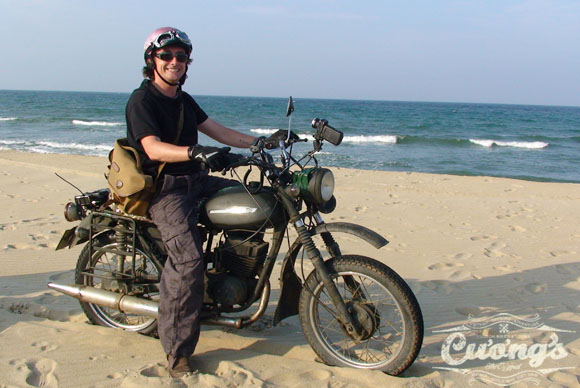
One of the most memorable motorcycles from the Vietnam Special was Richard Hammond’s Minsk.
The Minsk was rugged, noisy, simple, and full of character. It was exactly the kind of motorcycle that suited the spirit of the journey. Cuong created and prepared the special Minsk that Hammond rode during filming.
The bike became even more famous after it was painted pink in the parking area of the colonial-era Majestic Hotel in Huế. That moment became one of the most recognisable scenes from the episode.
On screen, it was funny and unexpected. Behind the scenes, the Minsk had to be kept running through a demanding filming schedule, long riding days, and changing Vietnamese road conditions.
Cuong’s work helped turn Hammond’s Minsk into one of the most iconic motorcycles in Top Gear history.

Jeremy Clarkson’s Vespa Breakdown
Jeremy Clarkson’s vintage Vespa was another unforgettable part of the Vietnam Special.
The Vespa looked stylish, but it was not always reliable. During filming, the scooter suffered mechanical and electrical problems that threatened to stop Clarkson’s journey.
Cuong helped keep the Vespa moving with the kind of practical roadside ingenuity that Vietnamese mechanics are famous for. One memorable behind-the-scenes repair involved using a plastic bag of weeds to help protect and fix the Vespa’s electrics.
It was a perfect example of real Vietnam motorcycle travel: when something breaks, you use what you have, solve the problem, and keep going.
The audience saw Clarkson’s frustration. Behind the scenes, Cuong and the support team were working hard to keep the story on the road.
James May’s Indestructible Honda Cub
James May rode a Honda Cub, one of the most reliable and important motorcycles in Vietnamese everyday life.
Cuong helped build and prepare the Honda Cub used by May during filming. The Cub became a symbol of simple, practical reliability. While it was small and modest compared with larger touring motorcycles, it proved why the Honda Cub has such a strong reputation across Asia.
In Vietnam, the Honda Cub is more than just a small bike. It is part of the country’s transport culture. It carries families, goods, students, workers, and travellers. It is simple, tough, and easy to repair.
That made it perfect for James May’s character in the episode: calm, steady, practical, and surprisingly hard to defeat.
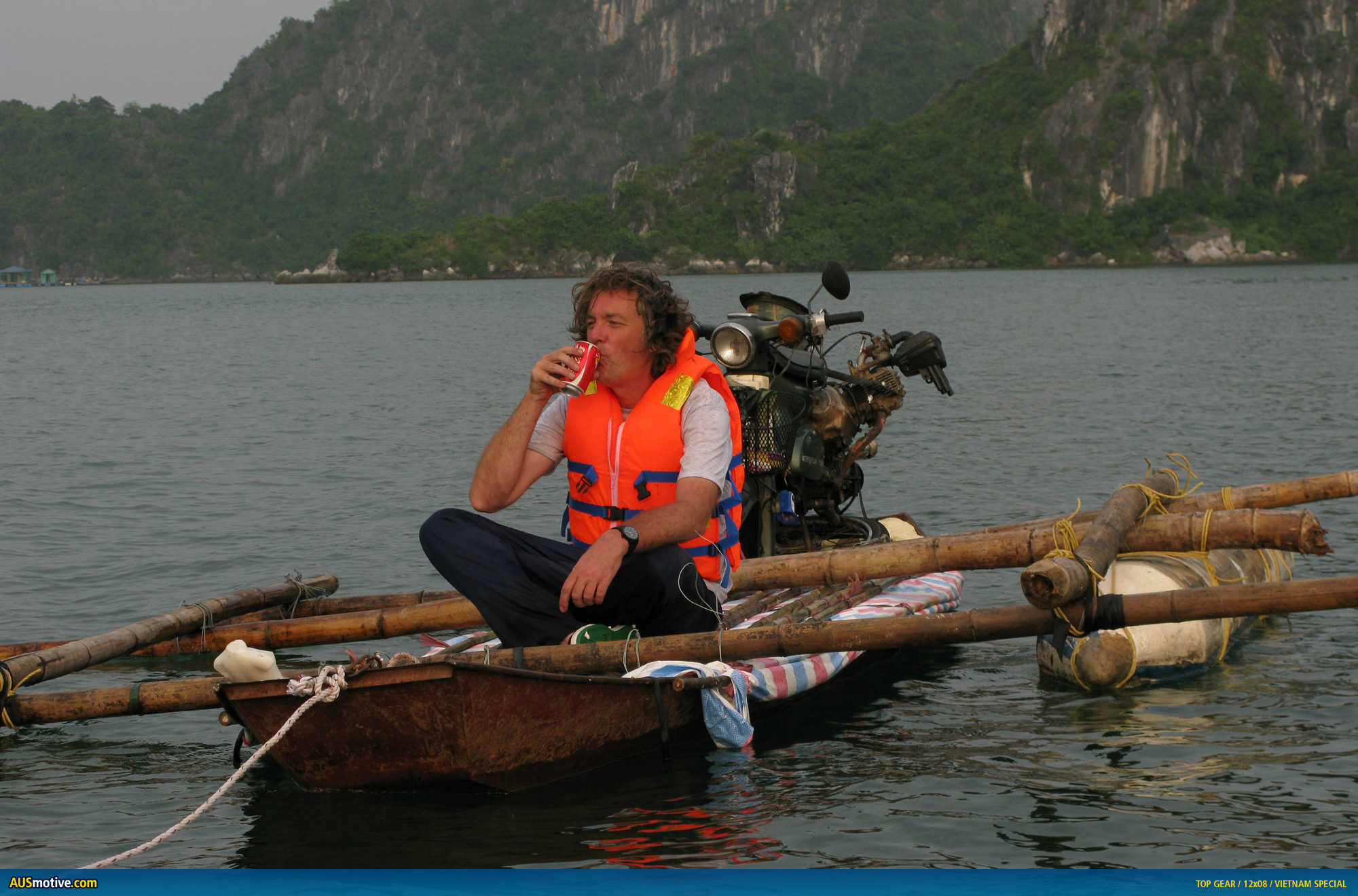 James May’s Honda Cub represented the practical and indestructible spirit of Vietnamese motorcycle culture.
Cuong, The Stig, and the Abandoned Airstrip
Some of the most interesting moments from the Vietnam Special never made it into the final broadcast.
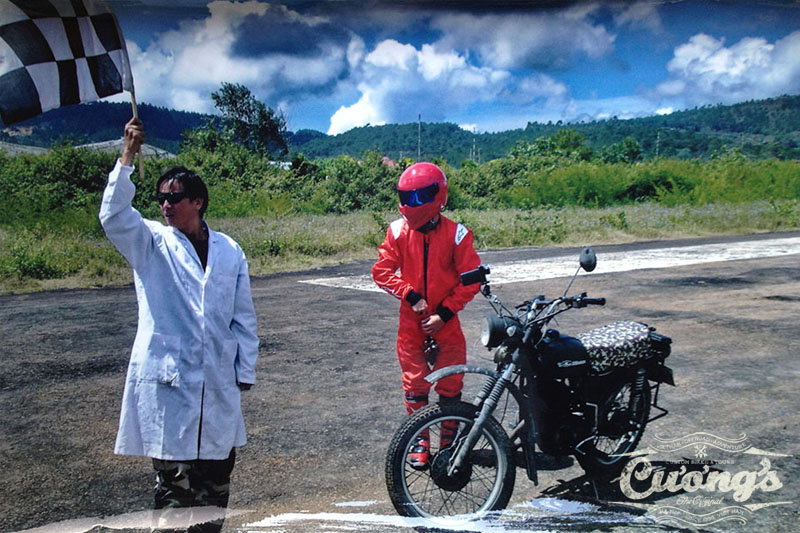
In deleted scenes and behind-the-scenes filming, Cuong worked with the production team during a sequence involving The Stig and the Minsk on an abandoned airstrip in central Vietnam.
The idea was pure Top Gear: take a strange motorcycle, put it on an open strip of tarmac, and see what happens.
Although this scene was not a major part of the final episode, it remains one of the great behind-the-scenes stories from the production. Cuong was there helping support the filming, the bike, and the crew as Top Gear created another unusual Vietnam moment.
Building the Bike-Boats for Hạ Long Bay
The final challenge of the Vietnam Special became one of the most famous endings in Top Gear history.
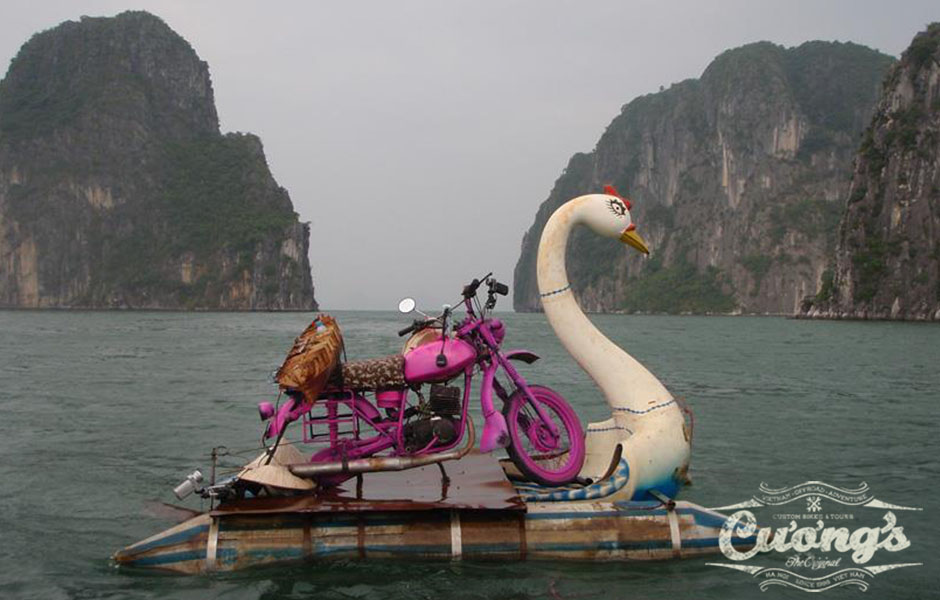
After travelling across Vietnam, the presenters discovered that the finish line was not simply on land. They had to reach Ba Hàng Bar in Hạ Long Bay. To get there, their motorcycles had to be transformed into watercraft.
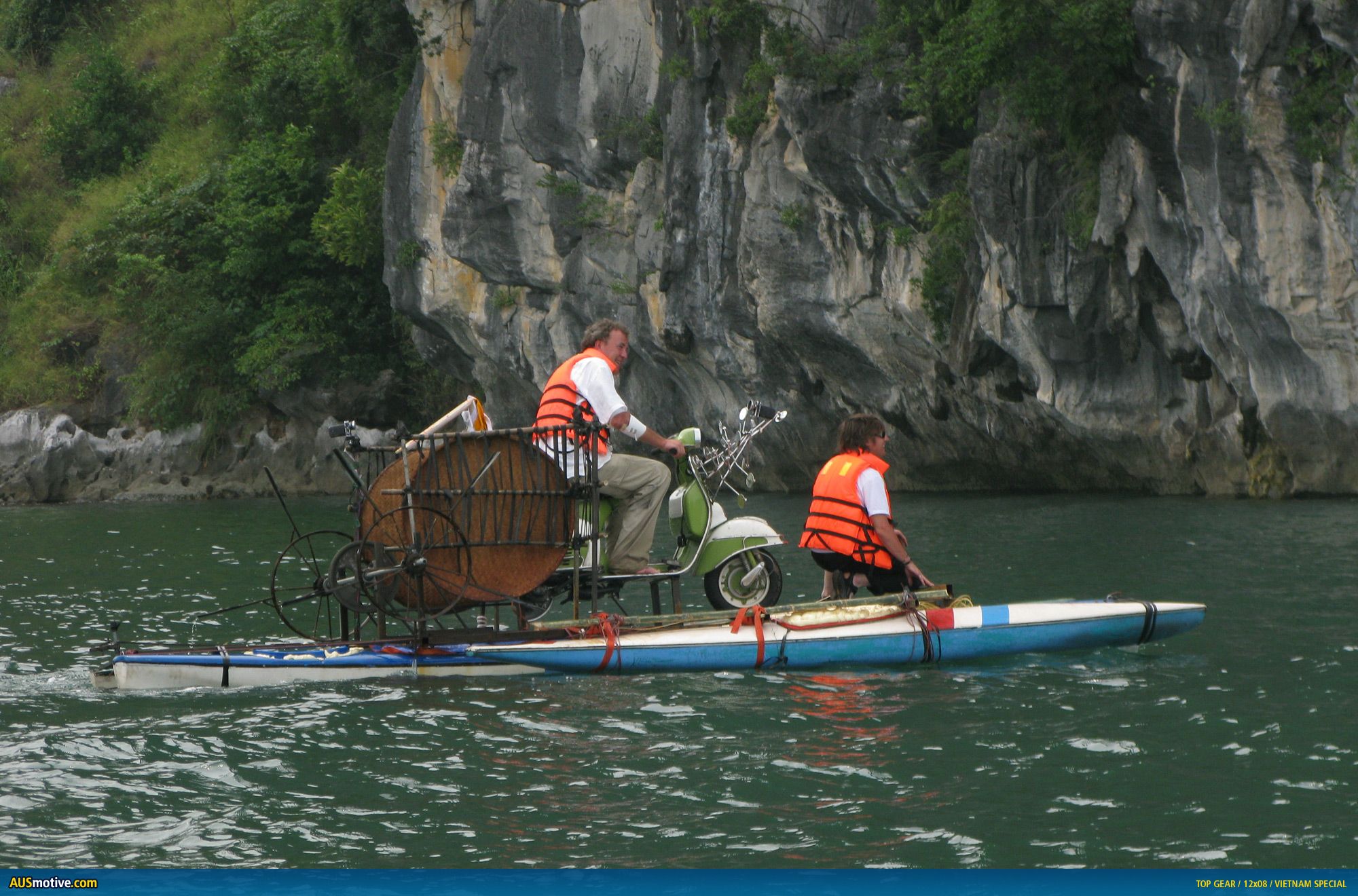
Cuong played an important role in building and preparing the bike-boats for this final voyage.
This was not normal motorcycle work. The machines had to float, move across the water, support the riders, and still look like the strange homemade creations expected from a Top Gear challenge.
The work involved fabrication, balance, buoyancy, propulsion, testing, and constant adjustment. Turning motorcycles into boats required both creativity and practical engineering.
According to Cuong’s production memories, the boats were built so well that James May’s boat performed better than the story required. To keep the ending dramatic and allow Jeremy Clarkson to reach the bar and the cold beer first, May’s boat had to be damaged so the story could finish in true Top Gear style.
The result was a chaotic, funny, and unforgettable finale in Hạ Long Bay.
The Legacy of the Vietnam Special
The Top Gear Vietnam Special continues to inspire riders nearly two decades after it was first broadcast.
It showed the world that Vietnam is one of the greatest motorcycle travel countries on earth. The episode captured the humour, challenge, beauty, and unpredictability of riding here.
It also showed something that every experienced Vietnam rider understands: the journey is never only about the bike. It is about the road, the people, the repairs, the weather, the food, the landscape, and the stories that happen along the way.
Cuong’s Motorbike Adventure was part of that story. From Hammond’s Minsk to Clarkson’s Vespa, May’s Honda Cub, The Stig’s airstrip scene, and the final bike-boats in Hạ Long Bay, Cuong helped support one of the most beloved Top Gear specials ever made.
Ride Vietnam with Cuong’s Motorbike Adventure
If the BBC Top Gear Vietnam Special inspired you to ride across Vietnam, the real adventure is still waiting.
Cuong’s Motorbike Adventure continues to take riders beyond the tourist trail and into some of the best motorcycle country in Southeast Asia.
From the mountains of the Northwest and Northeast to remote border roads, hidden valleys, off-road tracks, and legendary passes, Cuong’s team brings local knowledge, mechanical experience, and genuine adventure riding together.
Whether you are a Top Gear fan, a serious rider, or a traveller looking for the real Vietnam, Cuong’s Motorbike Adventure can help you experience the country the way it should be experienced: from the seat of a motorcycle.
The pink Minsk is now part of Top Gear history. But the roads of Vietnam are still open.
Start your Vietnam motorbike adventure with Cuong’s Motorbike Adventure
“`
Technical Off-Road Riding in Vietnam | Red Clay, Rice Terraces & Mountain Trails
Technical Off-Road Riding in Vietnam: Red Clay, Rice Terraces, Rocky Borders & Real Adventure
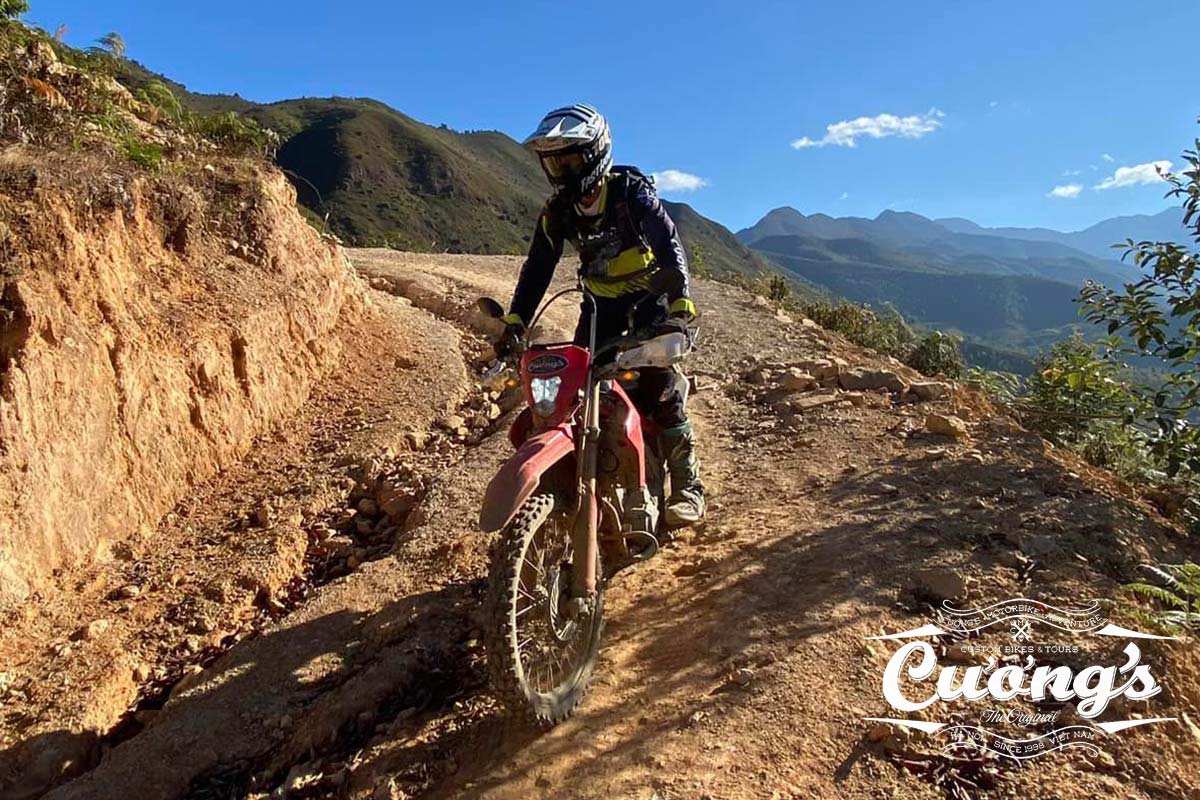
Off-road riding in Vietnam is not like riding in the desert, open bush tracks, or temperate forest trails. Here, the terrain changes quickly, the weather can transform a trail in minutes, and the best routes often run through remote mountain villages, terraced rice fields, bamboo bridges, and narrow single tracks used by local hill tribe communities. At Cuong’s Motorbike Adventure, technical off-road riding is not about speed — it is about skill, balance, trail awareness, and choosing the right route for each rider.
For riders looking for a true challenge, our Vietnam off-road motorbike tours offer some of the most varied technical riding in Southeast Asia, from the slippery red clay of the Northwest to the rocky mountain passes of Ha Giang and the Northern Border region.
Table of Contents
- Why Off-Road Riding in Vietnam Is Different
- Northwest Vietnam: Red Clay, Rice Terraces & Mountain Single Track
- Ha Giang & the Northern Border: Rocky Tracks and Remote Passes
- Water Crossings, Bamboo Bridges & Local Mountain Routes
- Honda CRF250L vs CRF300L for Technical Vietnam Terrain
- Why Experienced Local Guides Matter
- Recommended Vietnam Off-Road Motorbike Tours
- Watch Vietnam Off-Road Riding Videos
Why Off-Road Riding in Vietnam Is Different
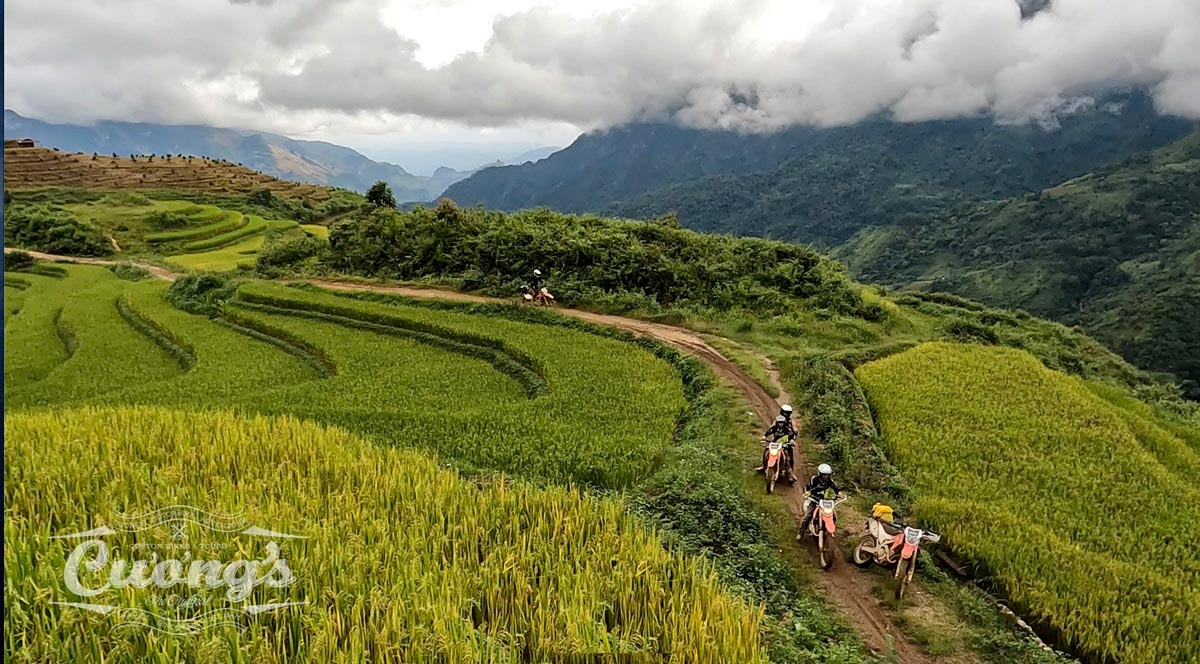
Riders who are used to desert riding often expect open visibility, flowing lines, and predictable traction. Riders from temperate climates may be familiar with forest trails, gravel tracks, mud, roots, and hill climbs. Vietnam is different because it combines many of these conditions into one ride — often in a single day.
In the mountains of northern Vietnam, a dry red dirt trail can become polished clay after rain. A narrow farm track can turn into a steep single trail above terraced rice fields. A rocky border road can suddenly drop into a river crossing or climb into mist-covered limestone mountains. This is technical off-road riding that demands attention, patience, throttle control, and respect for local conditions.
Northwest Vietnam: Red Clay, Rice Terraces & Mountain Single Track
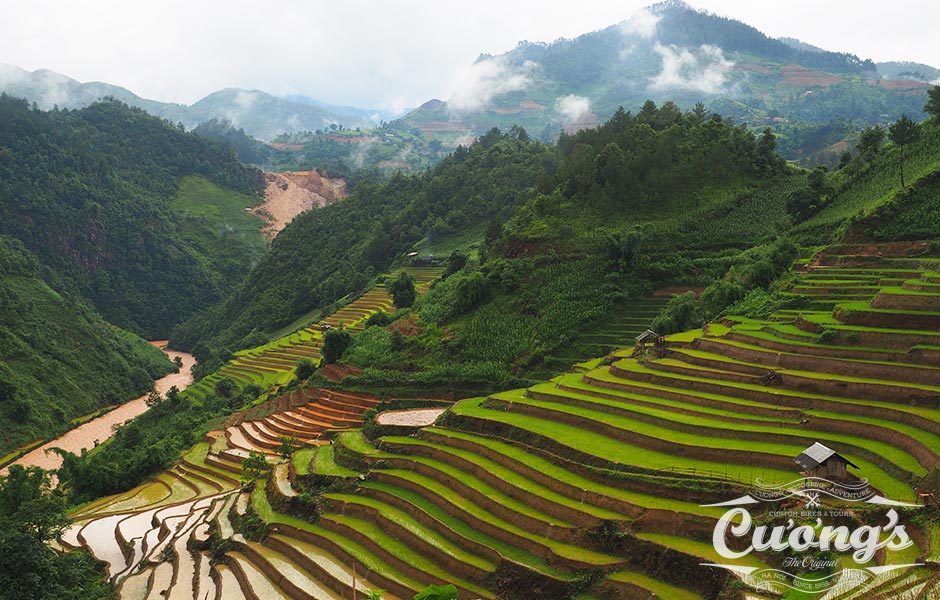
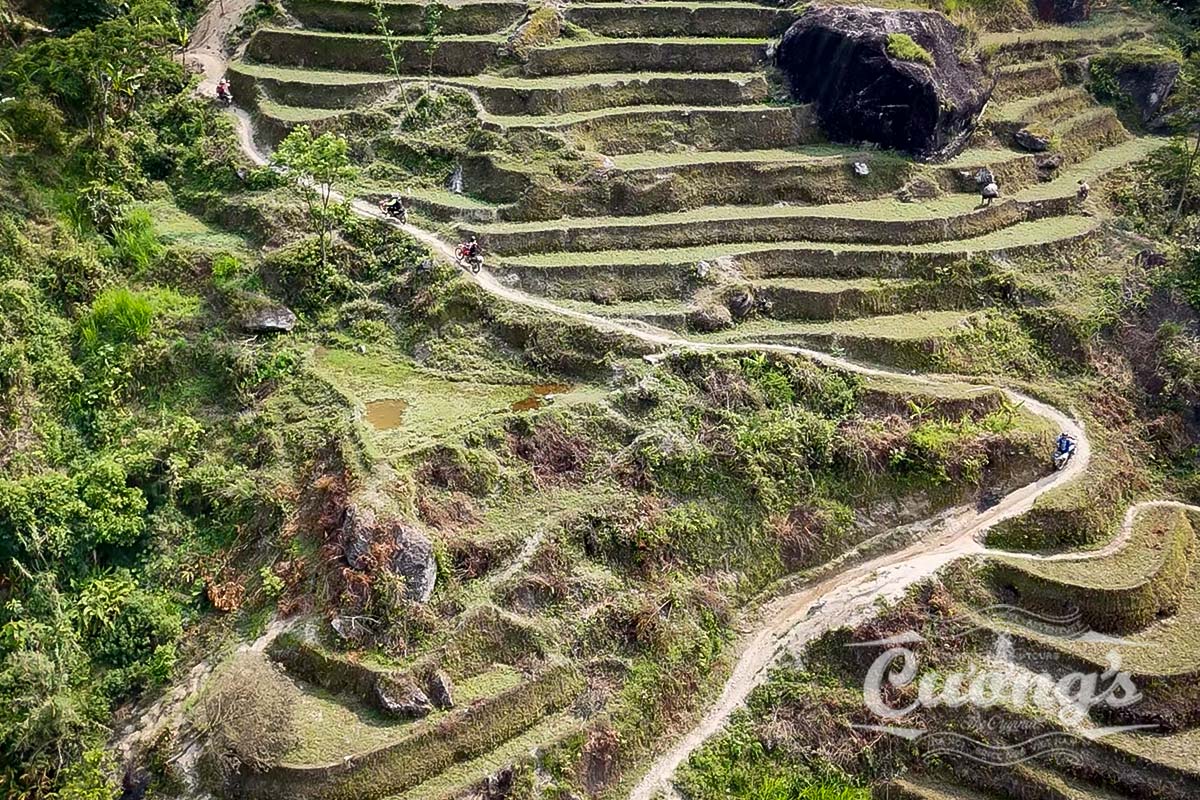
Northwest Vietnam is famous for its beautiful valleys, high mountain passes, and terraced rice fields. But for off-road riders, the real character of the region comes from its red clay mix. When dry, the trails can be fast, grippy, and flowing. When wet, the same red clay becomes extremely slippery, especially on steep climbs, shaded corners, and narrow tracks beside rice fields.
This is where Vietnam tests a rider’s balance and judgment. The trails are not always about power. Often, the best technique is smooth throttle, light braking, careful body position, and reading the surface before committing to a line. Along the terraced fields, riders must stay alert because the trails can be narrow, uneven, and shared with farmers, buffalo, scooters, and local traffic.
For riders who enjoy technical terrain, the Northwest offers a perfect mix of beauty and challenge: red clay climbs, mountain single track, forest trails, rice terraces, stream crossings, and remote villages far from normal tourist routes.
Ha Giang & the Northern Border: Rocky Tracks and Remote Passes
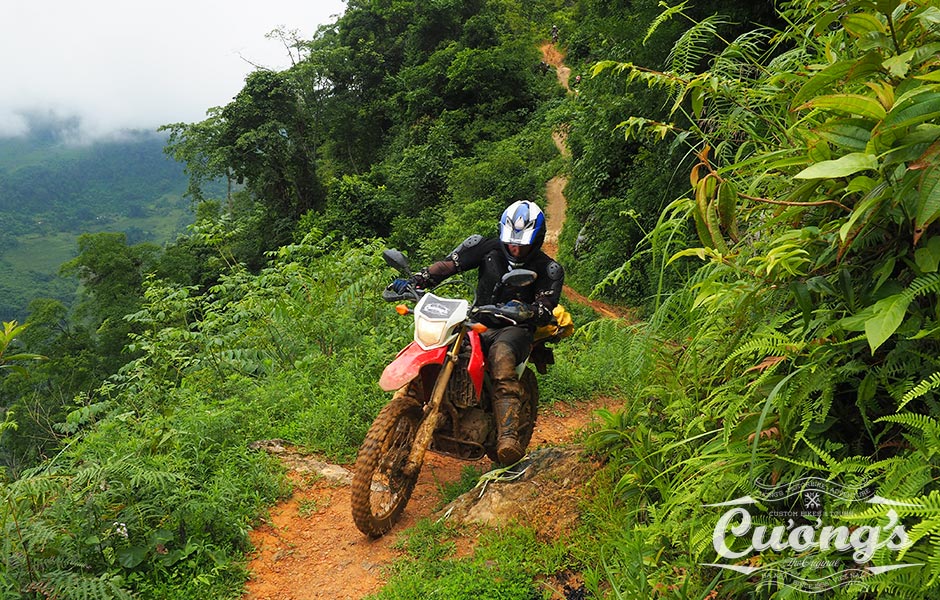
The Ha Giang Northern Border region is challenging in a different way. Compared with the red clay terrain of the Northwest, Ha Giang’s off-road tracks are often more rocky, broken, steep, and exposed. The mountain passes are dramatic, and the single tracks can be rough, narrow, and physically demanding.
These are not tourist-loop roads. Many of the best trails are used by local hill tribe communities to connect villages, fields, markets, and mountain homes. Riding here takes you far away from the standard Ha Giang Loop and deep into remote regions where the welcome from local communities is one of the great highlights of the journey.
The reward is huge: limestone peaks, border trails, rocky climbs, quiet valleys, and a feeling of real exploration. Ha Giang is not just a beautiful place to ride — it is one of Vietnam’s most rewarding technical off-road regions.
Water Crossings, Bamboo Bridges & Local Mountain Routes
One of the unique parts of off-road riding in Vietnam is how local communities adapt to the landscape. In remote mountain areas, villagers often build bamboo bridges, simple wooden crossings, and handmade rafts to connect homes, farms, and tracks across rivers and streams.
For riders, these crossings are a highlight of the adventure. They also require care. Water depth, current, hidden rocks, slippery exits, and soft riverbanks can all change quickly. A good guide knows when a crossing is safe, when to walk the bike, when to help as a team, and when to choose another route.
These moments are what make Vietnam off-road riding so memorable. It is not just the trail — it is the connection between terrain, people, culture, and real mountain life.
Vietnam and Laos Off-Road Motorbike Tours
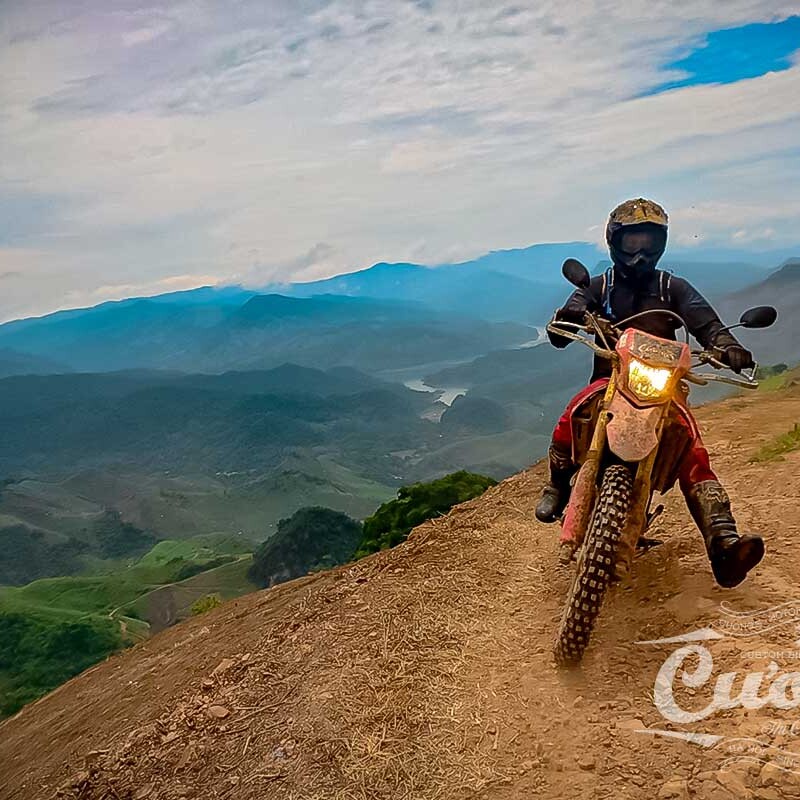
Honda CRF250L vs CRF300L for Technical Vietnam Terrain
| Feature | Honda CRF250L | Honda CRF300L |
|---|---|---|
| Best For | Technical riders who want a light, forgiving bike for tight trails. | Riders wanting more torque and stronger climbing power. |
| Red Clay Conditions | Excellent control when traction is poor; easy to manage in slippery sections. | More power available, but requires smoother throttle control on wet clay. |
| Rocky Ha Giang Tracks | Light and manageable over rocks, ledges, and narrow trails. | Better torque for steep rocky climbs and loaded mountain riding. |
| Single Track Riding | Very confidence-inspiring for tight technical terrain. | Capable and stronger, but slightly more demanding for less experienced riders. |
| Water Crossings | Easy to handle, push, balance, and recover if needed. | Strong and stable, but needs confident control in slippery exits. |
| Overall Vietnam Choice | Best all-round choice for technical trails, mixed skill levels, and difficult conditions. | Best for confident riders who want extra performance in the mountains. |
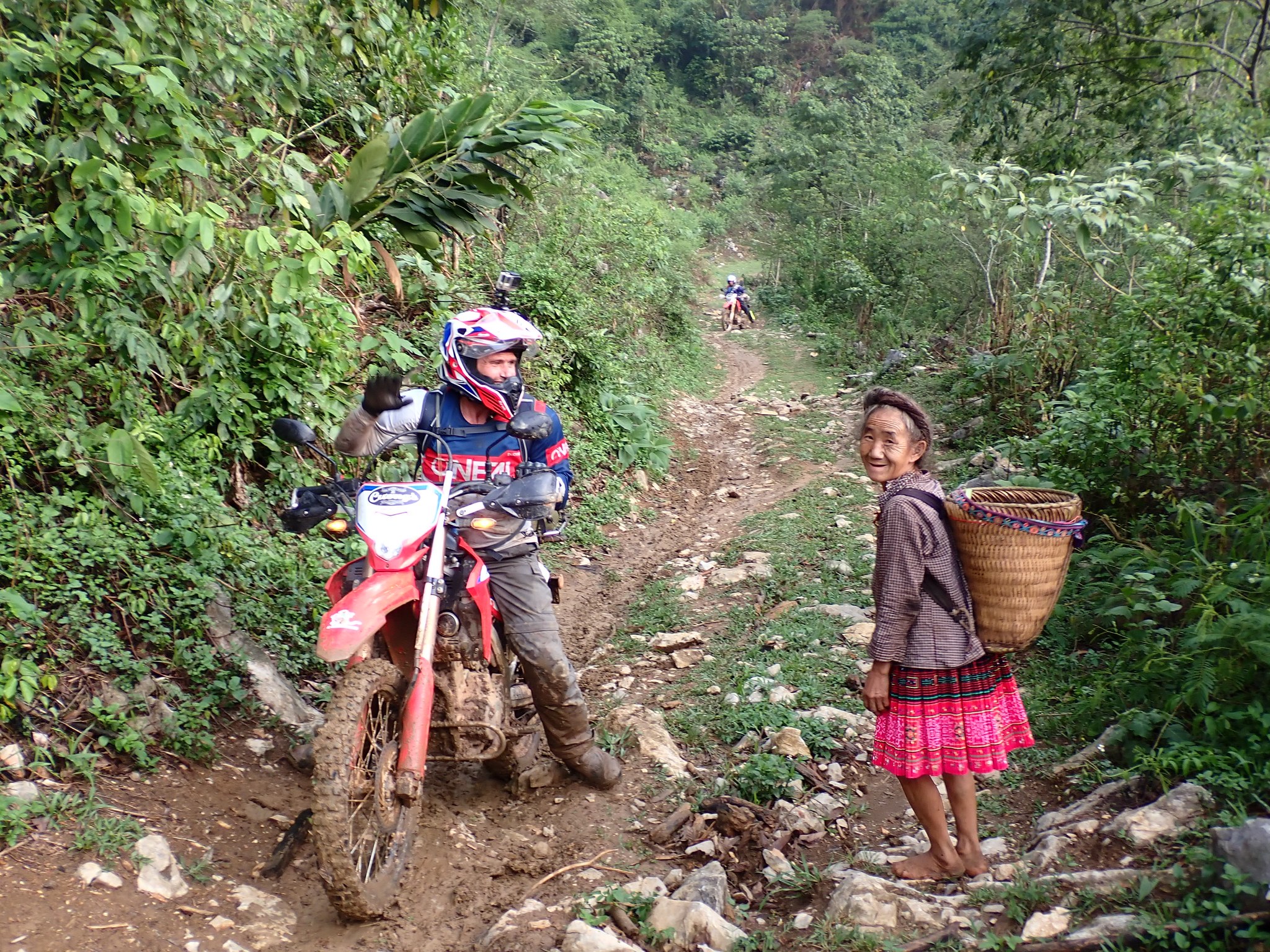
Why Experienced Local Guides Matter
Technical off-road riding in Vietnam is not something to plan from a map alone. Trail conditions change with the season, rainfall, farming activity, landslides, construction, and local access. A route that is perfect in the dry season may become too slippery or dangerous after heavy rain.
This is where experienced guides make the difference. At Cuong’s Motorbike Adventure, our guides know the trails, the villages, the river crossings, and the different levels of difficulty across each region. They can judge rider skill, adjust the pace, and select routes that are challenging without being reckless.
Good guiding is not about forcing every rider onto the hardest trail. It is about reading the group, choosing the right terrain, and creating the best possible adventure for the riders on that day.

Recommended Vietnam Off-Road Motorbike Tours
If you want to experience real technical off-road riding in Vietnam, start with our main off-road tour hub:
Explore Vietnam Off-Road Motorbike Tours
These tours are designed for riders who want more than the standard tourist loop. Expect mountain tracks, red clay, rocky passes, remote villages, water crossings, bamboo bridges, and carefully selected trails matched to your riding ability.
You can also visit the Cuong’s Motorbike Adventure homepage to learn more about our bikes, guides, support, and Vietnam motorbike tour experience.
Watch Vietnam Off-Road Riding Videos
Want to see the trails before you ride? Watch our Vietnam off-road motorbike riding videos here:
Final Thoughts: Vietnam Rewards Smart Riders
Vietnam’s technical off-road terrain rewards riders who stay focused, ride smoothly, and respect changing conditions. The red clay of the Northwest, the rocky border trails of Ha Giang, the terraced rice fields, bamboo bridges, water crossings, and remote village tracks all create a riding experience that is very different from desert or temperate-climate off-road riding.
This is not just another motorbike trip. It is a real mountain adventure through some of the most beautiful and technically rewarding terrain in Vietnam.
Ready to ride beyond the tourist trail?
View our Vietnam off-road motorbike tours and start planning your next adventure with Cuong’s Motorbike Adventure.
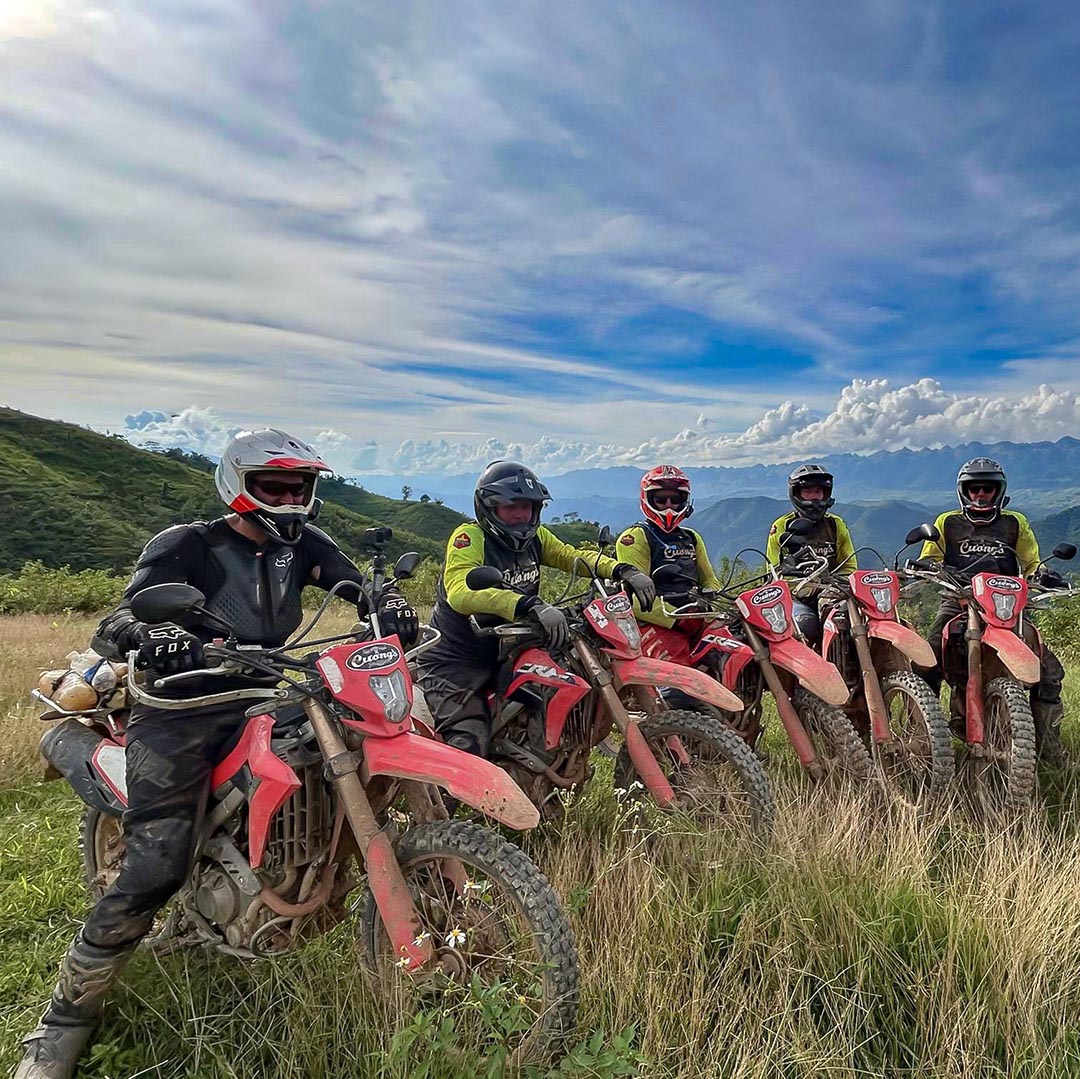
Ha Giang vs Northwest Vietnam Off-Road Motorbike Tours 2026 | Best Rice Harvest Routes
Ha Giang vs Northwest Vietnam Off-Road Motorbike Tours 2026 – Rice Harvest Season, Scenic Differences & Best Adventure Routes
Vietnam is quickly becoming one of the world’s top destinations for serious motorcycle adventure travel, and in 2026 the demand for off-road motorbike tours in Vietnam is stronger than ever. Riders searching for remote mountain roads, ethnic minority villages, dramatic rice terraces, and technical dirt tracks are increasingly choosing two legendary regions: Ha Giang and the Northwest of Vietnam.
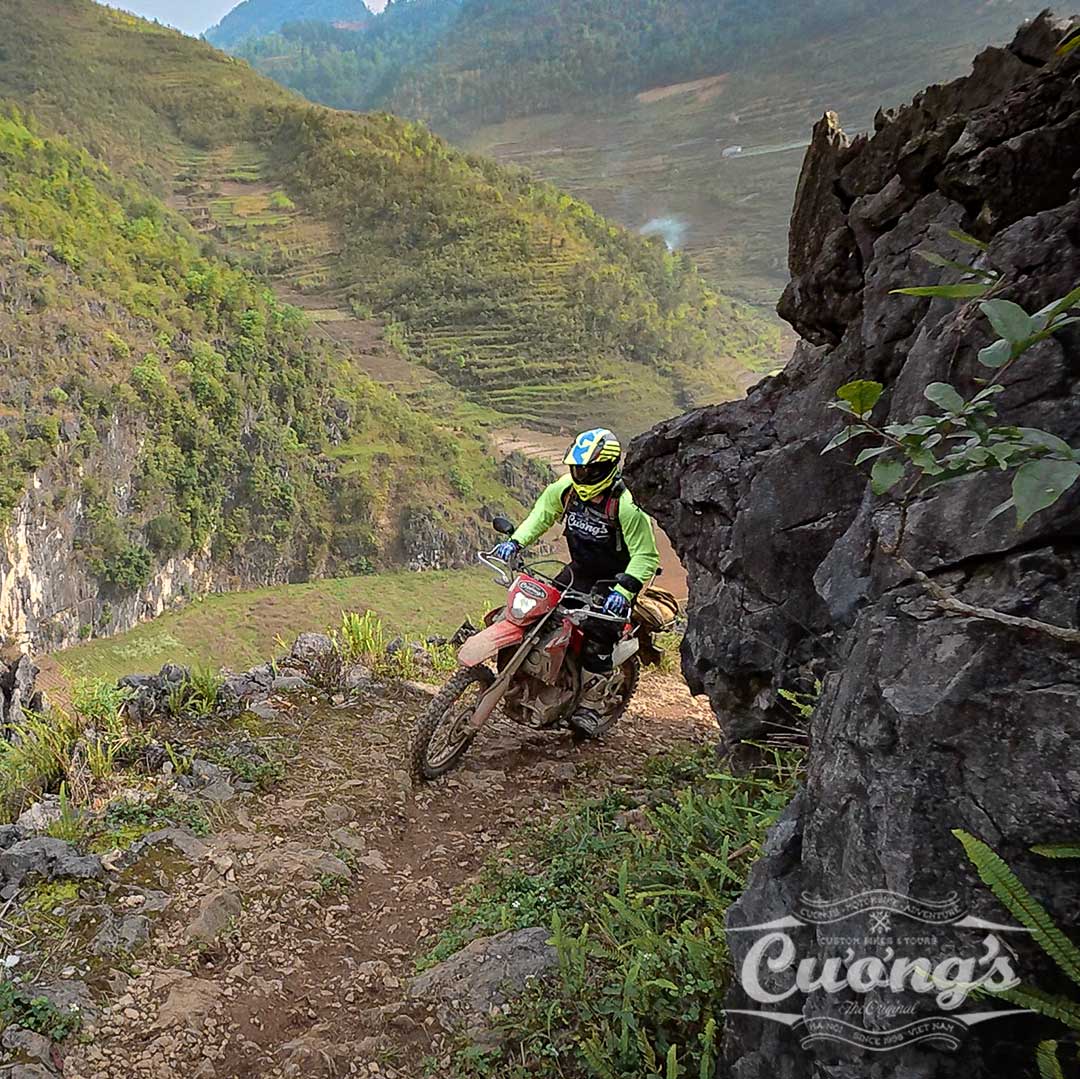
With Cuong’s Motorbike Adventure, riders can explore both regions with experienced local guides, professional support crews, carefully selected routes, and decades of off-road experience in Vietnam’s mountains. While both regions offer unforgettable riding, the scenery, terrain, road conditions, and overall riding style are very different.
This guide explains the key differences between Ha Giang motorbike tours and Northwest Vietnam motorbike tours, highlights the upcoming 2026 rice harvest season, and reveals the best routes to experience Vietnam’s famous golden rice terraces by motorbike.
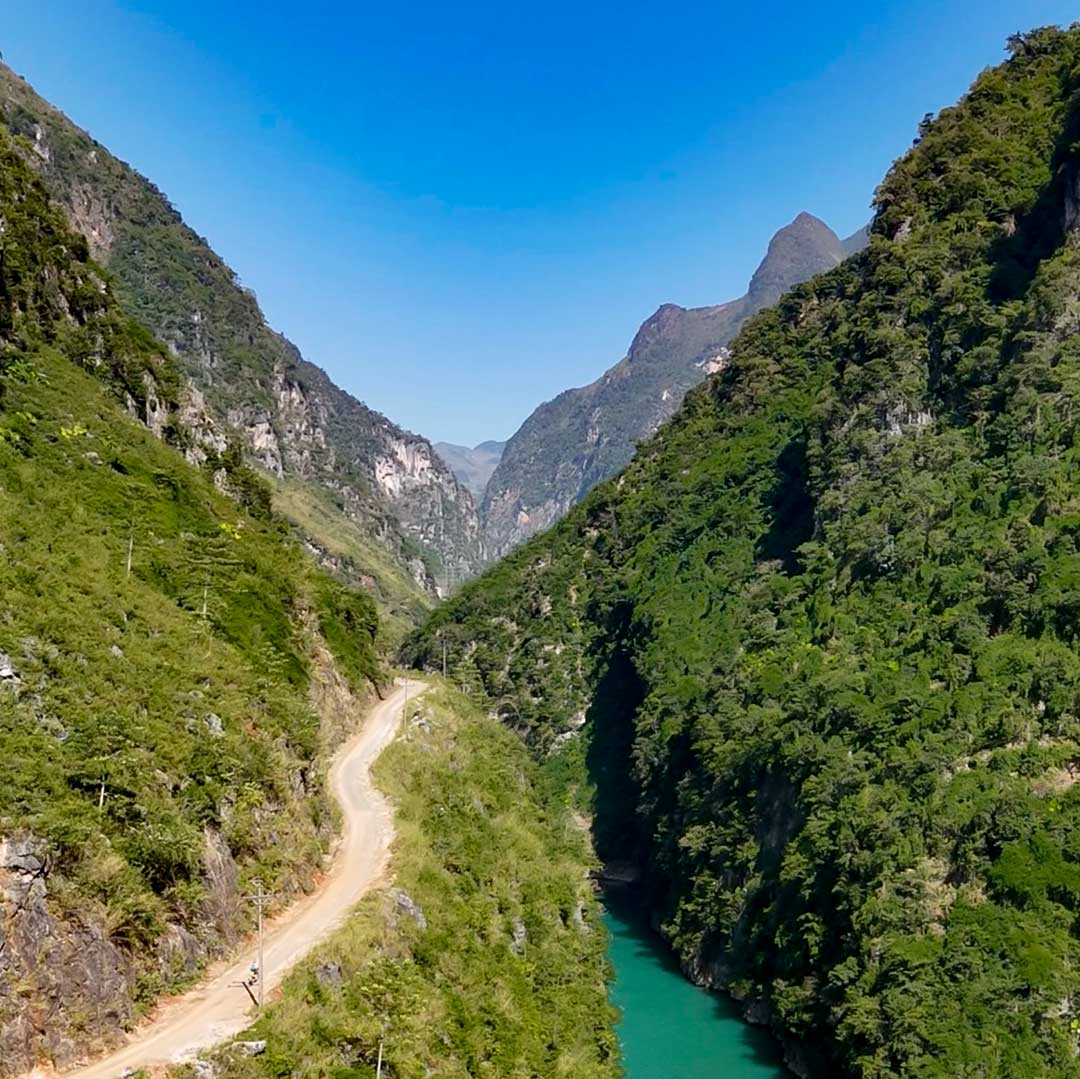
Why Vietnam Is One of the Best Off-Road Riding Destinations in the World in 2026
Vietnam offers something few countries still can — massive mountain landscapes, authentic rural culture, technical dirt roads, and real adventure riding that remains largely untouched by mass tourism. Northern Vietnam especially has become a dream destination for riders looking for:
- Mountain passes and deep valleys
- Remote border roads
- Single-track and dirt trails
- Traditional ethnic villages
- Rice terrace landscapes
- Challenging off-road terrain
- Authentic local culture
- Photographic scenery around every corner
The two most famous riding regions are Ha Giang and the Northwest, but each offers a very different style of adventure.
Explore all Vietnam off-road adventures here:
Vietnam Off-Road Motorbike Tours
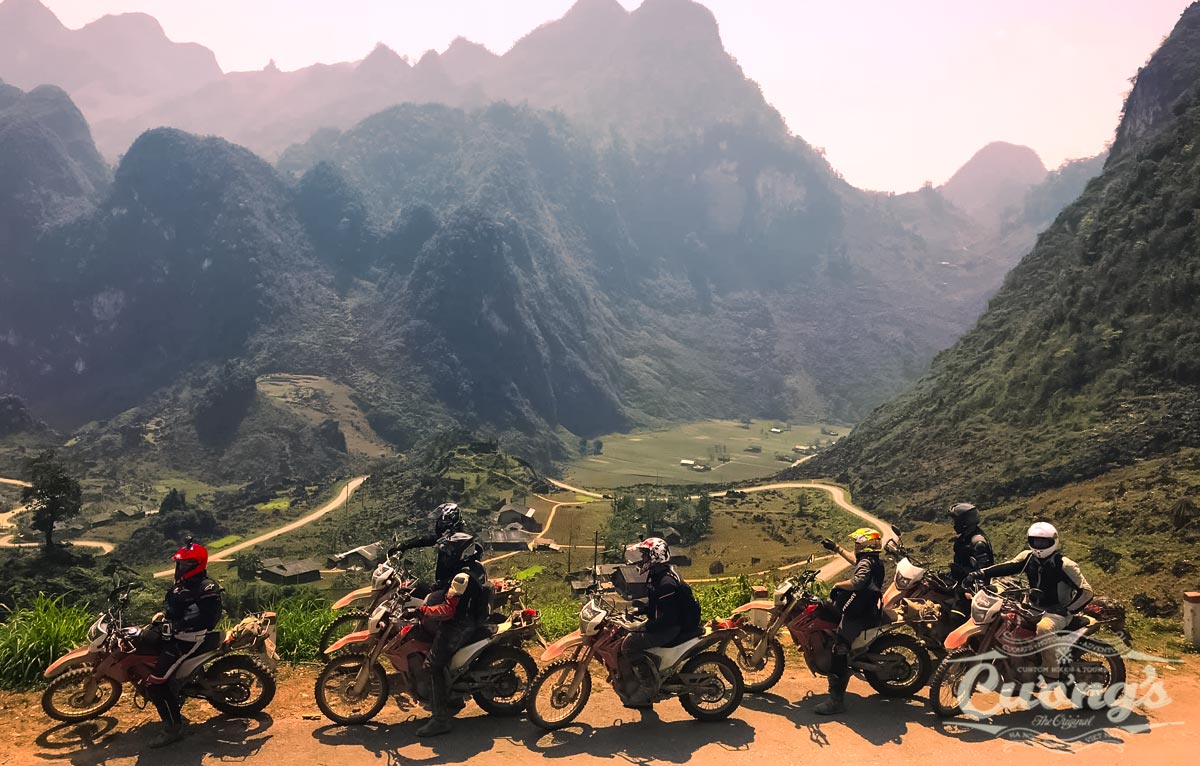
Ha Giang Motorbike Tours – Limestone Mountains, Border Roads & Dramatic Landscapes
Ha Giang motorbike tours are famous for dramatic limestone mountains, steep cliff roads, deep canyons, and winding mountain passes near the Chinese border.
Ha Giang is visually intense. The scenery changes rapidly from towering karst formations to narrow valleys, remote villages, and high mountain passes hanging above the clouds. It feels rugged, raw, and remote.
What Makes Ha Giang Unique?
- Massive limestone mountain formations
- Epic cliff-edge mountain roads
- The legendary Ma Pi Leng Pass
- Remote Chinese border regions
- Technical mountain riding
- Strong ethnic minority culture
- Dramatic photography locations
- Narrow winding roads through canyons
The riding in Ha Giang is often tighter and more technical compared to the Northwest. Riders spend much of the day climbing, descending, and navigating winding mountain roads with constant elevation changes.
Ha Giang is ideal for riders wanting:
- Epic mountain scenery
- Border exploration
- Steep passes
- Adventure photography
- Technical riding sections
- Remote villages untouched by tourism
Best Time for Ha Giang Motorbike Tours in 2026
The best riding seasons in Ha Giang for 2026 are:
- September to October: Rice harvest season with golden terraces
- October to November: Cool weather and clear mountain views
- March to April: Spring flowers and green valleys
The rice harvest period is especially spectacular in areas around:
- Hoang Su Phi
- Quan Ba
- Yen Minh
- Dong Van Plateau
During harvest season, entire mountainsides glow gold beneath the limestone peaks, creating one of the most photogenic motorcycle routes in Southeast Asia.
Watch the Ha Giang Adventure Video
Northwest Vietnam Motorbike Tours – Endless Rice Terraces, Jungle Mountains & Remote Dirt Tracks
While Ha Giang is dramatic and vertical, the Northwest Vietnam motorbike tours offer wider mountain landscapes, endless valleys, giant rice terrace systems, and some of the best off-road riding in Southeast Asia.
The Northwest region includes famous riding destinations such as:
- Sapa
- Mu Cang Chai
- Y Ty
- Bac Ha
- Moc Chau
- Mai Chau
- Ta Xua
- Son La
This region is known for massive terraced rice fields stretching across entire mountainsides. During harvest season, the scenery becomes an incredible mix of gold, green, misty mountains, and winding dirt tracks.
What Makes Northwest Vietnam Different?
- Huge panoramic mountain landscapes
- World-famous rice terraces
- Longer off-road trail systems
- More jungle riding
- Remote dirt roads and river crossings
- Less tourist traffic
- More varied terrain
- Wide valleys and rolling mountains
Compared to Ha Giang, the Northwest often feels more open and expansive. Riders spend longer periods riding dirt tracks through valleys and remote villages rather than constantly climbing steep cliff roads.
For experienced off-road riders, the Northwest often offers:
- Longer dirt riding sections
- More mud during wet season
- Remote jungle trails
- Technical river crossings
- Single-track opportunities
- Remote mountain camping opportunities
Best Rice Terrace Routes in Northwest Vietnam for 2026
The best rice harvest scenery in Northwest Vietnam is expected between:
- Late August to early October 2026
The most spectacular rice terrace routes include:
1. Mu Cang Chai
Possibly Vietnam’s most famous rice terrace destination. Endless golden rice fields wrap around steep mountain slopes with winding roads cutting through the valleys.
2. Sapa to Y Ty
A legendary high mountain route with cloud valleys, ethnic villages, and remote rice terraces near the Chinese border.
3. Bac Ha Back Roads
Remote dirt roads through isolated villages and layered rice terraces far from mass tourism.
4. Mai Chau to Ta Xua
An incredible combination of limestone valleys, jungle mountains, and hidden mountain roads with beautiful rice farming regions.
Watch the Northwest Vietnam Adventure Video
Ha Giang vs Northwest Vietnam – Trail Conditions Compared
| Feature | Ha Giang | Northwest Vietnam |
|---|---|---|
| Scenery Style | Dramatic limestone mountains | Wide rice terrace valleys and jungle mountains |
| Road Style | Tight mountain roads | Longer mixed terrain routes |
| Off-Road Difficulty | Moderate to technical | Moderate to advanced |
| Dirt Trails | Shorter technical sections | Long extended dirt tracks |
| Photography | Cliff roads and canyons | Rice terraces and wide landscapes |
| Tourism Level | More popular internationally | More remote and less crowded |
| Harvest Season Views | Beautiful mountain terraces | Massive golden rice valleys |
| Best For | Epic mountain roads | True off-road adventure riding |

Why Ride With Cuong’s Motorbike Adventure in 2026?
Cuong’s Motorbike Adventure is one of the oldest and most experienced off-road motorcycle tour companies in Vietnam, operating since 1998.
Their tours focus on:
- Professional local guides
- Experienced sweeper mechanics
- Support vehicles carrying luggage and spare parts
- Carefully researched off-road routes
- Authentic local experiences
- Safe and flexible riding pace
- Small group adventures
- Exclusive mountain routes
Unlike generic tour operators, Cuong’s team specializes in real adventure riding across Vietnam’s most remote mountain regions.
Best Off-Road Motorbike Tours in Vietnam for Rice Harvest Season 2026
If you are planning an off-road riding trip during the 2026 rice harvest season, these are some of the best options:
For riders wanting dramatic mountain roads and iconic passes, Ha Giang remains legendary. For riders searching for longer off-road sections, giant rice terrace landscapes, and deeper mountain exploration, the Northwest often delivers the ultimate Vietnam adventure.
Final Thoughts – Which Region Should You Ride in 2026?
The truth is simple: both regions are extraordinary.
Ha Giang delivers dramatic cliff roads, massive limestone mountains, and unforgettable border riding. The Northwest delivers endless rice terraces, remote dirt trails, jungle mountains, and some of the best off-road terrain in Southeast Asia.
For many riders, the ultimate solution is combining both regions into a larger Northern Vietnam expedition.
With the 2026 rice harvest season expected to produce incredible conditions across Northern Vietnam, now is the perfect time to plan an unforgettable motorcycle adventure through Vietnam’s mountains.
Start planning your ride with: Cuong’s Motorbike Adventure
Frequently Asked Questions
What is the best time for off-road motorbike tours in Vietnam?
The best time is from September to November during rice harvest season and cooler mountain weather.
Which is better for off-road riding, Ha Giang or Northwest Vietnam?
Ha Giang offers dramatic mountain roads and border scenery, while Northwest Vietnam provides longer dirt trails and larger rice terrace landscapes.
When is rice harvest season in Northern Vietnam in 2026?
Rice harvest season is expected from late August through early October 2026.
Are these tours suitable for experienced riders?
Many off-road routes in Northern Vietnam are best suited for riders with previous adventure riding experience.
What motorcycles are used for off-road tours in Vietnam?
Popular bikes include the Honda CRF250L and Honda CRF300L, ideal for Vietnam’s mountain terrain and dirt roads.
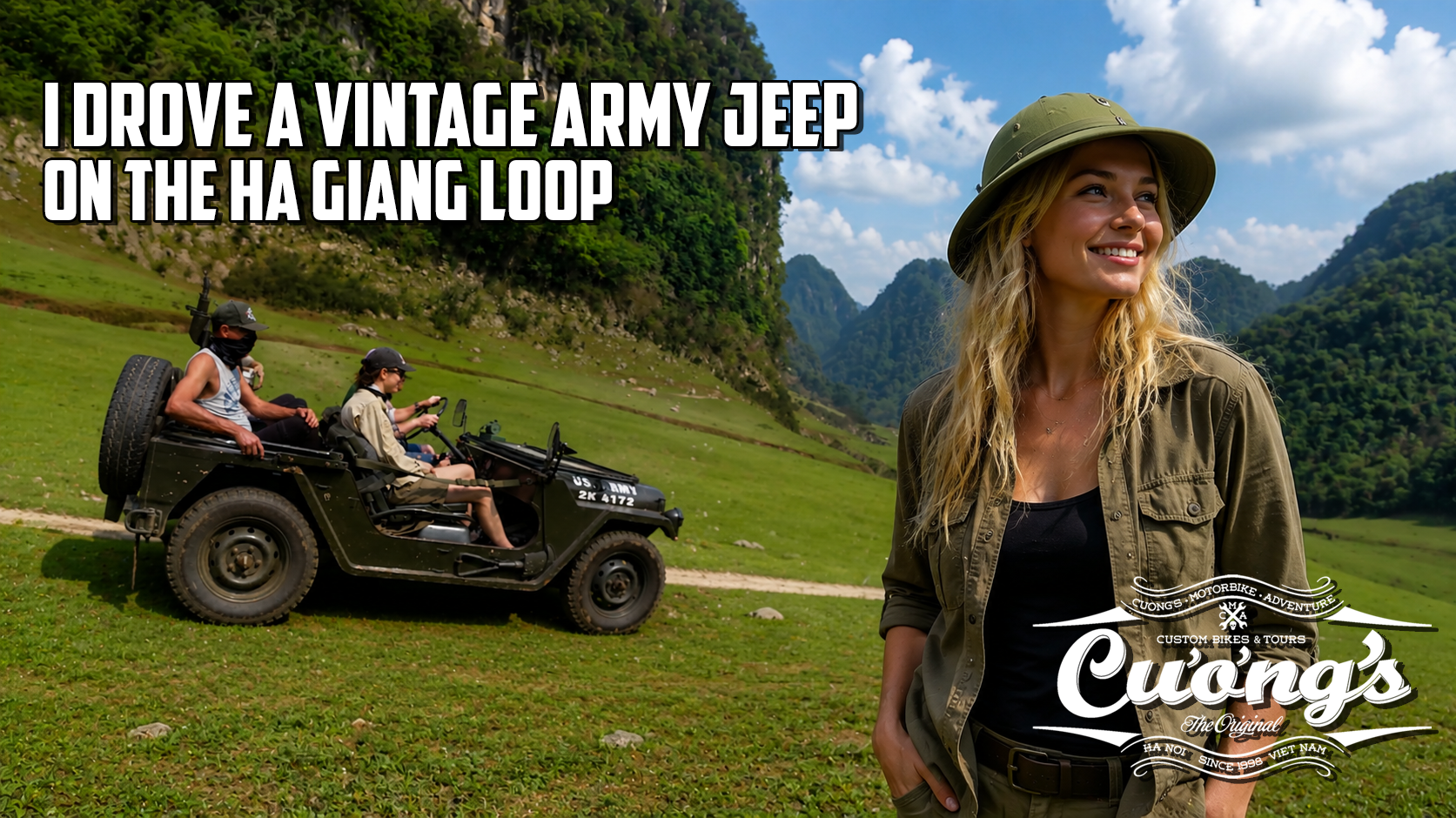
Ha Giang Self-Drive US Army Jeep – The Ultimate Open-Top Adventure in Vietnam
Ha Giang Self-Drive US Army Jeep Tour – The Ultimate Open-Top Adventure in Northern Vietnam
The Ha Giang Loop has become one of the most famous adventure routes in Southeast Asia, attracting travelers from around the world with its dramatic mountain passes, remote ethnic villages, limestone karst landscapes, and legendary winding roads. While many visitors explore the region by motorbike, a growing number of travelers are discovering that a Self-Drive US Army Jeep Tour offers a safer, more comfortable, and far more authentic way to experience Northern Vietnam.
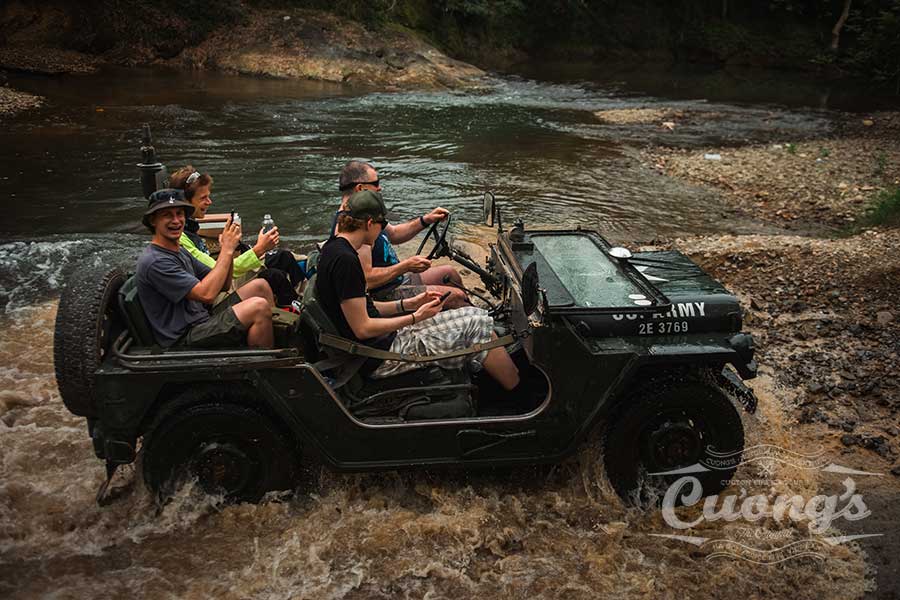
At Cuong’s Ha Giang Self-Drive Jeep Tour, travelers can explore the breathtaking mountains of Ha Giang in a vintage open-top US Army Jeep while still enjoying the freedom and excitement of a true overland adventure. These legendary vehicles combine classic military history, panoramic visibility, rugged off-road capability, and a level of comfort that many riders now prefer over motorbikes.
Ha Giang Self-Drive Jeep Tour
Ha Giang Motorbike Tours
Vietnam Jeep and 4×4 Tours
US Army Jeep Information
With increasing regulations around motorcycle licensing in Vietnam and growing concerns about road safety in the Ha Giang region, Jeep tours are quickly becoming one of the smartest and safest ways to experience the famous loop in 2026 and beyond.
For more adventure routes in Northern Vietnam, visit our main
Ha Giang Motorbike Tours Hub
or explore our growing collection of
Vietnam Jeep and 4×4 Tours.
Why Choose a Self-Drive US Army Jeep Tour in Ha Giang?
Driving a vintage open-top Jeep through the mountains of Northern Vietnam delivers a completely different experience from riding a motorbike. Instead of focusing entirely on balance, road hazards, weather conditions, and fatigue, Jeep travelers can relax and truly absorb the scenery around them.
The roads of Ha Giang twist through some of the most spectacular mountain terrain in Asia. Massive limestone peaks rise from deep valleys while cloud-covered passes connect tiny ethnic villages hidden near the Chinese border. In an open-top Jeep, you experience the landscapes with unrestricted panoramic visibility and without the physical exhaustion that often comes with long-distance motorcycle riding.
Unlike enclosed vehicles, the open military-style Jeep creates a direct connection with the environment. You smell the mountain air, hear village life, and feel immersed in the terrain rather than separated from it.
Benefits of a Ha Giang Jeep Tour
- Open-top panoramic mountain views
- Safer option for travelers without advanced riding experience
- Ideal for couples, photographers, and adventure travelers
- Comfortable seating for long mountain days
- Protection from fatigue compared to motorcycles
- Ability to carry luggage and camera equipment safely
- Perfect for changing mountain weather conditions
- Vintage military Jeep experience unique to Vietnam
- Professional support team and route planning
- Excellent option for travelers concerned about new licensing regulations
The Authentic Experience of Driving an Open-Top US Army Jeep
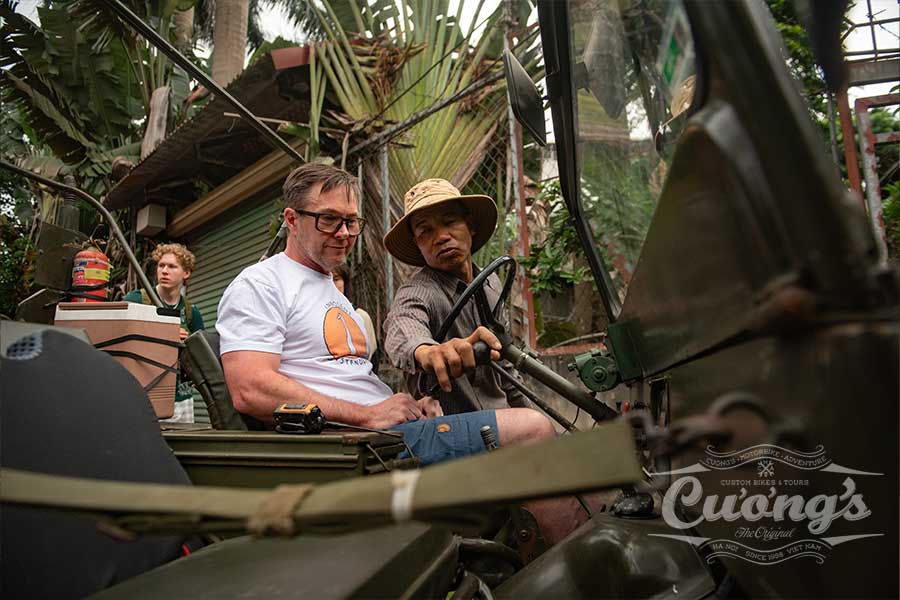
One of the biggest reasons travelers choose a Jeep tour in Ha Giang is the atmosphere and authenticity of the journey itself. These classic US Army Jeeps are not modern tourist vehicles pretending to be adventurous — they are rugged machines originally designed for harsh terrain and remote conditions.
The vintage military styling perfectly matches the raw landscapes of Northern Vietnam. As you climb narrow mountain roads and descend into deep valleys, the Jeep feels like part of the adventure rather than simply transportation.
Travelers regularly describe the experience as cinematic. The combination of dramatic roads, towering cliffs, remote ethnic communities, and the sound of the Jeep engine echoing through the mountains creates a feeling that modern SUVs simply cannot replicate.
The open-top design also makes photography and filming dramatically easier. Travelers can capture sweeping landscapes, roadside villages, and mountain passes without constantly stopping to remove helmets or maneuver motorcycles.
For content creators, photographers, YouTubers, and travel filmmakers, a Jeep tour provides one of the best ways to document the Ha Giang Loop while still enjoying the experience itself.
Highlights of the Ha Giang Self-Drive Jeep Tour
Ma Pi Leng Pass
Often called the most spectacular mountain road in Vietnam, Ma Pi Leng Pass cuts along the edge of massive limestone cliffs overlooking the emerald Nho Que River below. The open-top Jeep experience here is unforgettable, with uninterrupted views across the Dong Van Karst Plateau.
Dong Van Karst Plateau
Recognized as a UNESCO Global Geopark, the Dong Van Plateau contains some of the most dramatic geological formations in Southeast Asia. The region is home to remote villages, ancient stone houses, and winding mountain roads that feel untouched by modern development.
Ethnic Minority Villages
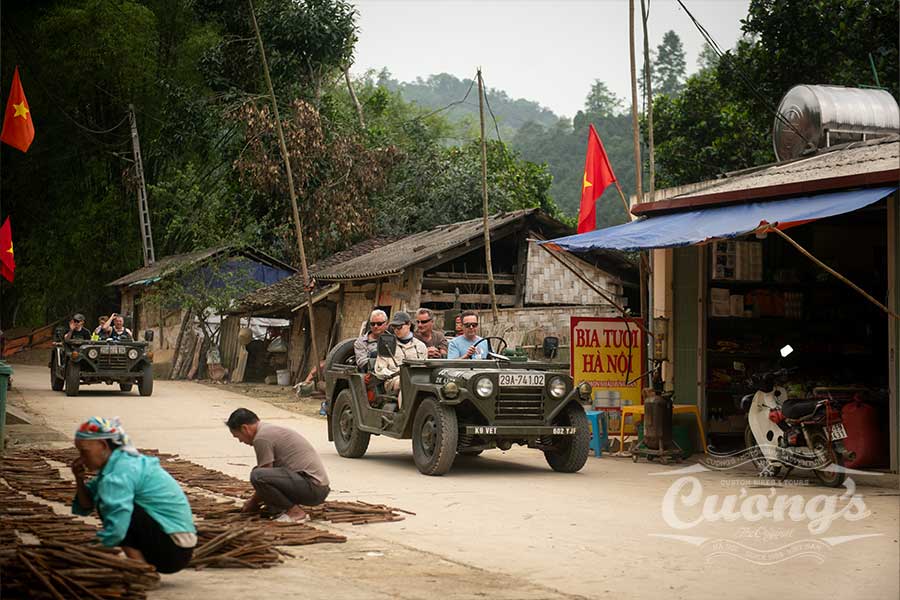
Ha Giang is home to numerous ethnic communities including the Hmong, Tay, Dao, Lo Lo, and Giay people. Jeep tours provide a comfortable way to visit remote villages while learning about traditional cultures, markets, farming methods, and mountain life.
Remote Border Roads
Many routes near the Chinese border remain quiet and lightly traveled compared to the main tourist loop. The Jeep allows travelers to access remote roads and hidden valleys while maintaining comfort and safety.
Mountain Passes and River Valleys
The route constantly changes between high mountain ridges, river valleys, terraced fields, and limestone canyons. Every hour of driving reveals new landscapes and different perspectives of Northern Vietnam.
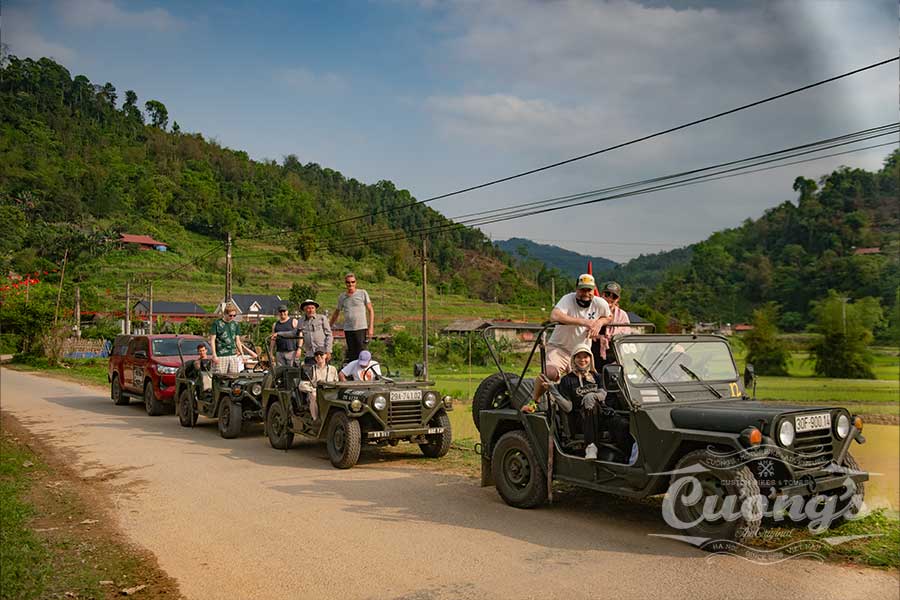
2026 Ha Giang Motorbike Regulations and Why Jeep Tours Are Becoming More Popular
In recent years, authorities in Vietnam have increased enforcement of motorcycle licensing regulations, especially in major tourism areas such as Ha Giang. Foreign travelers riding motorcycles without the correct documentation may face fines, insurance issues, or legal complications. :contentReference[oaicite:0]{index=0}
Vietnam only officially recognizes certain International Driving Permits issued under the 1968 Vienna Convention, and travelers must also possess a valid motorcycle license from their home country that matches the bike category being ridden. :contentReference[oaicite:1]{index=1}
Many travelers arriving in Vietnam discover too late that their home country’s license or International Driving Permit is not legally recognized for motorcycle use in Vietnam.
At the same time, concerns about safety on the Ha Giang Loop have increased due to inexperienced riders attempting difficult mountain roads in unpredictable weather conditions. Recent international media coverage has highlighted the risks associated with inexperienced motorcycle travel in the region. :contentReference[oaicite:2]{index=2}
For this reason, many travelers in 2026 are choosing Jeep tours instead of motorcycles. A Jeep allows visitors to legally and safely experience the same incredible landscapes without the physical demands and licensing complications associated with self-riding a motorbike.
Why Jeep Tours Are the Safer Choice in 2026
- Greater stability on mountain roads
- Protection from sudden weather changes
- No need for advanced motorcycle riding skills
- Reduced fatigue on long mountain routes
- Safer for couples and families
- Ideal for photographers and filmmakers
- Lower risk during rain and fog conditions
- More comfortable during cold winter months
- Professional route support and local knowledge
International Driving Permit Guide for Vietnam Jeep and Motorbike Tours
Travelers planning to drive vehicles in Vietnam should carefully research licensing requirements before arrival.
Motorbike Requirements
For motorcycles, Vietnam generally requires:
- A valid motorcycle license from your home country
- An International Driving Permit issued under the 1968 Vienna Convention
- Motorcycle category endorsement (A or A1 depending on engine size)
Travelers without the correct documentation may not be legally covered by insurance while riding. :contentReference[oaicite:3]{index=3}
Why Many Travelers Prefer Jeep Tours
A Jeep tour significantly reduces the stress associated with licensing uncertainty and difficult riding conditions. Instead of focusing on traffic enforcement, road hazards, and technical riding, travelers can fully enjoy the landscapes and cultural experiences that make Ha Giang famous.
This has made Jeep tours especially popular among:
- Couples
- Photographers
- Adventure travelers over 30
- Families
- Travel creators and YouTubers
- Travelers without motorcycle experience
- Visitors concerned about safety regulations
The Best Time to Experience a Ha Giang Jeep Tour
Ha Giang can be visited year-round, but each season offers different scenery and experiences.
September to November
One of the most popular seasons with clear skies, cool temperatures, and golden rice terraces across the mountains.
December to February
Winter creates dramatic misty mountain scenery and cold temperatures in higher elevations. Jeep tours provide more comfort during colder conditions.
March to May
Spring brings green valleys, blooming flowers, and excellent visibility throughout the region.
June to August
Summer offers vibrant green landscapes and fewer tourists, though occasional heavy rain can affect road conditions.
Professional Support and Local Experience
One of the biggest advantages of touring with Cuong’s Motorbike Adventure is the experience of the local team. With decades of experience operating adventure tours across Northern Vietnam, the company understands the terrain, weather patterns, road conditions, and cultural aspects of the region.
Travelers benefit from:
- Carefully planned routes
- Reliable vehicles
- Local guides with regional knowledge
- Support crew and logistics
- Quality accommodation
- Flexible pace and itinerary support
- Authentic cultural experiences
Unlike rushed backpacker-style tours, the focus is on delivering a safe, comfortable, and immersive adventure experience.
Watch Our New Ha Giang Jeep Tour Video
Our latest video showcases the incredible scenery, open-top Jeep atmosphere, mountain passes, remote valleys, and authentic adventure experience of our Ha Giang Self-Drive Jeep Tour.
From limestone peaks and winding roads to hidden ethnic villages and dramatic viewpoints, the video captures why Ha Giang has become one of the world’s most exciting overland destinations.
If you are searching for a safer, more comfortable, and more immersive alternative to motorcycle touring in Vietnam, this is the perfect way to explore the mountains of the far north.
Book Your Ha Giang Self-Drive Jeep Tour
Ready to experience Northern Vietnam from the seat of a legendary open-top US Army Jeep?
Explore the full tour here:
👉 Ha Giang Self-Drive Jeep Tour
Discover more Jeep adventures:
Learn more about our classic military vehicles:
Browse all Northern Vietnam routes:

2026 Ha Giang Loop and Beyond | Off-Road Motorbike Adventure
2026 Ha Giang Loop and Beyond: Riding Off-Road into Vietnam’s Real Northern Adventure
The famous Ha Giang Loop is one of Vietnam’s most spectacular rides — but for riders looking for something wilder, rougher, and far less travelled, the real adventure begins when you leave the usual loop behind.
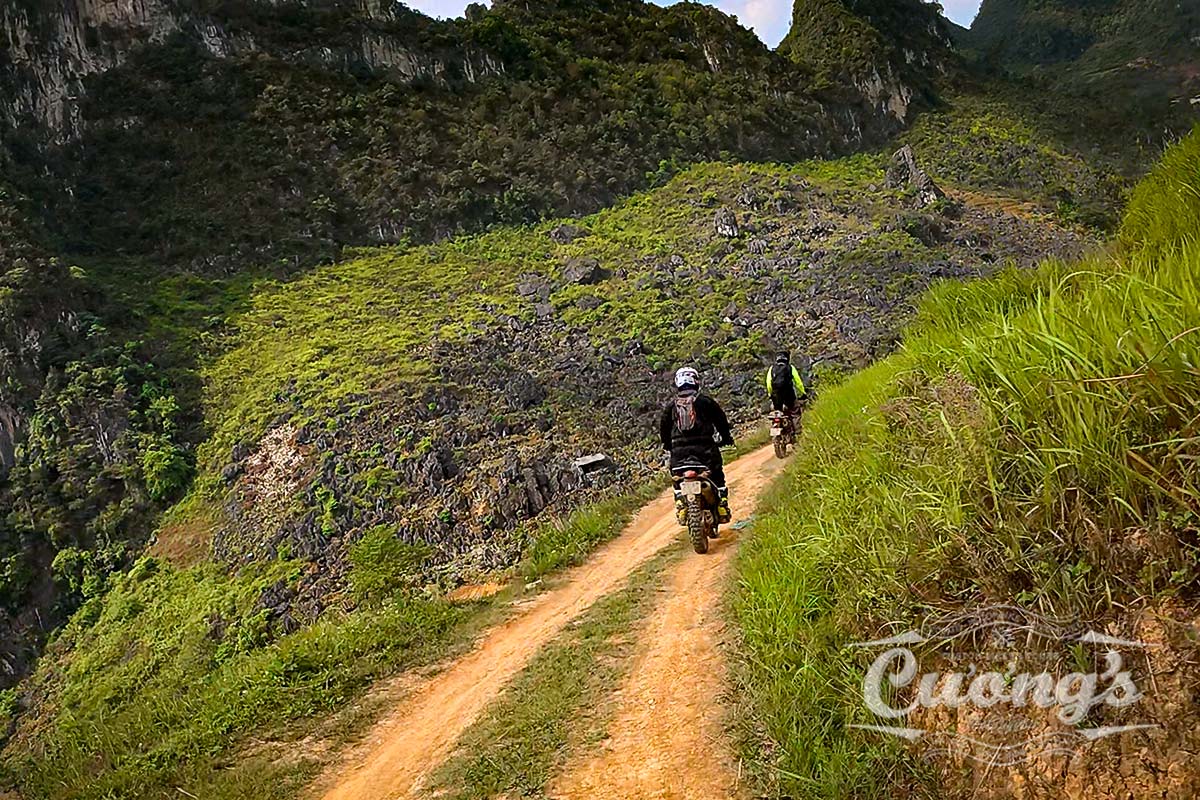
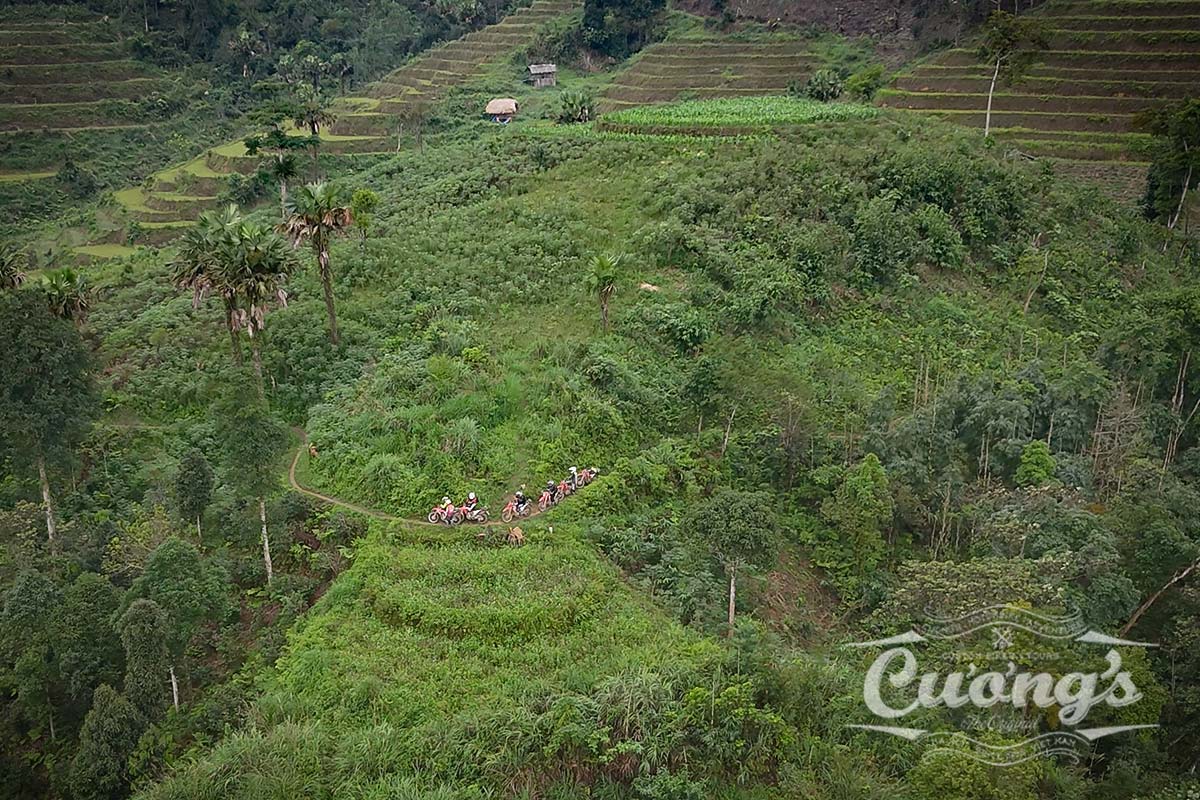
This video follows our Ha Giang Off-Road Border Ride 10D/10N, a serious motorbike adventure designed for experienced riders who want more than the standard Ha Giang Loop. It is a ride into the backcountry — through limestone mountains, muddy trails, ethnic minority villages, and remote roads running close to the Vietnam–China border.
Beyond the Usual Ha Giang Loop
The classic Ha Giang Loop is beautiful, but it has become one of Vietnam’s best-known travel routes. Many riders now follow the same loop roads through Quan Ba, Yen Minh, Dong Van, Meo Vac, and Ma Pi Leng Pass. The scenery is still world-class, but the sense of discovery can disappear quickly when every viewpoint is full of other travellers.
Our off-road border ride takes a different approach. Instead of staying only on the main loop, we use Ha Giang as a gateway into the rougher and more remote parts of northern Vietnam. The route pushes onto dirt tracks, broken mountain roads, hidden valleys, and trails that most tourists will never see.
You still experience the dramatic landscapes that make Ha Giang motorbike tours famous — but with more mud, more challenge, fewer crowds, and a much stronger feeling of real adventure.
What Makes This Ride Different?
This is not a casual sightseeing loop. The Ha Giang Off-Road Border Ride is built for riders who enjoy technical terrain and long days in the saddle. Some sections are smooth and scenic, but others can include rocky climbs, muddy forest trails, water crossings, steep descents, and narrow tracks through remote mountain villages.
- Remote off-road tracks away from the standard Ha Giang Loop
- Border roads close to China
- Mountain passes, river crossings, and dirt trails
- Ethnic minority villages and local markets
- Professional local guide, mechanic, and support crew
- Adventure riding for experienced off-road riders
A Real Off-Road Motorbike Adventure in Northern Vietnam
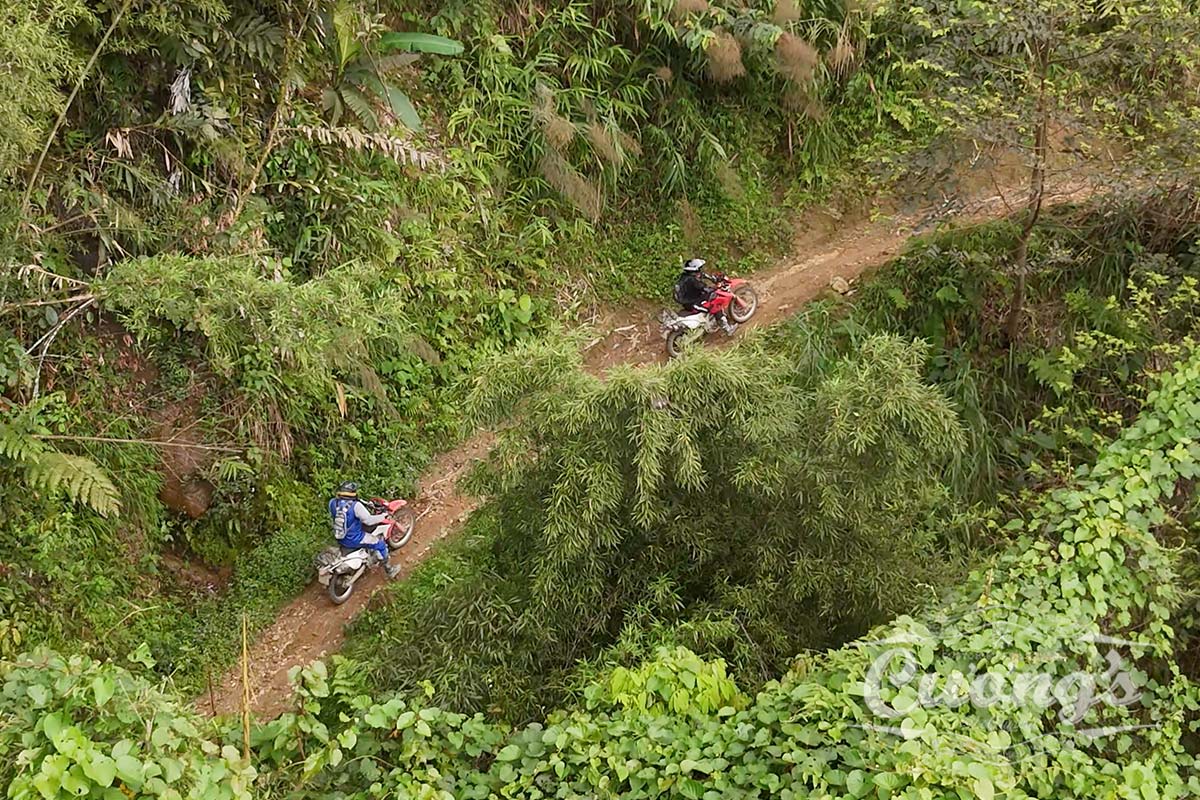
Northern Vietnam is one of Asia’s best regions for adventure motorcycling. The mountains are steep, the weather changes quickly, and the road conditions can shift from perfect tarmac to broken dirt within minutes. That is exactly what makes riding here so exciting.
On this journey, riders leave Hanoi and head north toward the highlands, gradually moving from busy lowland roads into quieter mountain country. The deeper you go, the more dramatic the riding becomes. The landscape opens into limestone peaks, deep valleys, terraced fields, and small communities scattered along the mountain slopes.
For riders searching specifically for technical terrain, our Vietnam off-road motorbike tours are designed to get away from the easy routes and into the places where adventure riding still feels genuine.
Who Is This Tour For?
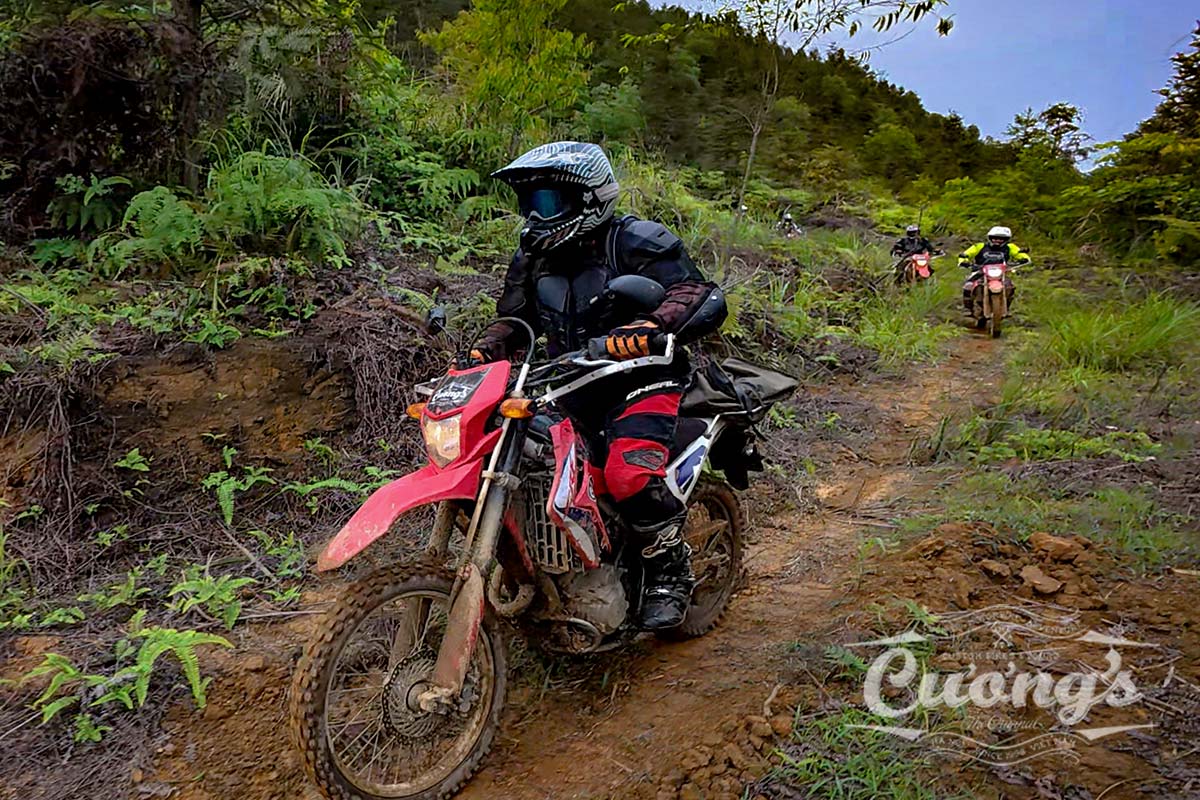
This ride is best suited to confident motorbike riders with previous off-road experience. You do not need to be a professional racer, but you should be comfortable standing on the pegs, handling loose surfaces, managing steep climbs, and riding for full days in changing conditions.
If your idea of a perfect day involves clean tarmac, short distances, and easy café stops, the regular Ha Giang Loop may be a better fit. But if you want dirt, dust, mud, border tracks, and a proper expedition feeling, this ride is built for you.
Watch the Ride. Then Come Ride It.
Experience the full Ha Giang Off-Road Border Ride on video, then explore the complete 10-day tour itinerary.
Ha Giang in 2026: Why Go Further?
In 2026, Ha Giang will continue to attract riders from around the world. The loop is famous for good reason — Ma Pi Leng Pass, Dong Van Karst Plateau, and the mountain roads around Meo Vac are unforgettable. But popularity also means more traffic, more group tours, and more riders following the same route.
Going “Ha Giang Loop and beyond” means using the region as the beginning of a bigger adventure. It means riding past the normal photo stops and into the harder, quieter, more rewarding parts of the north. It is the difference between seeing Ha Giang and truly riding it.
Plan Your Ha Giang Off-Road Ride
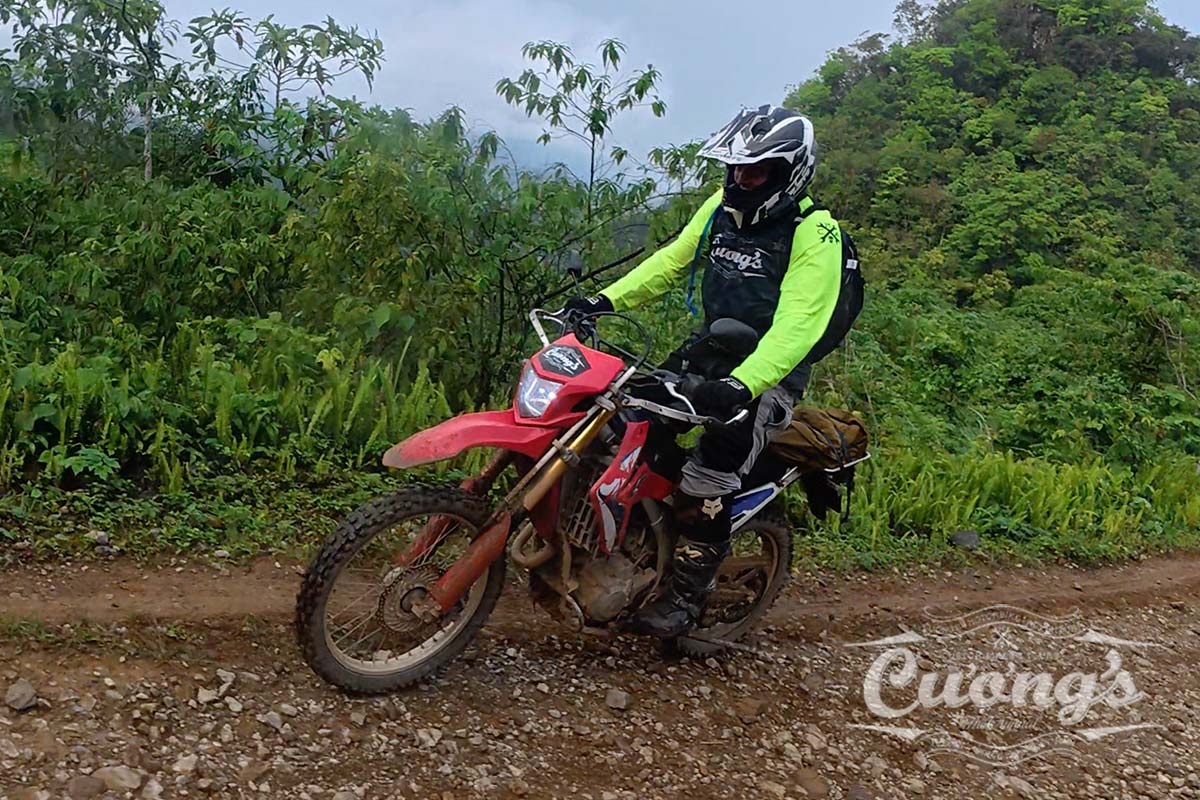
Cuong’s Motorbike Adventure has been guiding riders through Vietnam for decades, with experienced local guides, reliable bikes, mechanical support, and deep knowledge of the northern mountain routes. Our Ha Giang rides are not generic copy-and-paste tours — they are built from years of real riding experience.
Explore more options on our Ha Giang Motorbike Tours hub page, browse our dedicated Vietnam Off-Road Motorbike Tours, or go straight to the full Ha Giang Off-Road Border Ride 10D/10N tour page.
Final Thoughts
The Ha Giang Loop is beautiful, but the best stories often begin where the usual route ends. This off-road border ride is for riders who want challenge, remoteness, and the feeling of discovering Vietnam from the saddle of a dirt bike.
If you are planning a 2026 motorbike adventure in Vietnam and want something more serious than the standard tourist loop, this is the ride to watch — and the ride to join.
Ready to Ride Beyond the Ha Giang Loop?
Book the Ha Giang Off-Road Border Ride and experience northern Vietnam the hard, beautiful, unforgettable way.
Ha Giang Motorbike Tour 7 Days | Border Ride Vietnam
7D/7N Ha Giang Motorbike Tour – Vietnam’s Ultimate Border Ride Adventure
Watch the 7 Day Ha Giang Motorbike Tour Video
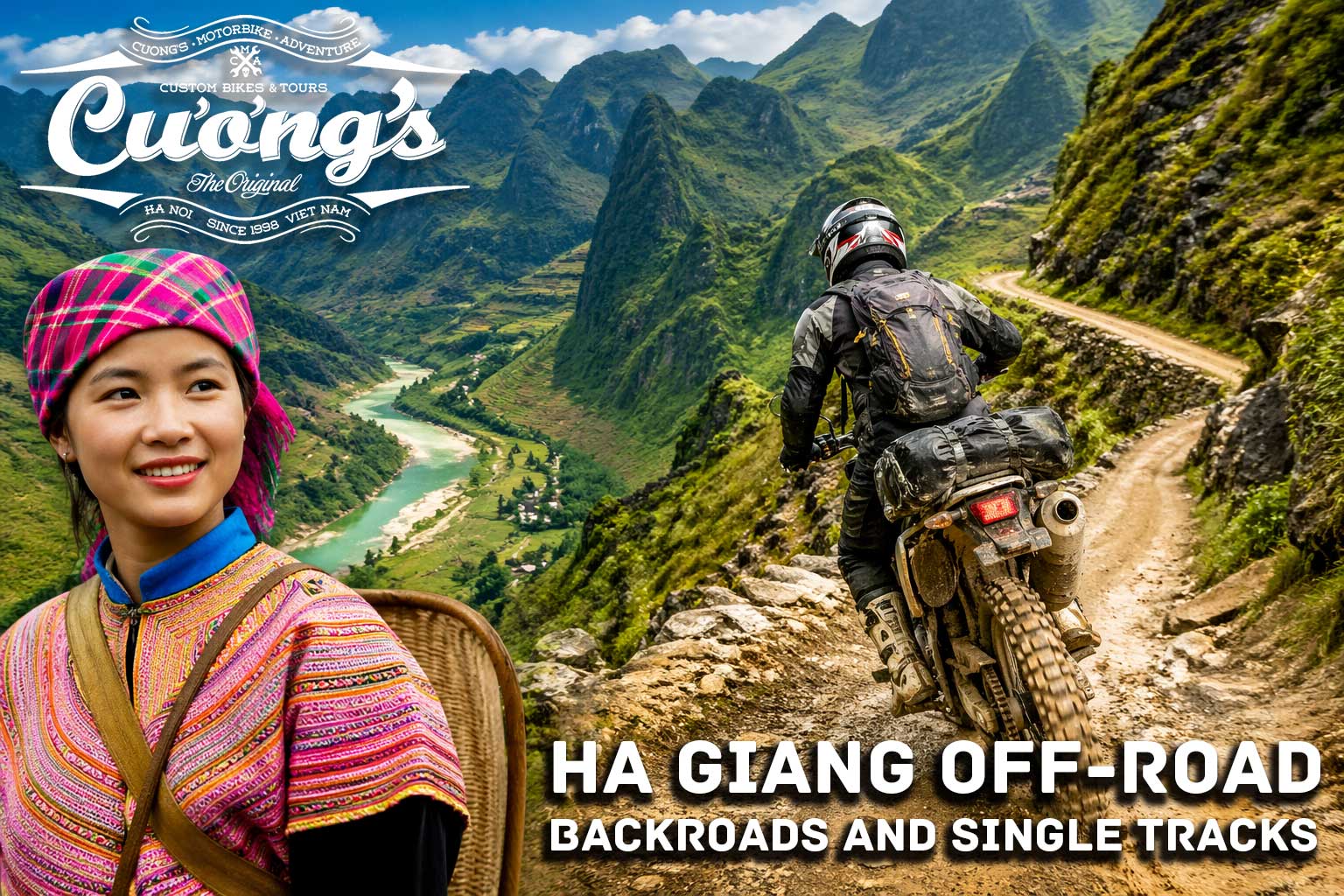
Experience the full journey through northern Vietnam’s most remote mountain landscapes. This 7-day ride goes far beyond the standard loop.
What Makes This 7 Day Ha Giang Motorbike Tour Different?
This is not just the Ha Giang Loop. Our extended border route takes you deeper into remote regions with fewer tourists, more challenging terrain, and a more authentic riding experience.
The Route – Beyond the Ha Giang Loop
Ride through Ha Giang, Dong Van, Meo Vac, and the legendary Ma Pi Leng Pass. This journey includes remote border roads, limestone mountains, and some of the most scenic riding in Vietnam.
Real Off-Road Riding in Ha Giang
Expect a mix of paved roads and off-road terrain including dirt tracks, river crossings, and technical mountain sections. This is real adventure riding.
Local Culture & Ethnic Villages
Meet local communities including H’mong, Tay, and Dao people. Experience traditional village life far from mass tourism.
Why Ride With Cuong’s Motorbike Adventure
Fully guided tours with experienced English-speaking guides, mechanic support, backup vehicle, and premium bikes including Honda CRF250L, CRF300L, and CB500X.
Explore More Ha Giang Motorbike Tours
Browse all Ha Giang motorbike tours or view the full
7 Day / 7 Night Ha Giang Border Tour.
Ready to Ride Ha Giang?
Book your adventure or explore more tours across Vietnam.

North-West Vietnam Sapa Loop Off-Road Motorbike Tour 2026
North-West Vietnam Sapa Loop Off-Road Motorbike Tour 2026 | Cuong’s Motorbike Adventure
Take on one of Vietnam’s most spectacular and least-traveled routes with our 8 Day / 8 Night North-West Sapa Loop Off-Road Motorbike Tour. This is not just a tour — it’s a true expedition into the wild mountains of Northern Vietnam. Starting from Hanoi, this epic journey takes you deep into the rugged North-West, looping through the breathtaking landscapes of Sapa and beyond.
Expect dramatic mountain passes, misty valleys, and endless off-road riding challenges. You’ll ride through remote regions where few travelers go, tackling dirt tracks, river crossings, rocky trails, and high mountain passes. Along the way, experience authentic local culture in traditional villages of the H’mong, Dao, Tay, and Thai ethnic groups. This is Vietnam at its rawest — untouched, remote, and unforgettable. WHY RIDE WITH US Fully guided adventure with experienced road captains Mechanic support + backup vehicle Premium bikes (CRF250L / CRF300L / CB500X) Small groups, flexible pace Real off-road riding — not tourist routes EXPLORE MORE 👉 Official Website: https://cuongs-motorbike-adventure.com 👉 Full Tour Details: https://cuongs-motorbike-adventure.co… 👉 Ha Giang Tours: https://cuongs-motorbike-adventure.co… 👉 Ho Chi Minh Trail Tours: https://cuongs-motorbike-adventure.co… CONTACT US 👉 WhatsApp: +84 918 763 515 👉 Email: [email protected] Cuong’s Motorbike Adventure Vietnam’s leading premium motorbike tour operator — featured in BBC Top Gear Vietnam Special and trusted by riders worldwide. Vietnam motorbike tour, Sapa motorbike loop, North West Vietnam off road, Vietnam dirt bike adventure, Sapa off road riding, Vietnam motorcycle tour, guided motorbike Vietnam, adventure riding Asia, Vietnam enduro tour, remote Vietnam travel
TOUR DE NAM with Transmoto
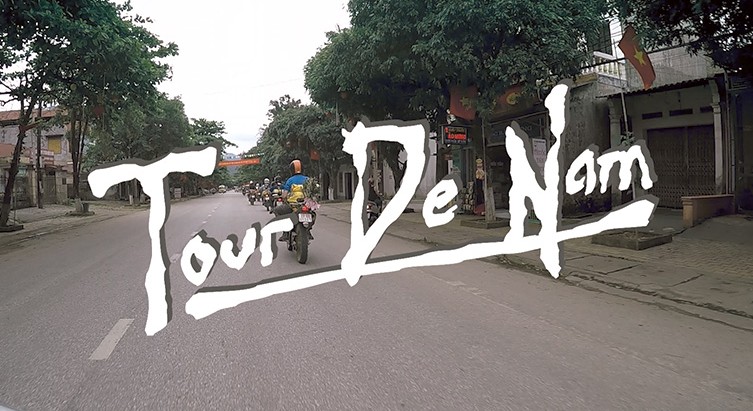
Transmoto‘s Andy Wigan joins a posse of Aussie dirt bike diehards for an epic 11-day, 2700km journey of discovery along Vietnam’s borders with China and Laos.
For more of an insight into the never-ending winding road that is the socialist Republic of Vietnam, and the pleasures of exploring it via motorcycle, grab yourself a copy of Transmoto’s July-August issue (#51) and visit Cuong’s Motorbike Adventure tour’s website.
Northwest Vietnam Motorbike Tours | Guided On-Road & Off-Road Adventures
Northwest Vietnam Motorbike Tours
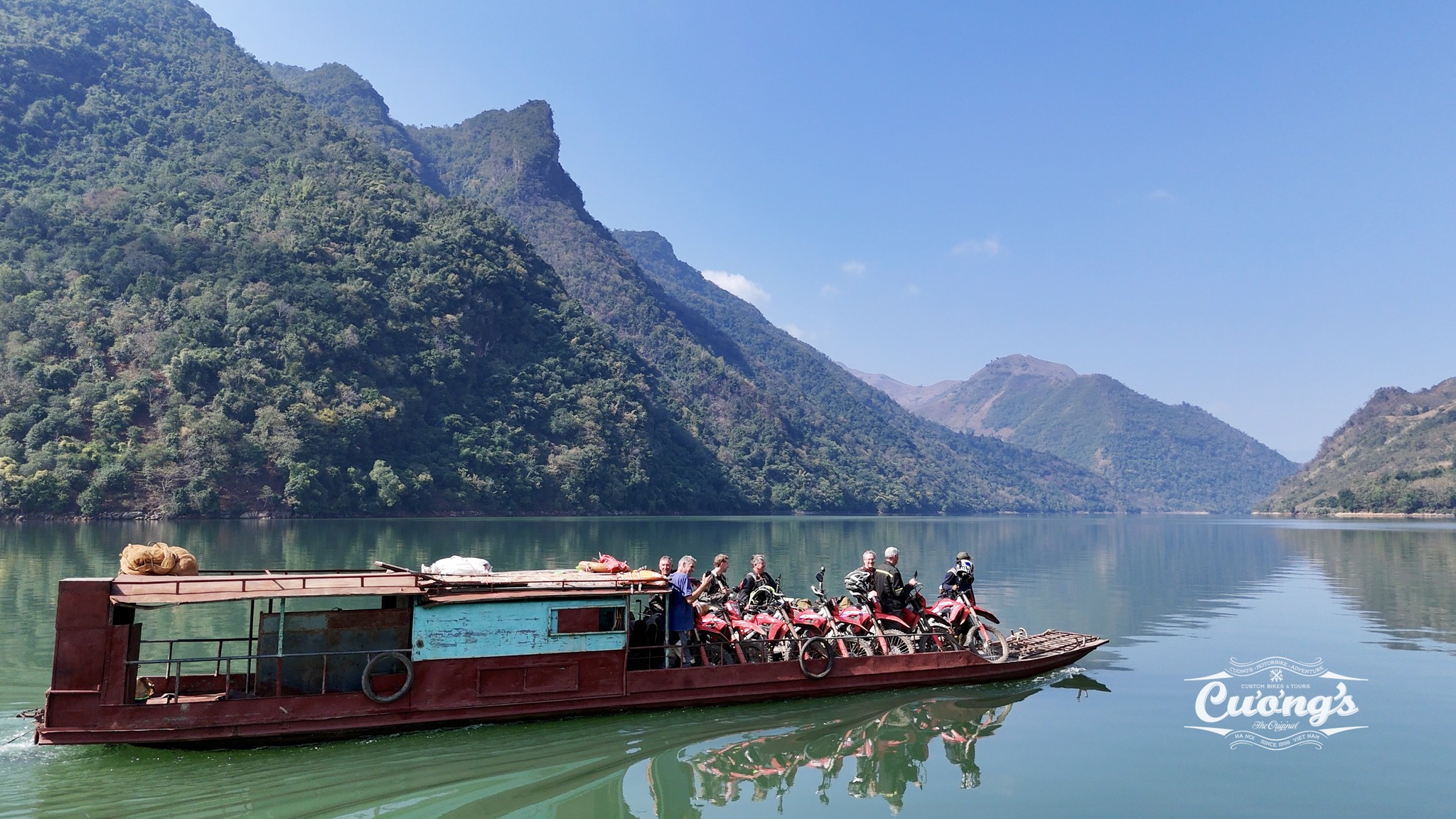
Northwest Vietnam motorbike tours take riders into some of the most scenic and rewarding mountain landscapes in the country. From the terraced rice fields of Mu Cang Chai to the high roads around Sapa, this region is ideal for riders looking for dramatic scenery, quieter roads, and a deeper experience of northern Vietnam beyond the main tourist trail.
At Cuong’s Motorbike Adventure, our Northwest routes include both scenic guided on-road motorbike tours and more technical off-road motorbike tours in Vietnam. All of our adventures are fully guided, all-inclusive, and professionally supported, making them suitable for riders who want real adventure with expert local backup.
What Is a Northwest Vietnam Motorbike Tour?
A Northwest Vietnam motorbike tour is a multi-day guided ride through the mountain provinces west and northwest of Hanoi. Depending on the route, riders may travel through Mai Chau, Pu Luong, Moc Chau, Tu Le, Mu Cang Chai, Bac Ha, Lao Cai, and Sapa, following a mix of mountain roads, remote valleys, hill-tribe villages, and high passes.
Compared with more heavily traveled routes, Northwest Vietnam feels broader, quieter, and more remote. It is a strong choice for riders who want scenic riding, cultural variety, and long days on some of the best mountain roads in Vietnam.
Why Ride Northwest Vietnam by Motorbike?
Northwest Vietnam is one of the best regions in the country for a longer motorcycle journey. The scenery changes constantly, with limestone valleys, tea hills, forest roads, mountain passes, and rice terraces that are especially striking around Mu Cang Chai and the Sapa region.
- High mountain roads with less traffic than many better-known routes
- Terraced rice fields and seasonal landscape changes
- Ethnic minority villages and local markets
- Options for both scenic paved riding and serious off-road exploration
- Excellent route combinations with Sapa Loop motorbike tours and longer northern expeditions
Types of Northwest Vietnam Motorbike Tours
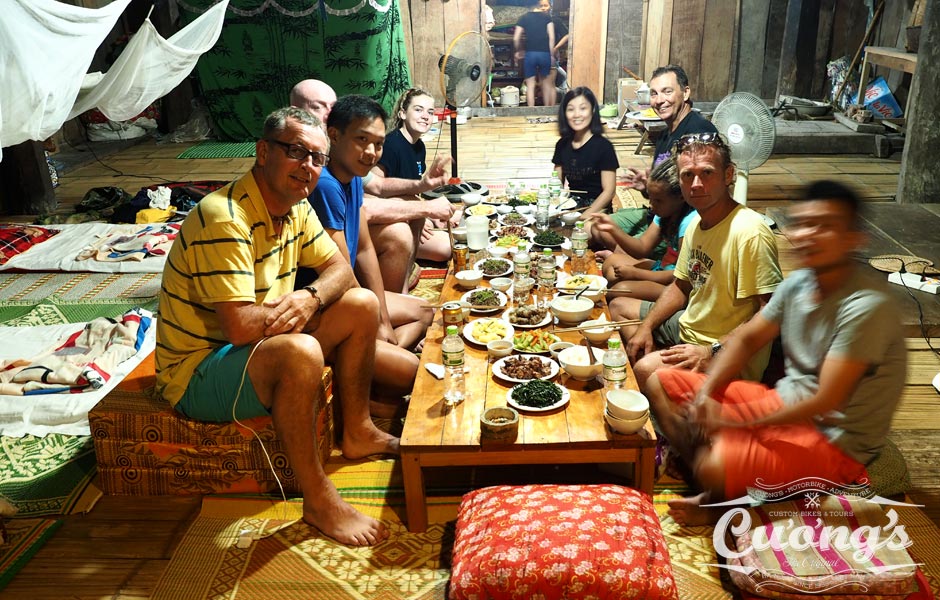
Guided On-Road Northwest Vietnam Tours
Our guided on-road Northwest Vietnam motorbike tours are ideal for riders who want spectacular scenery, mountain passes, and cultural travel on mostly paved roads. These routes suit confident riders who prefer long scenic riding days rather than highly technical terrain.
Good choices include the Northwest Vietnam Motorbike Tour 6D 6N and the Northwest Vietnam On-Road Tour by Honda CB500X or our Mai Chau 2 Day Ride
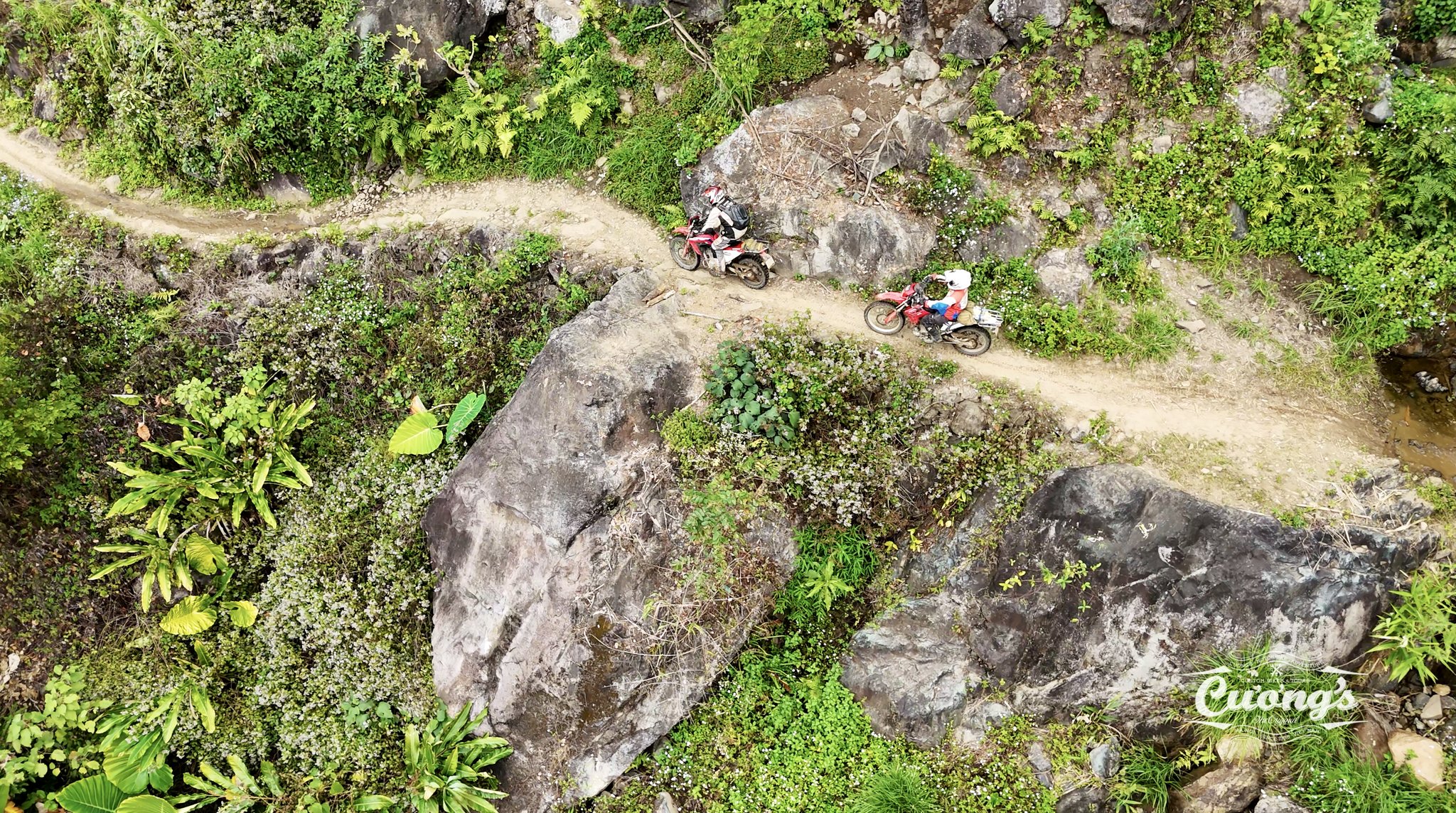
Northwest Vietnam Off-Road Motorbike Tours
For experienced riders, Northwest Vietnam also offers some of the most challenging dirt riding in the country. These tours can include jungle tracks, river crossings, mountain trails, rough backroads, and isolated sections far beyond the standard tourist circuit. A shorter Pu Luong Mai Chau Off-Road Motorbike Tour 4 Days and Northwest Off-Road Ride 8 Days
Riders looking for a more technical expedition should see the Northwest Vietnam Off-Road Motorbike Tour and the Northern Vietnam Off-Road Loop.
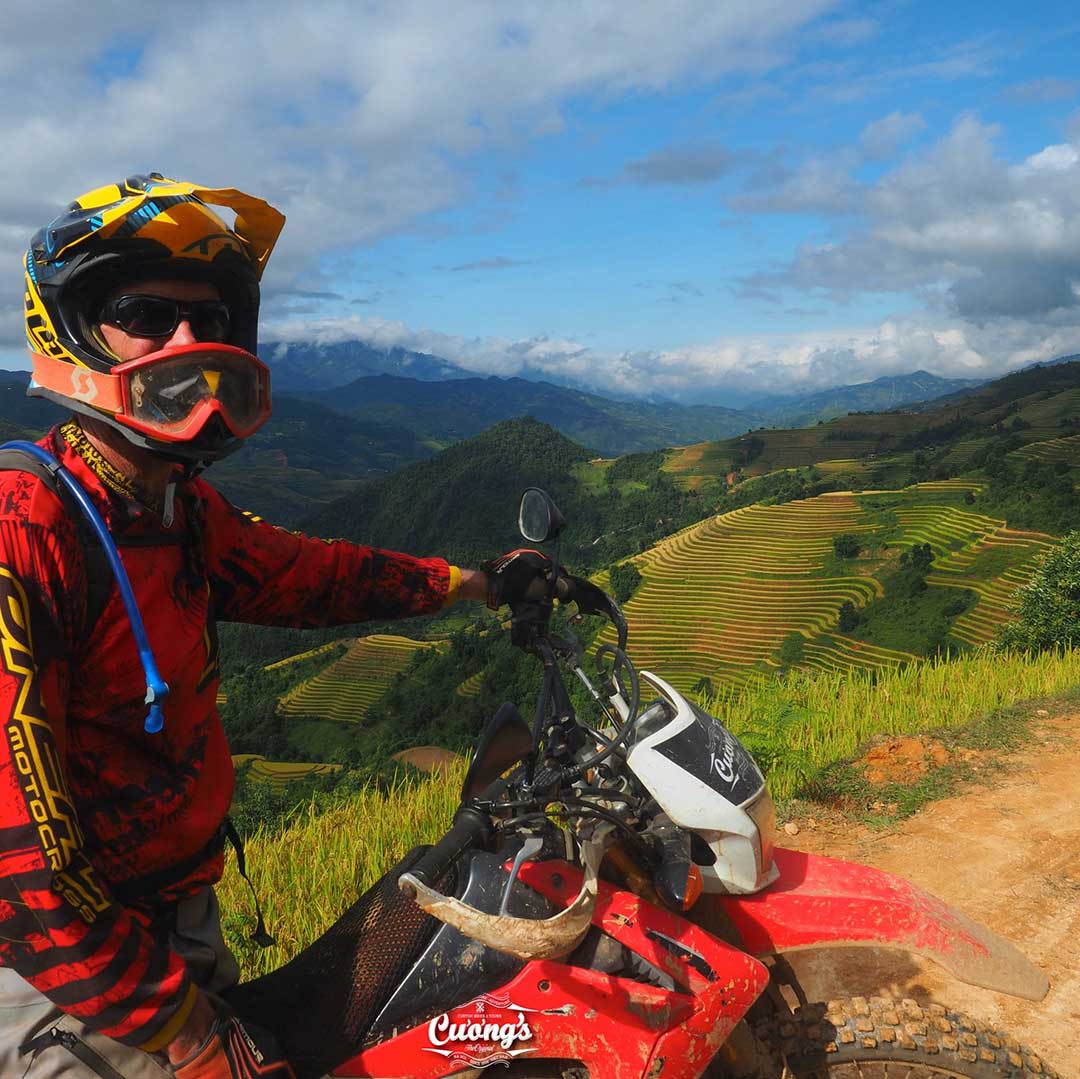
Sapa and Northwest Loop Options
The Northwest region also works very well for shorter scenic loops. The Sapa Loop Motorbike Tour
is a strong option for riders who want mountain scenery, local culture, and a shorter guided ride linked to Lao Cai and the Hoang Lien Son range.
A shorter ride can take you to Mai Chai for a quick 3 Days ride, or a Northwest On-Roand Tour 6 Days
Popular Northwest Vietnam Routes
Depending on the itinerary, a Northwest Vietnam motorbike tour may include a mix of the following regions:
- Mai Chau and Pu Luong: accessible mountain riding with scenic valleys and rural villages
- Moc Chau: tea hills, rolling countryside, and gateway riding west of Hanoi
- Tu Le and Mu Cang Chai: some of Vietnam’s most famous rice terrace landscapes
- Bac Ha and Lao Cai: mountain roads, market towns, and links toward Sapa
- Sapa: high-altitude scenery, mountain roads, and a classic finish for longer Northwest routes
Riding Difficulty and Terrain
Northwest Vietnam offers a wide range of riding conditions, so choosing the right route matters.
| Tour Style | Terrain | Best For | Difficulty |
|---|---|---|---|
| On-road tours | Mostly paved mountain roads, passes, valleys, village roads | Intermediate riders, photographers, scenic travelers | Moderate |
| Off-road tours | Dirt tracks, river crossings, mountain trails, rough backroads | Experienced off-road riders | Challenging |
| Sapa loop routes | Scenic roads with some light adventure sections depending on route | Riders wanting a shorter mountain tour | Moderate |
Who These Tours Are Best For
- Riders who want mountain scenery and quieter roads than more crowded routes
- Travelers looking for a guided Vietnam motorbike tour from Hanoi into the northern highlands
- Photographers interested in rice terraces, passes, villages, and seasonal landscapes
- Experienced riders wanting a serious Northwest Vietnam off-road expedition
- Couples or private groups who want a fully supported custom adventure
Why Ride Northwest Vietnam with Cuong’s Motorbike Adventure?
Our Northwest Vietnam motorbike tours are not budget tourist rides. Every tour is built as a guided adventure with local route knowledge, safety planning, and professional support throughout the journey.
- Fully guided, all-inclusive tours
- Experienced road captain and local riding team
- Mechanic support on demanding routes
- Well-maintained bikes including dual-sport and adventure models
- Scenic on-road and serious off-road options in the same region
- Small-group and private departures available
Related Tours in Northern Vietnam
If you are comparing northern routes, you may also want to explore our
Ha Giang motorbike tours,
the
Pu Luong off-road motorbike tour,
and the
full Vietnam motorbike tours collection.
Frequently Asked Questions About Northwest Vietnam Motorbike Tours
Is Northwest Vietnam better than Ha Giang for a motorbike tour?
They offer different experiences. Ha Giang is more famous and more concentrated, while Northwest Vietnam gives riders a broader mountain journey with longer distances, quieter roads, and strong route variety.
Are Northwest Vietnam motorbike tours suitable for intermediate riders?
Yes, many on-road Northwest tours suit intermediate riders. Off-road routes are better for experienced riders with technical dirt experience.
What is the best time to ride Northwest Vietnam?
Spring and autumn are usually the most comfortable seasons for mountain riding, while the rice terrace periods around Mu Cang Chai can be especially attractive for photographers.
Do your Northwest Vietnam tours include support?
Yes. Our tours are fully guided, all-inclusive, and professionally supported, with route planning and on-tour assistance built into the experience.
Plan Your Northwest Vietnam Motorbike Tour
Whether you want a scenic mountain road adventure, a Sapa loop, or a demanding off-road expedition, our Northwest Vietnam motorbike tours offer some of the best riding in the country. Contact us to choose the right route based on your riding level, available time, and the style of trip you want.