
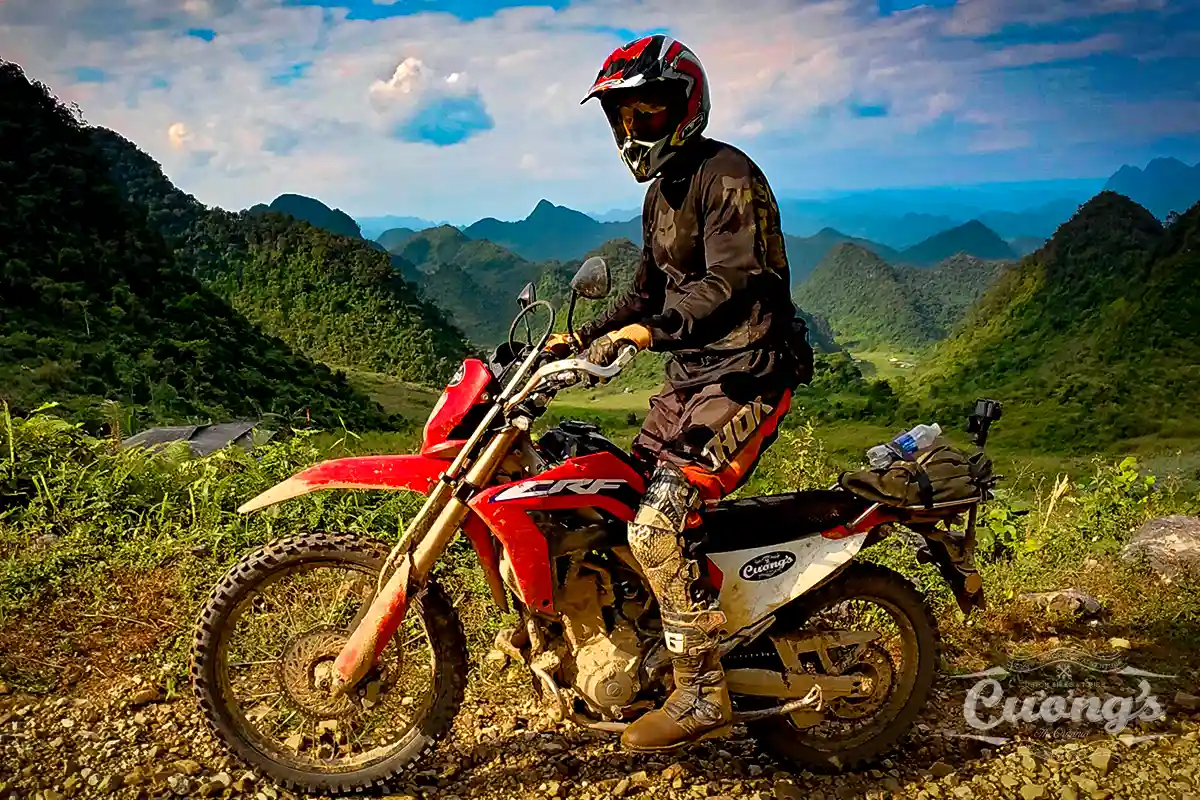
Vietnam Motorcycle Tour Itinerary: How to Choose the Right Route
Vietnam Motorcycle Tour Itinerary: How to Choose the Right Route
Vietnam is an undisputed paradise for motorcycle touring. Across its length and breadth, narrow mountain ribbons cling to vertiginous limestone karsts, coastal roads trace turquoise waters, and ancient jungle paths cut through primary rainforests. Every year, thousands of adventurous travelers travel to Hanoi or Ho Chi Minh City with dreams of throttle-blasting across one of the most culturally vibrant, geographically diverse countries in Southeast Asia.
However, motorcycling across Vietnam is far from a one-size-fits-all holiday. The country spans over 1,600 kilometers from north to south, encompassing completely different climate systems, road topologies, traffic cultures, and technical demands. A route that delights a seasoned enduro enthusiast who lives for loose gravel and off-camber hairpins could quickly turn into a grueling, high-stress ordeal for a rider used to smooth weekend highway cruising.
Choosing the right itinerary comes down to matching your technical riding ability, fitness, mental stamina, and preferred travel pace with the right region and season.
This comprehensive guide breaks down everything you need to plan your journey: an honest self-assessment of your riding abilities, a detailed deep-dive into Vietnam’s premier riding regions—the rugged Northwest, the iconic Ha Giang province, and the historic Ho Chi Minh Trail—as well as comprehensive weather breakdowns, bike selection guidelines, and route selection tips.
Table of Contents
- Route 1: Northwest Vietnam – The Roof of Indochina
Terrain and Topography
Skill Level and Technical Demands
Highlights and Iconic Passes
Ideal Seasons and Weather Hazards
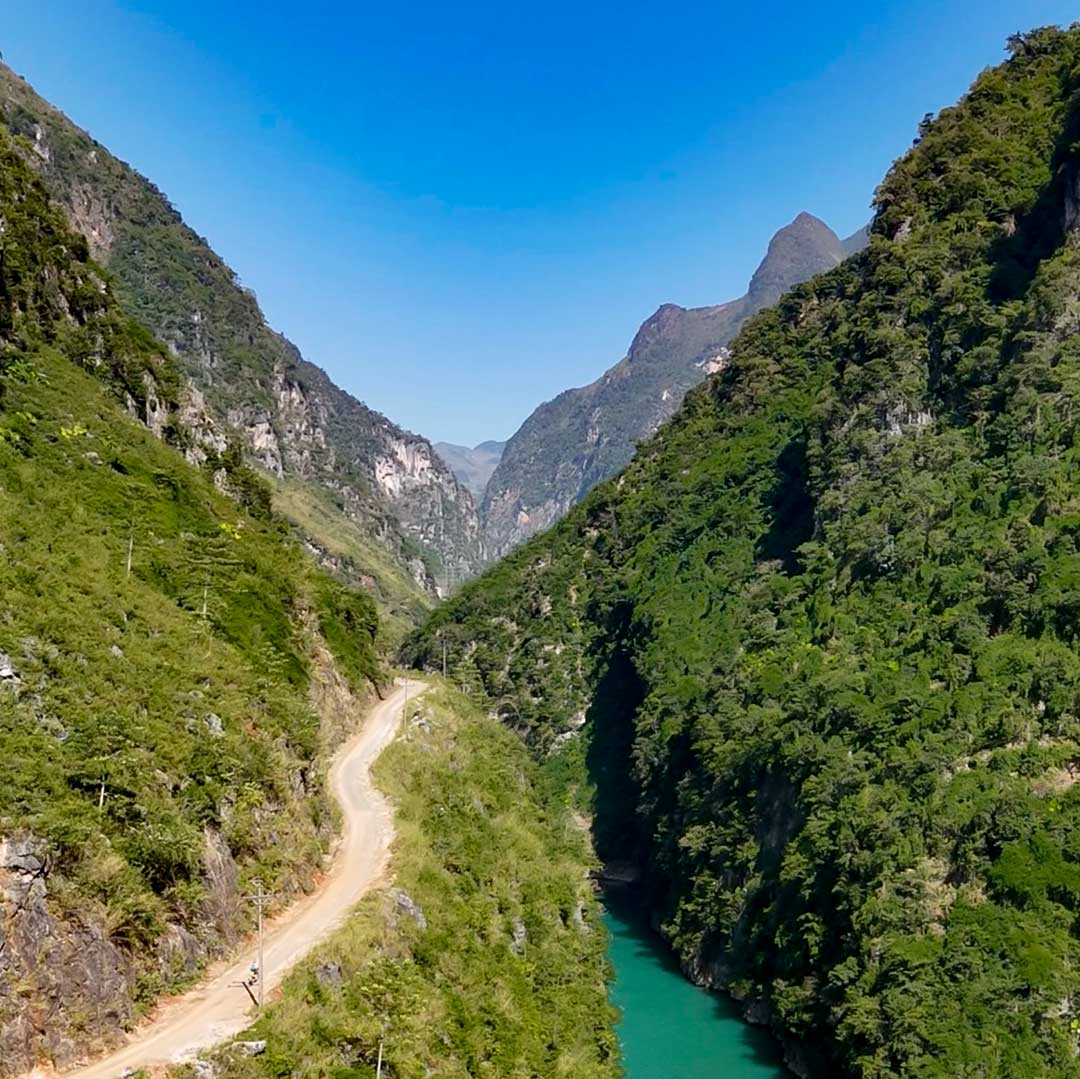
- Route 2: Ha Giang Loop – The Frontier of Limestone Karsts
Terrain and Topography
Skill Level and Technical Demands
Highlights and Iconic Passes
Ideal Seasons and Weather Hazards
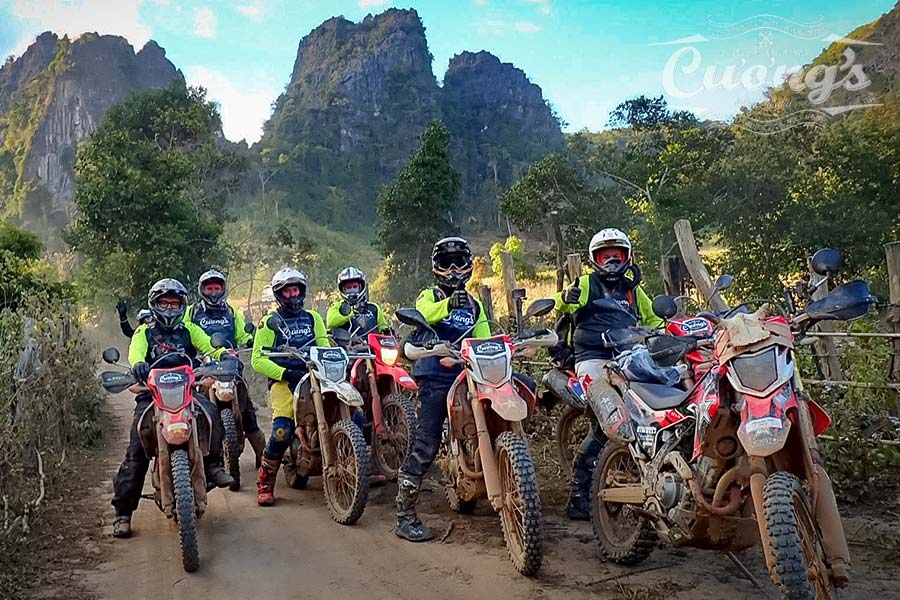
- Route 3: The Ho Chi Minh Trail – History, Jungles, and Open Cruising
Terrain and Topography
Skill Level and Technical Demands
Highlights and Iconic Passes
Ideal Seasons and Weather Hazards

1. The Philosophy of Route Planning in Vietnam
The biggest mistake riders make when designing a motorcycle tour in Vietnam is relying strictly on digital map distances and speeds.
In Western countries, covering 300 to 400 kilometers (180 to 250 miles) in a single day on a mid-sized dual-sport or touring motorcycle is a relaxed, half-day jaunt on open highways. In Vietnam, that exact same distance can easily translate into ten to twelve grueling hours in the saddle.
Why? Because road reality in Vietnam is shaped by:
- Topography: The northern and central mountains feature non-stop radius-changing switchbacks, hairpins, and steep gradients.
- Variable Pavement Quality: Smooth asphalt can abruptly turn into loose gravel, deep rutted mud, unexpected potholes, or diesel-slicked concrete.
- Mixed Traffic Dynamics: Roads are shared by roaming water buffalo, wandering children, slow-moving overloaded farm tractors, fast-moving sleeper buses cutting the apex, and thousands of scooters.
- Weather Fluctuations: Mountain passes are microclimates unto themselves; dense fog, sudden tropical deluges, and flash mudslides can halve your travel speed in a matter of minutes.
When planning your route, average your travel speed between 30 to 45 km/h (18 to 28 mph) in the northern mountains, and 45 to 60 km/h (28 to 37 mph) on central highways. A safe, sustainable daily distance is roughly 150 to 200 kilometers. Planning around realistic physical limits allows you to absorb the scenery, stop in remote villages, drink roadside cà phê sữa đá (Vietnamese iced coffee), and arrive at your evening homestay with enough energy to enjoy the culture.
2. Evaluating Your True Riding Skill Level
Be brutally honest with yourself about your riding proficiency. Riding in your home country—where lanes are strictly respected and traffic laws are uniformly enforced—does not fully prepare you for the chaotic flow of Southeast Asian transport.
Beginner / Novice
- Profile: You have held a motorcycle license for under two years or ride sporadically. You are comfortable on paved roads, can manage clutch and throttle inputs reliably, but have minimal experience with low-speed balance, tight uphill hairpins, off-road gravel, or dynamic hazards.
- What you should avoid: Technical single-track, off-road muddy passes, high-altitude cliffside routes with high exposure, and navigating heavy metropolitan traffic in Hanoi or Ho Chi Minh City without an experienced guide.
- Recommended Route: Select stretches of the paved Ho Chi Minh Road (Central Vietnam), coastal loops, or guided tours that run at an easy pace on forgiving tarmac.
Intermediate
- Profile: You ride regularly and have several thousand kilometers under your belt across various bikes. You understand counter-steering, trail braking, body-weight positioning, and clutch slipping. You have tackled occasional gravel, broken asphalt, and steep hill climbs, and you maintain your cool when traction shifts unexpectedly.
- What you should tackle: The Northwest loops, major mountain passes (like O Quy Ho and Khau Pha), and paved sections of the Ha Giang Loop.
- Recommended Route: Northwest Vietnam Motorbike Tours or
- Recommended Route: Northwest Vietnam Motorbike Tours or well-paced Ha Giang Motorbike Tours.
Advanced / Expert
- Profile: You are a seasoned adventure tourer, dirt-bike rider, or enduro pilot. You are completely unfazed by rear-wheel slides, deep rutted mud, stream crossings, loose boulder fields, rainstorms, and blind hairpins flanked by hundreds of meters of vertical drop.
- What you should tackle: Remote border trails, off-the-beaten-path single-track connecting ethnic minority villages, the rugged high-elevation passes of the northern frontier, and the technical bypasses of Ha Giang and Northwest Vietnam.
- Recommended Route: Specialized enduro extensions in Northwest Vietnam, extreme backroads of Ha Giang, and remote branches of the western Ho Chi Minh Trail.
3. Master Comparison: Regions, Difficulty, and Riding Seasons
| Region / Route | Best Experience Level | Dominant Terrain & Road Types | Daily Distance Average | Primary Scenery & Culture | Best Riding Seasons | Seasons to Avoid / Caution |
|---|---|---|---|---|---|---|
| Northwest Vietnam | Intermediate to Advanced | High alpine passes, stepped valley roads, broken asphalt, optional enduro tracks | 150 – 220 km | Grand mountain ranges (Fansipan), rice terraces (Mu Cang Chai), Black H’mong & White Thai ethnic culture | Sept – Nov (Harvest/Dry) March – May (Spring bloom) | July – Aug (Peak monsoon/landslides) Dec – Jan (Freezing drizzle/fog) |
| Ha Giang Loop | Advanced (or Experienced Intermediate) | Sheer limestone karsts, tight switchbacks, steep elevation gains, narrow canyon ledges | 120 – 180 km | UNESCO Dong Van Karst Plateau, Ma Pi Leng Pass, Tu San Canyon, authentic frontier markets | Oct – Dec (Clear skies/Buckwheat) Feb – April (Spring warmth/flowers) | June – Aug (Intense downpours/flash floods) Jan (Extreme cold and heavy mist) |
| Ho Chi Minh Trail | Beginner to Intermediate | Smooth sweeping asphalt, undulating jungle hills, rolling mountain ribbons | 180 – 260 km | Truong Son Mountain range, Phong Nha karst caves, Vietnam War battlegrounds, lush jungle | Jan – May (Mild temps, low rain) Feb – April (Prime conditions) | Sept – Nov (Typhoon season in Central Vietnam, localized flooding) |
4. Route 1: Northwest Vietnam – The Roof of Indochina
The Northwest of Vietnam represents the pinnacle of alpine riding in Southeast Asia. This region is dominated by the Hoang Lien Son mountain range, which contains Fansipan, the highest peak on the Indochinese Peninsula at 3,147 meters. For riders seeking sweeping vistas, ancient culture, and roads that carve endlessly through massive mountain shoulders, Northwest Vietnam Motorbike Tours offer an unparalleled playground.
Terrain and Topography
The topography here is immense. Unlike the abrupt, jagged limestone pillars found in Ha Giang, the Northwest features massive tectonic massifs, wide agricultural river valleys, and deeply layered valleys etched with tiered rice paddies.
Road conditions vary dramatically. Main arterial links such as Highway 32 and Highway 4D are largely paved, but ongoing exposure to heavy rainfall and tectonic shifts means you will regularly encounter roadworks, sections stripped to rough bedrock, patches of red clay mud, and loose aggregate. If you diverge onto the provincial “TL” routes or rural trails linking higher-altitude villages around Bac Ha, Sin Ho, or Mu Cang Chai, expect technical dual-sport riding.
Skill Level and Technical Demands
- Rating: Intermediate to Advanced.
- Demands: Northwest touring requires sound cornering technique, throttle control, and continuous situational awareness. You will ascend and descend long alpine gradients that can overheat your brakes if you don’t utilize engine braking.
- Physical Stamina: High. Riding through the Northwest often involves sustained 6 to 8-hour days in changing microclimates, transitioning from humid 30°C (86°F) valley floors to chilly 10°C (50°F) mountain ridges.
Highlights and Iconic Passes
- Khau Pha Pass: One of Vietnam’s legendary “Big Four” passes, Khau Pha spans roughly 30 kilometers, rising out of the mist above terraced fields in Mu Cang Chai. The road climbs through dense mountain jungle, often shrouded in cloud near the summit, testing your composure in low-visibility conditions.
- O Quy Ho Pass: The longest mountain pass in Vietnam, spanning nearly 50 kilometers across the spine of the Hoang Lien Son range between Lao Cai and Lai Chau provinces. It climbs to an elevation of over 2,000 meters, presenting steep drops, dramatic sunset horizons, and sweeping wind currents.
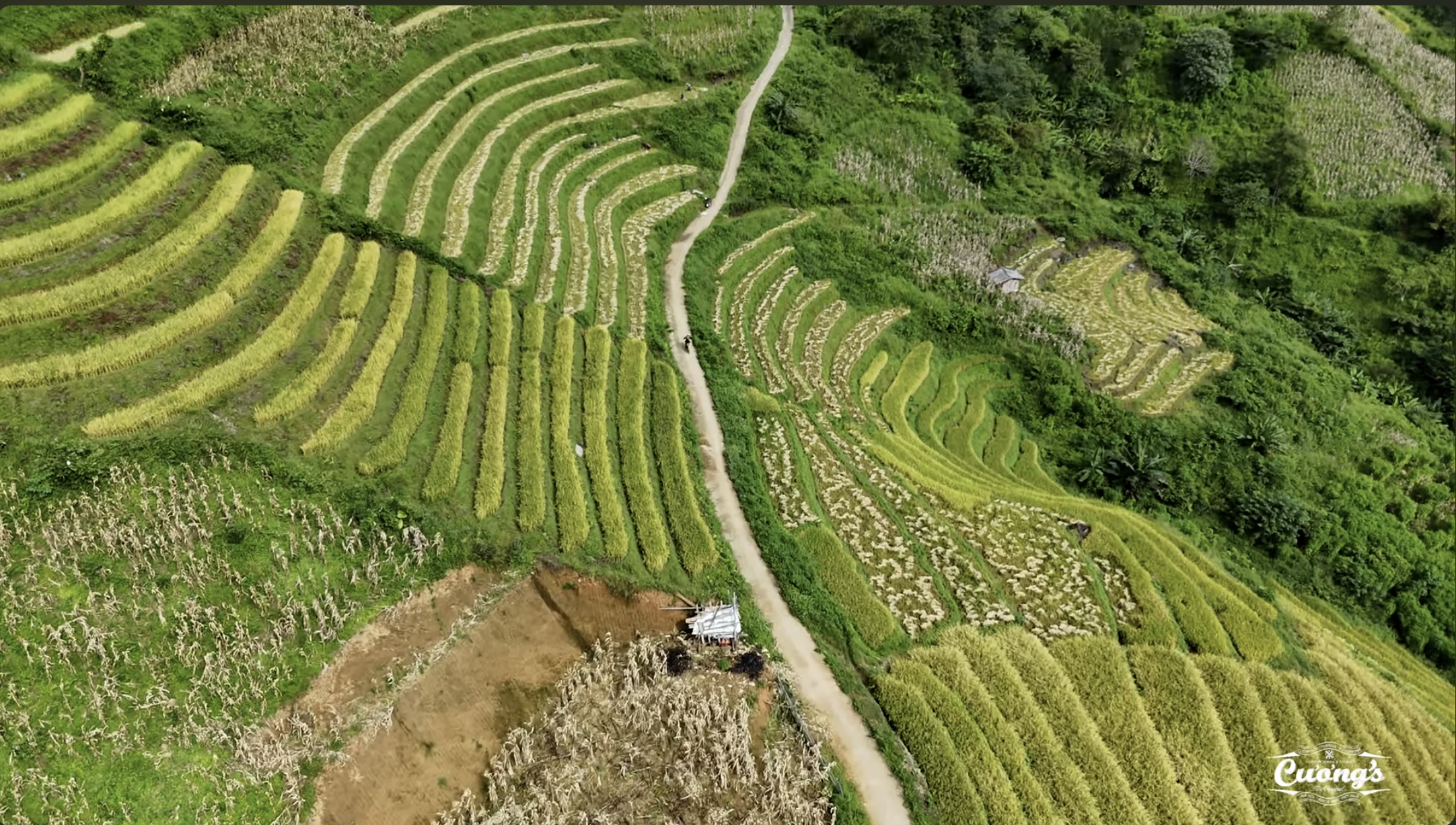
- Mu Cang Chai Terraces: A designated National Heritage site, these staircased rice paddies cascade thousands of feet down valley walls, sculpted over generations by the H’mong people.
- Mai Chau Valley: A peaceful basin carpeted in emerald rice paddies and dotted with White Thai stilt houses, serving as the quintessential gateway between the lowlands and the high northern ranges.
Ideal Seasons and Weather Hazards
- The Golden Harvest (September to Late October): This is widely considered the ultimate window to ride the Northwest. The terraced paddies turn vibrant gold before the harvest, and the summer monsoon gives way to stable, crisp mountain air with high visibility.
- Spring Awakening (March to May): A sublime time to ride. Wild peach and plum blossoms carpet the hillsides, temperatures are comfortable, and precipitation remains low.
- Hazards to Watch For: Avoid July and August if you dislike riding in heavy rain. The summer monsoon can unleash massive downpours, leading to landslides that block roads for days. During December and January, Arctic cold fronts pushing down from China can turn the Northwest passes bitterly cold, often accompanied by dense fog with visibility dropped to under five meters.
5. Route 2: Ha Giang Loop – The Frontier of Limestone Karsts
Tucked directly against the northern border with China, Ha Giang is the stuff of two-wheeled legends. It is home to the UNESCO-protected Dong Van Karst Plateau Geopark, a surreal lunar landscape dominated by black limestone peaks, canyon gorges, and vibrant frontier trade culture.
If your heart yearns for roads that defy structural logic, carved directly into towering cliff faces above emerald rivers, check out the specialized options on Ha Giang Motorbike Tours.
Terrain and Topography
Ha Giang’s geology is fundamentally unique: it features vertical limestone spires, collapsed dolines, deep fissures, and vertical drops. The road network was carved out by hand through massive civic works projects (such as the “Happiness Road”) in the mid-20th century.
The roads here are narrow, exceptionally twisting, and run alongside sheer drops that rarely feature modern crash barriers. The asphalt surface is frequently polished smooth by heavy local transit and mountain moisture, reducing traction. You will encounter sudden off-camber hairpins, 15% gradients, roaming farm animals around blind corners, and single-lane bottlenecks where oncoming trucks demand the right of way.
Skill Level and Technical Demands
- Rating: Advanced (or Very Confident Intermediate).
- Demands: Ha Giang does not tolerate target fixation or lazy cornering. The rider must possess crisp trail-braking capabilities, comfort with tight, uphill/downhill 180-degree switchbacks, and the ability to maintain spatial composure despite dizzying vertical drop-offs.
- Caution: In recent years, the classic loop has seen a rise in inexperienced backpackers renting low-powered scooters, creating unpredictable road hazards. Staying alert and maintaining control over your speed is paramount.
Highlights and Iconic Passes
- Ma Pi Leng Pass: The undisputed crown jewel of Vietnamese mountain roads. Stretching approximately 20 kilometers along a cliff face between Dong Van and Meo Vac, it overlooks the Nho Que River snaking through the 800-meter-deep Tu San Canyon below. Riding this stretch on a clear afternoon is a world-class motorcycling experience.
- Quan Ba Heaven’s Gate: The dramatic mountain portal leading into the high-altitude plateau. The climb up through dozens of switchbacks treats you to views of the iconic Fairy Bosom Hills.
- Tham Ma Pass: A photogenic series of nine snake-like switchbacks carved into a steep mountain ridge, acting as the historic trial of strength for horses and machines alike.
- Lung Cu Flag Tower: The northernmost outpost of Vietnam, offering panoramic views across the mountainous Chinese border.
Ideal Seasons and Weather Hazards
- Autumn Buckwheat Season (October to December): The premier season for Ha Giang. Temperatures are cool and dry, rainfall is minimal, and the terraced valleys are colored by blooms of pink buckwheat blossoms (tam giác mạch).
- Post-Tet Spring (February to April): The landscape bursts into life with white plum blossoms and brilliant red kapok flowers. Clear mountain skies and moderate temperatures provide optimal traction on the technical passes.
- Hazards to Watch For: Winter (late December through January) brings penetrating cold, damp cloud inversions, and slippery, grease-like moisture onto the polished stone surfaces. Summer (June to August) brings heavy convective storms that can trigger rockfalls across the narrow canyon roads.
6. Route 3: The Ho Chi Minh Trail – History, Jungles, and Open Cruising
For riders who crave sweeping, open miles, pristine wilderness, and historical resonance, no road holds a candle to the Ho Chi Minh Trail.
Historically a clandestine network of supply corridors cut through the Truong Son Mountain range to support logistical movements during the Vietnam War, today the route has been developed into the paved Ho Chi Minh Highway (QL14 and associated branches). It offers some of the smoothest, most serene touring in Asia.
To explore routes tracing this historic network from Hanoi down to Hoi An and beyond, dive into Ho Chi Minh Trail Motorbike Tours.
Terrain and Topography
The Ho Chi Minh Highway transitions through undulating limestone hills, broad agricultural valleys, and dense jungle mountain passes.
The crown jewel of this network is the Western Branch (Ho Chi Minh Highway West), stretching between Phong Nha-Ke Bang National Park and Khe Sanh. Here, the road narrows to a two-lane concrete and asphalt path carved into the primary jungle. Traffic is practically nonexistent—you can ride for fifty kilometers without seeing another automobile, sharing the road only with curious macaques, hornbills, and the hum of cicadas.
Skill Level and Technical Demands
- Rating: Beginner to Intermediate.
- Demands: On the main branches, the gradients are gentle, corners feature open sightlines, and asphalt quality is generally high. It is the ultimate route for developing smooth touring cadence, long-distance saddle stamina, and high-speed flow.
- Logistical Demands: While technically accessible, the Western Branch requires disciplined route planning. Gas stations are sparse (spanning 150 to 200 km stretches without commercial services), phone reception can be intermittent, and emergency support is hours away.
Highlights and Iconic Passes
- Phong Nha-Ke Bang National Park: A UNESCO World Heritage site home to the oldest karst mountain systems in Asia and the largest cave networks on Earth (including Son Doong and Paradise Cave).
- The Western HCM Branch: Hundreds of kilometers of uninhibited twisties carving through primary tropical rainforest along the Lao border.
- Khe Sanh Combat Base and DMZ: Deeply poignant historical sites from the Vietnam War, including the battlegrounds of Khe Sanh, the Rockpile, and the subterranean Vinh Moc Tunnels.
- Hai Van Pass (The Pass of Ocean Mists): Connecting Hue with Da Nang, this world-renowned coastal pass sweeps up over a coastal mountain spur, offering views of the South China Sea, curved viaducts, and sweeping hairpins made famous across international motoring media.
Ideal Seasons and Weather Hazards
- The Dry Window (January through May): Central Vietnam shines in the spring. Temperatures are mild to warm, the humidity has not reached its mid-summer peaks, and the mountain asphalt remains dry and grippy.
- Hazards to Watch For: Beware the Central Vietnam Monsoon and Typhoon Season (September through November). While northern regions are drying out, central provinces experience heavy downpours, localized river flooding, and powerful storms blowing in off the Pacific. Plan your central crossing outside this window.
7. Choosing the Right Motorcycle for the Terrain
Your choice of steed will shape your touring experience. The unique topography and road conditions of Vietnam demand lightweight, nimble, and reliable machinery over heavy big-bore adventure bikes.

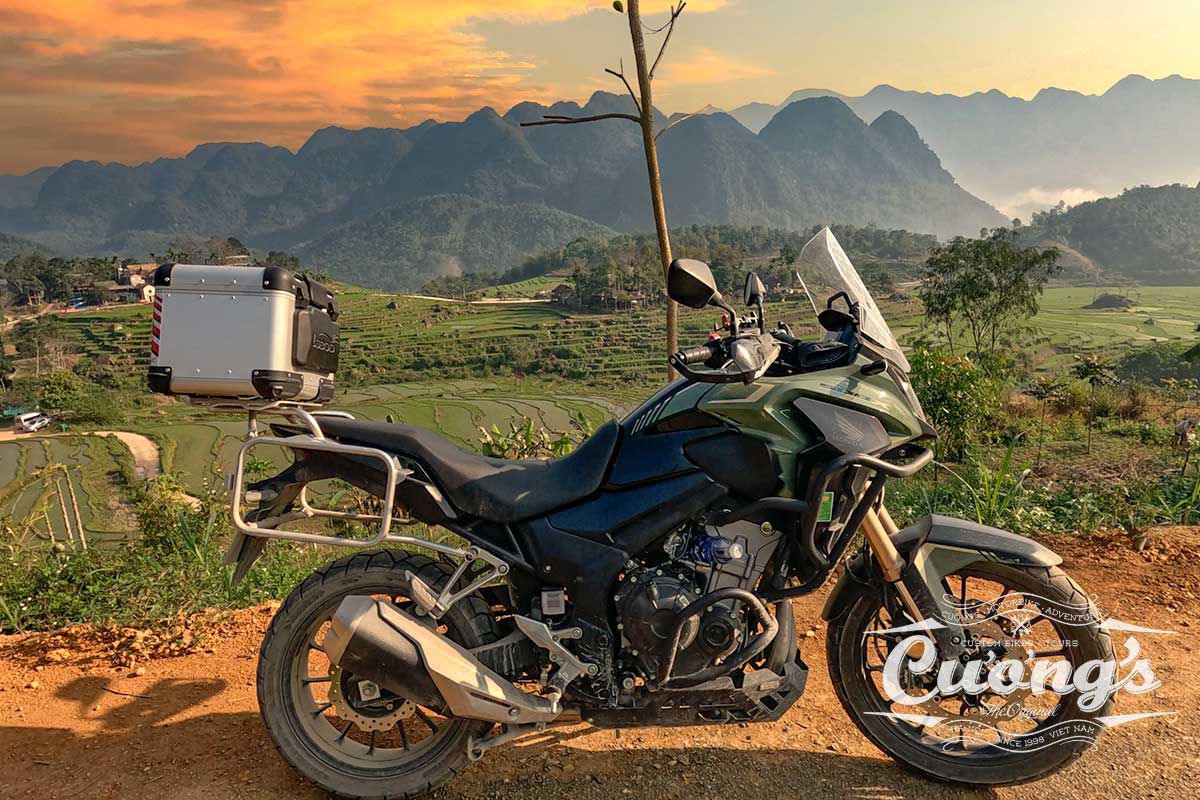

8. Surviving and Thriving in Vietnamese Traffic
Riding a motorcycle in Vietnam is fundamentally different from riding in Europe, North America, or Australasia. It operates on an organic, fluid philosophy often described as “school of fish” dynamics.
To ride safely, internalize these core rules of the road:
- The Flow State (Don’t Be a Wall): Traffic in Vietnam flows like water around obstacles. Do not make erratic, sudden stops or sharp, un-signaled lateral maneuvers. Move predictably, smoothly, and deliberately. If an oncoming scooter pulls out of a minor lane, they expect you to adjust your line slightly to flow around them, rather than coming to a dead, panic-braking halt.
- The Hierarchy of Mass: On Vietnamese roads, the right of way is often governed by physical size rather than road signs. In order of priority:
Sleeper Buses and Heavy Quarry Trucks (King of the road)
Commercial Delivery Vans and Medium Trucks
SUVs, Cars, and Taxis
Motorcycles and Scooters
Bicycles and Pedestrians
Water Buffalo (True Kings of the road—never assume they will yield)
Always assume that a sleeper bus overtaking an oncoming truck on a blind corner will use your entire lane. Ride with reserve margins and keep an escape path open. - Master the Horn: In Western cultures, leaning on the horn signifies aggression or annoyance. In Vietnam, the horn is a safety tool. A short double-tap (
beep-beep) translates to: “I am here, sharing this space with you, please do not make sudden lateral moves.” Tap your horn whenever you approach a blind hairpin, overtake a farmer on an overloaded scooter, or enter a narrow village alley. - Beware of Road Surfaces: Look out for loose rice spread out on the tarmac by farmers drying their harvest in the sun, fine red silt left by construction trucks, and slick diesel spillages on switchbacks.
9. Packing, Safety Gear, and Practical Touring Logistics
Safety Gear: All the Gear, All the Time (ATGATT)
Vietnam’s tropical heat tempts many riders into wearing shorts, t-shirts, and open-face helmets. This is a massive mistake. A low-side slide on gravel at 30 km/h will ruin your trip if you lack protection.
- Helmet: A proper DOT/ECE-certified full-face or dual-sport adventure helmet. Do not rely on $15 plastic half-helmets bought at tourist street stalls.
- Jacket & Pants: Mesh adventure gear with integrated armor. Modern textile mesh allows maximum airflow to manage tropical humidity while retaining abrasion resistance and impact shielding at your shoulders, elbows, back, and knees.
- Boots: Sturdy adventure or off-road boots with solid ankle support. Ankle and foot injuries are the most common trauma sustained in low-speed mountain drops.
- Gloves: Lightweight, perforated leather or reinforced mesh gloves.
- Hydration: A hydration backpack (CamelBak) is essential. Riding in high heat and humidity drains fluids quickly, leading to fatigue and slow reaction times.
Documentation and Legal Requirements
- International Driving Permit (IDP): Vietnam formally recognizes the 1968 Convention on Road Traffic. Ensure your home-country license has a valid motorcycle endorsement, and that your IDP is the 1968 version.
- Travel Insurance: Verify that your medical evacuation and travel insurance policy covers motorcycle operation at your engine displacement. Read the fine print regarding licensing compliance.
- Border Permits (Ha Giang): Because Ha Giang borders China, foreign travelers must hold a Provincial Border Travel Permit to enter certain restricted areas (such as Dong Van and Meo Vac). These are easily procured for a nominal fee at the immigration office in Ha Giang City or arranged via your tour operator or homestay.
10. Guided vs. Self-Guided: Which Is Right for You?
One of the final choices in your route planning is deciding whether to strike out independently or book an organized, professional guided tour.
When to Go Self-Guided
If you are an experienced mechanic, comfortable using translation apps, relish navigating via GPS tracks, and have an open-ended travel window that allows for days lost to repairs or weather disruptions, a self-guided journey offers unmatched freedom.
When to Book a Guided Expedition
If you are constrained by a limited holiday schedule, want to experience the best off-the-grid trails without hours of map cross-referencing, and prefer the security of having an experienced lead rider, sweep mechanic, and pre-vetted homestays, a guided tour is worth every cent. Professional guides monitor local weather stations and road conditions in real-time, redirecting your group around dangerous landslides before you find yourself stuck at the edge of a washed-out pass.
11. Conclusion: Designing Your Ultimate Vietnamese Adventure
Motorcycle touring in Vietnam is transformative. There are few feelings on earth comparable to rounding a high-altitude karst bend in Ha Giang as the morning mist lifts, or winding your throttle open through the untamed jungle valleys of the Western Ho Chi Minh Trail.
To make the most of your adventure:
- Match your route to your skill level. If you are an intermediate rider seeking mountain passes and vibrant indigenous culture, plan for the Northwest Loops.
- If you crave high-altitude drama, narrow cliffside roads, and can confidently control your bike on steep switchbacks, conquer the Ha Giang Loop.
- If you want a smooth, scenic journey through historical battlegrounds and untouched jungles, ride the Ho Chi Minh Trail.
Assess your limits, ride within your sightlines, invest in quality gear, and choose the right season. Vietnam’s roads are waiting—mount up, drop the clutch, and enjoy the ride.

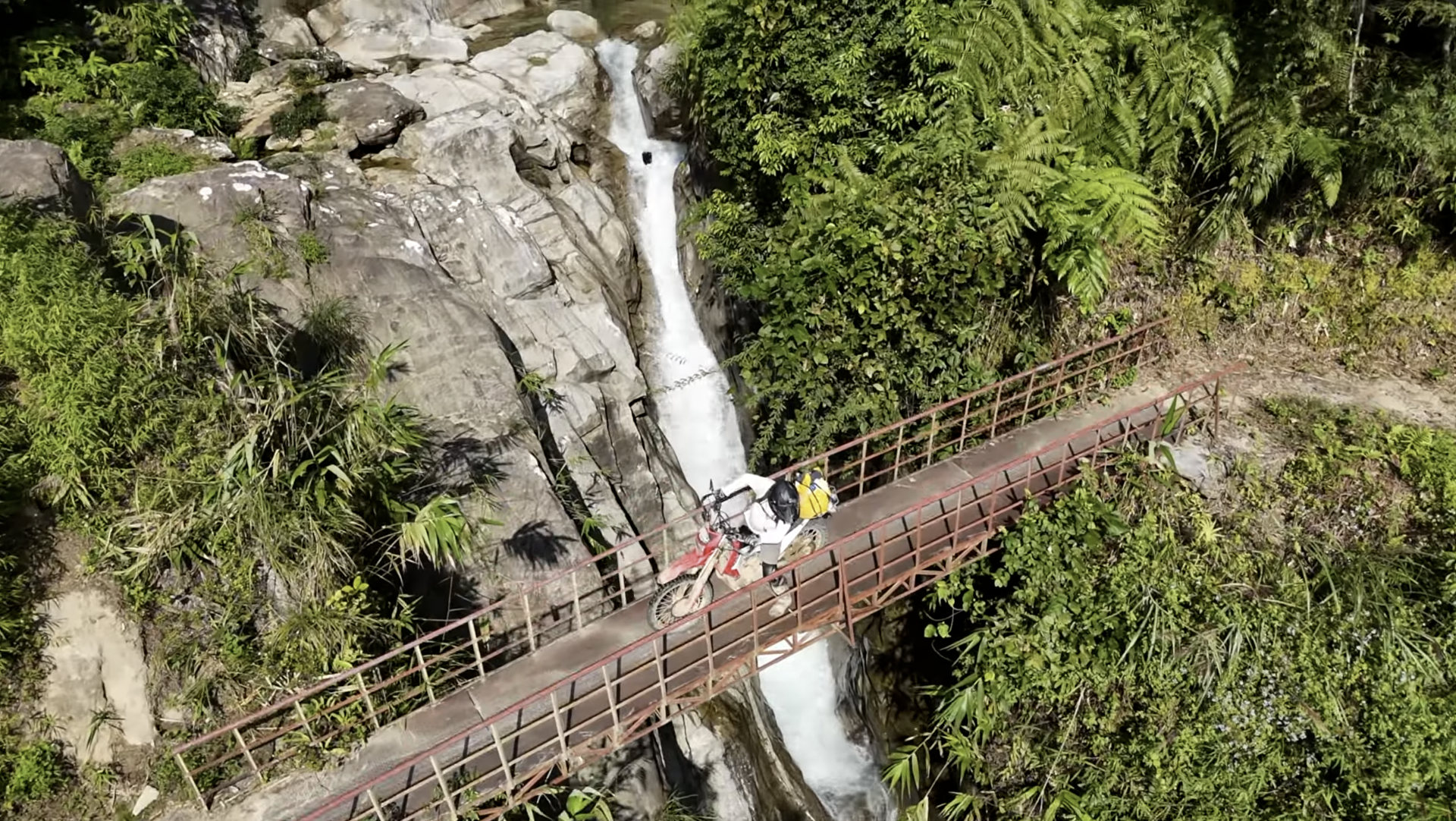
Ha Giang Loop Tour Difficulty: Roads, Weather and Rider Requirements
Ha Giang Loop Tour Difficulty: Roads, Weather and Rider Requirements
A rider can leave Ha Giang on dry pavement and meet fog, loose gravel and construction mud before lunch. Add steep descents, buses crossing the center line and several hours of repeated corners, and a route that looks simple on a map becomes physically and mentally demanding.
Cuong’s Motorbike Adventure treats Ha Giang Loop tour difficulty as a combination of road surface, weather, daily distance, motorcycle choice and rider judgment. Experience in city traffic alone does not settle the question.
Quick answer: How difficult is the Ha Giang Loop?
Use these five steps to decide whether you should ride yourself, join a guided tour or travel as a passenger:
- Assess whether you can control a motorcycle on steep, narrow and occasionally broken mountain roads.
- Match your experience to a semi-automatic, manual road bike or dual-sport motorcycle.
- Plan for four to seven hours on the road each day, including stops and delays.
- Check rain, fog, heat and cold rather than relying only on a monthly weather average.
- Choose self-riding only if your license, insurance, bike control and mountain judgment are adequate.
A confident licensed rider with recent motorcycle experience can usually complete the standard loop at a conservative pace. A complete beginner should not use Ha Giang as a place to learn clutch control, braking or cornering. Joining a guided ride does not remove the need for riding ability unless you travel as a passenger with an experienced driver.
To make the assessment concrete, this guide follows a four-day example: Ha Giang to Yen Minh, Yen Minh to Dong Van, Dong Van to Du Gia via Meo Vac, and Du Gia back to Ha Giang. The example rider has two years of urban scooter experience but little practice on manual motorcycles or mountain descents.
Ha Giang Loop road difficulty and terrain
Most travelers do not struggle because every kilometer is technically difficult. They struggle because straightforward pavement can change quickly, and the consequences of a poor line are higher on exposed mountain roads.
The main loop includes paved highways, village roads, steep passes, hairpin bends, narrow sections and stretches affected by roadworks. Surface quality varies with maintenance and recent weather. A section described as paved may still contain potholes, sand, gravel at the edge or a muddy construction zone.
Steep climbs and descents
Long climbs require steady throttle control and an appropriate gear. Descents demand more skill because speed builds quickly and repeated braking can reduce control if the rider relies only on the brakes.
Use engine braking. Select a lower gear before the steepest part of a descent, keep a stable line and avoid grabbing the front brake while leaned over. On a semi-automatic motorcycle, learn how each gear behaves before leaving Ha Giang city.
The example rider begins the climb toward Quan Ba with familiar scooter habits. The automatic response is to brake late and coast into bends. That approach becomes tiring within an hour. After shifting earlier, reducing entry speed and holding a consistent line, the rider uses less braking and has more time to react to oncoming traffic.
Hairpin bends and limited sight lines
Mountain bends often hide trucks, buses, animals or stopped motorcycles. Some vehicles use part of the opposing lane to complete a turn. Staying near the center line leaves little room when that happens.
Approach every blind bend at a speed that allows you to stop within the visible road. Sound the horn where local traffic expects it, but never assume the horn gives you priority. Keep enough space from the motorcycle ahead to see the surface for yourself.
Ma Pi Leng Pass is visually dramatic, but attention belongs on the road. Stop at a safe pull-off for photographs instead of slowing unexpectedly in a traffic lane.
Gravel, potholes and road construction
Loose gravel reduces available grip, especially during braking or cornering. Construction sections add ruts, stones, heavy vehicles and workers to the same narrow space. Rain can turn compacted earth into slick mud within minutes.
On loose surfaces, reduce speed before entering, keep the motorcycle as upright as possible and make gentle control inputs. Do not follow another rider closely just because that rider appears confident. Their tires, motorcycle and experience may be different.
The example route reaches a roadworks section after Yen Minh. The rider follows a local motorcycle too quickly, enters a gravel patch while braking and runs wide. There is no crash, but the mistake shows why urban scooter experience does not fully transfer to mountain riding. The next section is taken with a larger following distance and lower entry speed.
Road exposure and roadside protection
Some roads have steep slopes beside them, while barriers are inconsistent. Even where there is a barrier, hitting one is not a safe outcome. Riders who are uncomfortable with heights may tense their arms or stare toward the edge.
Look through the turn, not down the slope. Relax your grip and keep your vision where you want the motorcycle to go. If exposure causes panic or target fixation, riding as a passenger is a better choice than trying to force confidence on the route.
Ha Giang Loop difficulty by motorcycle type
Motorcycle choice changes both the physical workload and the consequences of mistakes. A light semi-automatic can feel approachable, while a manual dual-sport offers better control on broken surfaces but requires clutch and gear skills.
| Motorcycle option | Best suited to | Main advantages | Main difficulty on the Ha Giang Loop | Practical verdict |
|---|---|---|---|---|
| Automatic scooter | Riders with automatic experience on easier paved routes | No manual shifting and familiar controls | Small wheels, limited engine braking and less confidence on potholes or mud | Not the preferred choice for uncertain road conditions |
| Semi-automatic motorcycle | Riders already comfortable shifting without a clutch lever | Light, simple and common in Vietnam | Gear selection and steep descents still require practice | Suitable for competent riders using a conservative pace |
| Manual road motorcycle | Licensed riders with recent clutch experience | Better gear control and stable road handling | Stalling on steep starts and poor low-speed clutch use | Good for experienced road riders |
| Dual-sport motorcycle | Riders with manual and mixed-surface experience | Suspension, ground clearance and control on broken roads | Taller seat, added weight and more demanding low-speed handling | Strong option when the rider already knows the bike type |
| Passenger with a guide | Beginners, nervous riders or travelers without valid riding credentials | Local driver handles the motorcycle and road decisions | Less independence and limited control over the pace | Safest practical option for many first-time visitors |
Automatic scooters are not automatically easier
An automatic scooter removes gear changes, but that does not make every mountain situation easier. Many scooters have smaller wheels and less suspension travel than a suitable manual motorcycle. They also provide less useful engine braking on descents.
A rider who has only used an automatic scooter should not switch to a manual bike on departure morning. At the same time, choosing a scooter solely to avoid learning gears may create other limitations. Discuss the actual route and current conditions before selecting the motorcycle.
Semi-automatic motorcycles require real practice
A semi-automatic bike has no hand-operated clutch, but the rider still selects gears. Poor gear choice can leave the engine struggling uphill or allow too much speed downhill.
Practice starting, stopping, changing gears, turning tightly and restarting on an incline. A short parking-lot demonstration is not enough if these controls still require conscious thought. They need to feel predictable before mountain traffic is added.
For the example rider, a semi-automatic is more sensible than changing to a tall dual-sport with an unfamiliar clutch. The trade-off is slower progress on rough sections and greater care over potholes.
Manual and dual-sport bikes suit experienced riders
A manual motorcycle gives the rider precise gear and engine control. A dual-sport model can also handle damaged pavement and gravel more comfortably. Neither compensates for weak fundamentals.
Tall motorcycles can be awkward during U-turns, sloping stops and muddy sections. If you cannot restart smoothly on a hill, stand securely at a cambered roadside or control the bike at walking speed, choose a lower and more familiar machine.
Motorcycle size should support the route, not the rider’s image of the trip.
Ha Giang Loop daily riding hours and fatigue
A distance that takes two hours on an open road can occupy most of a day in Ha Giang. Progress is slowed by bends, villages, viewpoints, meals, fuel stops, livestock, construction and changing weather.
Plan for roughly four to seven hours on the road during a normal tour day. That is not four to seven uninterrupted hours in the seat. It includes short stops, but the concentration required across the day still accumulates.
A realistic four-day Ha Giang Loop pace
On day one, the example rider travels from Ha Giang toward Quan Ba and Yen Minh. The early start leaves room for a slow lunch and a roadworks delay. Arrival before dark matters more than adding another viewpoint.
Day two continues to Dong Van through repeated climbs and corners. Although the distance is modest, concentration falls during the last hour. The rider stops for water rather than pushing through. That ten-minute pause improves braking and line choice more than rushing to recover time.
Day three covers Ma Pi Leng, Meo Vac and the route toward Du Gia. Photo stops, traffic and surface changes make this the most mentally demanding day. Day four returns to Ha Giang, where riders can become careless because the trip feels nearly complete.
Fatigue often appears as late braking, missed gears, stiff shoulders or following the bike ahead too closely. Treat those signs as a reason to stop.
Why a three-day itinerary feels harder
A three-day loop can work for riders who start early, know their motorcycles and accept fewer detours. It leaves less flexibility for rain, construction or a mechanical delay. A four-day schedule is usually more forgiving for first-time mountain riders.
Longer is not always easier. A five-day itinerary with sensible stages reduces daily pressure, while an overloaded five-day route can add remote tracks and increase difficulty. Compare the actual roads and expected seat time, not just the number of nights.
Avoid riding after dark. Visibility falls, road defects become harder to identify and animals or unlit vehicles can appear with little warning. Build each day backward from a daylight arrival time.
How weather changes Ha Giang Loop tour difficulty
Weather can turn an appropriate route into a poor decision. Mountain conditions also vary by elevation, so sunshine in Ha Giang city does not guarantee clear roads near Dong Van or Ma Pi Leng.
Check the forecast each morning and ask for local information about the next section. Vietnam’s National Center for Hydro-Meteorological Forecasting publishes official forecasts and warnings, but mountain riders should also pay attention to visible cloud, recent rainfall and reports from the road.
Rain, mud and reduced grip
The first rain after a dry period can mix with dust and oil on the road. Heavy rain may create standing water, wash gravel across pavement or trigger small rockfalls. Unpaved construction zones become much harder for road-oriented motorcycles.
Reduce the day’s ambition when sustained rain arrives. Waiting for a severe shower to pass can be safer than continuing for the sake of a booking. If water hides the road surface, do not assume a puddle is shallow.
In the running example, rain begins before the planned ride from Dong Van. The original schedule includes extra stops beyond Meo Vac. Those stops are removed so the rider can cross the main pass slowly and reach Du Gia in daylight. Keeping every planned stop would turn a manageable day into a late arrival.
Fog and low cloud
Fog can reduce visibility to a few vehicle lengths. It also collects on visors, making sight lines worse even at low speed. Use a low beam, increase the following distance and avoid following another rider’s taillight so closely that you copy every mistake.
Bright high beams can reflect from fog and make vision worse. Keep the visor clean and stop somewhere fully away from traffic if visibility becomes inadequate.
Heat, cold and dehydration
Lower valleys can feel hot while exposed passes are cool and windy. Wet clothing increases heat loss quickly. Carry a waterproof outer layer even when the morning is warm.
Drink before you feel thirsty. Dehydration affects attention and decision-making, while cold hands reduce precise braking and throttle control. Gloves should protect the hands without making the controls difficult to feel.
Seasonal averages help with packing, but they cannot confirm whether a specific road will be safe on a specific day. Route decisions belong to the conditions in front of you.
What riding experience do you need for the Ha Giang Loop?
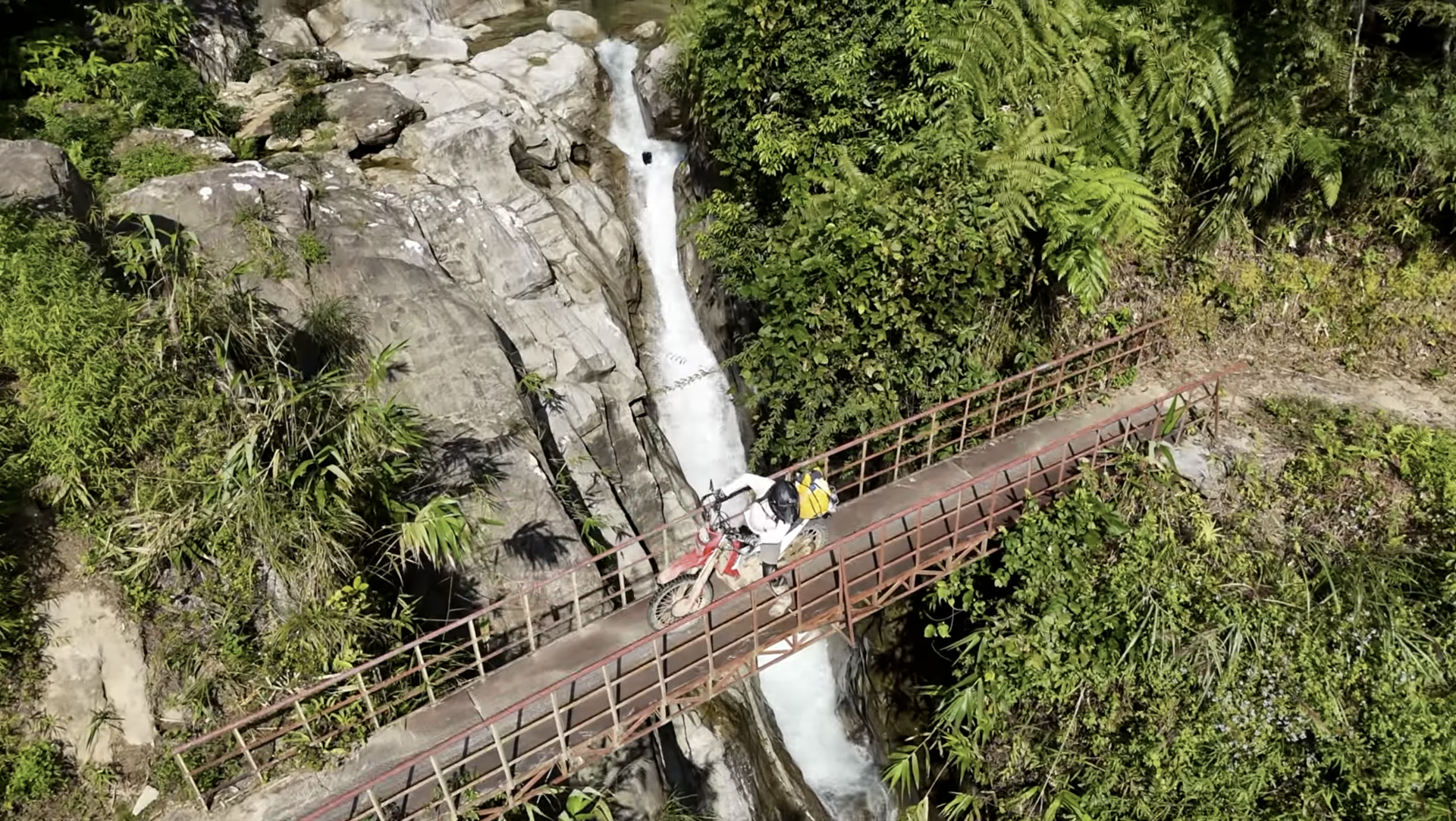
A suitable self-rider can start smoothly on an incline, brake progressively, select gears without looking down, complete tight turns and remain calm when the surface changes. Recent experience matters more than having ridden a motorcycle several years ago.
City riding provides useful traffic awareness, but it may not prepare someone for prolonged descents, gravel or exposed bends. Off-road experience helps on broken surfaces, although aggressive trail habits are inappropriate around local traffic and villages.
Before choosing to self-ride, test whether you can do the following:
- Stop firmly without locking a wheel or grabbing the brake.
- Ride slowly while maintaining balance and steering control.
- Start uphill without rolling backward into another vehicle.
- Select a safe cornering speed before entering the turn.
- Ride on gravel without abrupt braking or steering.
- Recognize fatigue and stop before control deteriorates.
If two or more of those actions are unfamiliar, take training before the trip or travel with an experienced driver.
Licensing and insurance are part of rider readiness
Physical ability does not make an unlicensed ride legal or insured. License recognition can depend on nationality, license class and the international permit convention under which a document was issued. Do not rely on a rental counter’s willingness to provide a motorcycle as proof that you can ride legally.
Check the current requirements with the appropriate Vietnamese authority, your license issuer and your insurer. The UK government’s Vietnam safety guidance illustrates why travelers must verify license validity, helmets and insurance rather than making assumptions based on other countries.
Confirm that your policy covers the motorcycle’s engine size and the activity itself. Medical coverage and vehicle damage coverage are separate issues. Read the exclusions.
The World Health Organization identifies speeding, helmets and post-crash care among the major factors affecting road traffic injury risk. On the loop, a properly fastened motorcycle helmet, protective gloves, long clothing and sturdy footwear are basic equipment, not optional touring accessories.
How a guided Ha Giang Loop tour reduces the workload
A guide cannot give a beginner motorcycle control by riding nearby. A properly planned guided tour does remove much of the route selection, timing and daily decision load, while a passenger option removes the riding task itself.
This is where a local operator’s value becomes visible. On a Cuong’s Motorbike Adventure tour, the useful process begins before departure rather than at the first mountain pass.
First, the rider gives an honest account of recent experience, license status, height, bike familiarity and comfort on loose surfaces. Saying that you have ridden scooters for two years is more useful than describing yourself as intermediate.
Next comes route and motorcycle selection. A traveler comfortable on a semi-automatic should not be pushed toward a taller manual motorcycle merely because it appears more capable. The chosen itinerary also needs realistic daily stages.
Before leaving, controls, luggage and protective equipment are checked. The rider needs to know the signals used by the group, the following-distance expectation and what to do after becoming separated. Practice happens before the road narrows.
During the ride, the guide sets a pace based on the slower competent rider, not the fastest person in the group. Stops are placed before difficult sections and after sustained concentration. If fog, rain or construction changes the route, the schedule changes with it.
At the end of each day, the next stage can be adjusted according to weather and rider fatigue. That feedback loop is valuable. A traveler who was comfortable on day one may be tired after the longer bends toward Dong Van, while another may improve once the controls become familiar.
Travelers comparing broader Vietnam motorcycle tour information and route ideas should look beyond destination lists. Ask how an operator evaluates ability, changes routes in bad weather, handles mechanical problems and responds when a rider no longer wants to continue.
Tour inclusions also affect practical support. The guide to Vietnam motorbike tour costs and inclusions explains why motorcycle condition, support, accommodation and what happens after a problem matter more than the headline price alone.
Common Ha Giang Loop difficulty mistakes
The most common error is choosing an itinerary from social media highlights. Scenic clips rarely show the wet descent, the truck around a blind bend or the final hour after concentration has faded.
Learning to ride during the tour
A flat practice area can introduce the controls. It cannot compress weeks of traffic, braking and cornering experience into a morning. Beginners sometimes improve quickly, but the public mountain road is still carrying buses, trucks, local riders and pedestrians while they learn.
Choose a passenger ride if you want the scenery without using the loop as a training course.
Copying another rider’s speed
Following a confident guide or friend can make a rider feel protected. It can also encourage entry speeds that exceed personal ability. Leave enough distance to choose your own line and brake independently.
The example rider’s gravel mistake occurred partly because attention shifted from the surface to the motorcycle ahead. A guide is a reference, not a substitute for observation.
Packing too much luggage
High or poorly secured luggage changes balance at low speed and during direction changes. It can also move under braking. Carry only what is needed for the loop, keep weight low and test the straps before each departure.
Do not hang loose bags from handlebars. They can interfere with steering or controls.
Treating the itinerary as fixed
A hotel reservation is not a reason to cross a pass in dangerous visibility. Keep room in the schedule, maintain communication with the next stop and accept that weather may remove an attraction or alter the overnight location.
For the four-day example, dropping an optional detour protects the daylight margin after rain. The route becomes less ambitious, but the trip remains enjoyable.
Underestimating the return day
Riders often relax too early once Ha Giang is within reach. Fatigue, familiar-looking pavement and the desire to finish can raise speed. Maintain the same spacing, corner entry discipline and rest schedule until the motorcycle is parked.
Should you self-ride, take a guided tour or ride as a passenger?
Self-riding suits licensed motorcyclists who have current road experience, reliable braking and gear control, and the judgment to change plans. It offers independence but leaves the rider responsible for navigation, bike checks, weather decisions and incident response. Going with a guide makes all the difference to explore and find the hidden locations for the Ha Giang Region, It can take 7-8 days to explore the NorthEast regions
A guided self-ride suits competent riders who want local route knowledge and less logistical work. It can also be valuable for experienced riders visiting Vietnam for the first time, since local traffic patterns and road conditions are unfamiliar.
A passenger tour is the practical choice for beginners, unlicensed travelers, nervous riders and anyone who wants to focus on the scenery. There is no meaningful loss of achievement in recognizing that the loop exceeds your current skill.
For the example rider with urban scooter experience, the decision depends on the pre-ride assessment. If slow control, semi-automatic shifting and hill starts are solid, a conservative guided self-ride may be reasonable. If those skills remain inconsistent, travel as a passenger.
Do not let a group’s plans determine your category. Select the option that remains appropriate in rain, not just the one that feels possible in a dry parking area.
Ha Giang Loop tour difficulty FAQ
Is the Ha Giang Loop suitable for beginners?
It is not a suitable place for a complete beginner to learn motorcycle control on public roads. A beginner can experience the route as a passenger with an experienced driver. Riders with limited experience should arrange a skills assessment rather than assuming that a guided group makes self-riding safe.
Is the Ha Giang Loop mostly paved?
Much of the standard route is paved, but that description can be misleading. Potholes, gravel, mud, repairs and construction can appear on otherwise paved roads. Conditions may change after heavy rain or maintenance work.
How many hours do you ride each day on the Ha Giang Loop?
Expect approximately four to seven hours on the road during a typical day, including stops. The exact time depends on the itinerary, weather, traffic, roadworks and group pace. Distance alone is a poor predictor because repeated mountain bends reduce average speed.
Is three days enough for the Ha Giang Loop?
No not for our Ha Giang Motorbike Tours, There are so many different places to visit it is best to take the time to realy explore. Three days can be enough for an experienced rider following a focused route in good conditions. Four days gives first-time visitors more room for viewpoints, rest and delays. Add flexibility rather than filling the extra day with more difficult roads.
Can I ride the Ha Giang Loop on a scooter?
Some riders use automatic scooters, but small wheels, suspension limits and reduced engine braking can make damaged surfaces and descents less comfortable. Motorcycle condition and rider competence matter more than the automatic label. Discuss the current route before deciding.
What is the hardest part of the Ha Giang Loop?
There is no single hardest section in all conditions. For one rider it may be the exposed bends around Ma Pi Leng. For another it will be a muddy construction zone, a foggy descent or the final hour of a long day. Weather can make an otherwise straightforward section the day’s main challenge.
Is a guided Ha Giang Loop tour safe?
A guide can improve route planning, pacing and response to changing conditions, but motorcycle travel always carries risk. A guided tour is not safe for a self-rider who lacks basic control. Choose a passenger option if you cannot meet the riding requirements.
What should I do if the weather becomes dangerous?
Stop somewhere fully clear of traffic, assess the forecast and seek local route information. Delay departure, shorten the day or change the route when visibility, flooding, landslide risk or surface conditions are unacceptable. Do not continue only because accommodation has already been booked.
The Ha Giang Loop is achievable for prepared riders, but it should be treated as a mountain motorcycle journey rather than a casual scooter outing. Competent riders can choose a guided self-ride or carefully planned independent trip. Beginners and travelers without valid riding credentials should choose a passenger tour and experience the same roads without carrying a task beyond their ability.
Vietnam Motorbike Tour Cost: What Is Included and What You Pay For
Vietnam Motorbike Tour Cost
Two Vietnam motorbike tours can follow a similar route and still have very different prices. A lower quote may exclude fuel, damage cover or the night before departure, while a higher quote may include support that only becomes valuable when a motorcycle develops a problem far from Hanoi.
Cuongs Motorbike Adventure recommends comparing the complete riding arrangement, not just the advertised daily rate.
Quick answer: how to calculate your Vietnam motorbike tour cost
Use this process before paying a deposit:
- Confirm the exact route, number of riding days and group size.
- Check whether a guide, motorcycle and fuel are included.
- Identify every included hotel night, meal and drink.
- Confirm permits, entrance fees and local access arrangements.
- Check airport, hotel, luggage and motorcycle transfers.
- Add riding gear, insurance, tips and personal spending.
- Review deposits, cancellation terms and possible damage charges.
- Divide the final trip total by the number of riding days for a fair comparison.
Your real cost is the tour price plus every required and likely expense that sits outside the package. Ask for the inclusions and exclusions in writing. If an operator cannot explain them clearly, the headline price is not useful enough to compare.
What determines a Vietnam motorbike tour cost?
The route is only one part of the calculation. Group size, motorcycle choice, room arrangement, support level and the remoteness of the riding area all affect what an operator must provide.
Consider an illustrative rider named Alex, who is comparing eight-day guided trips from Hanoi into Ha Giang. One itinerary includes seven riding days and seven nights. Another is described as an eight-day tour but uses the first day for arrival and the final morning for departure, leaving six substantial riding days.
Those are not equivalent products.
Alex should first create a common basis for comparison. That means recording the number of full riding days, included nights, meals, fuel arrangements and transfers for each quote. Any missing item should be marked as unknown rather than assumed to be included.
Group size also changes the service structure. On a private tour, guide time and logistical support are allocated to one booking. A scheduled group spreads some of those costs across more riders. The group option may cost less per person, but riders normally have less control over daily pace, photo stops and route changes.
Remote routes create another variable. A tour through well-connected towns may use conventional hotels and easy fuel stops. A northern mountain route can involve family-run accommodation, limited motorcycle parts and longer recovery distances. The room may be simpler even when the logistical work behind the trip is greater.
Season matters as well. Weather can affect route selection, demand and whether an off-road section is practical. It does not automatically mean one month will always be cheaper. Request a quote for your actual dates instead of relying on an old daily price found in a forum.
How guide support affects a Vietnam motorbike tour price
A professional guide does more than ride at the front. The guide sets a pace that suits the group, reads road and weather conditions, coordinates stops, communicates with accommodation providers and responds when the planned road is blocked or inappropriate.
Ask whether the quoted guide support includes:
- One guide riding with the group throughout the route
- An additional guide for a larger group
- Basic roadside troubleshooting and route changes
- English-language communication during the tour
- Help coordinating accommodation, meals and local stops
- Emergency communication and evacuation assistance
The description should be specific. “Fully guided” can mean a guide rides with the group each day, or it can refer to a prearranged route with limited assistance. Those are materially different.
Alex’s Ha Giang comparison shows why this matters. Suppose one operator assigns one guide to a compact group and another runs a much larger departure with the same guide ratio. Both packages can truthfully say a guide is included, but the experience will differ when a rider needs help, falls behind or wants a difficult section explained before entering it.
A support vehicle is another separate service. It may carry luggage, spare parts or passengers who cannot continue riding. Do not infer that a guided motorcycle tour includes one. Confirm whether a vehicle follows the entire route, meets the group at selected points or is not part of the package.
Full vehicle support adds cost and can be impractical on narrow tracks. For some paved itineraries and larger groups, it can still be worthwhile. Solo riders and small groups with light luggage may prefer a simpler setup.
Motorcycle, fuel and mechanical support costs
The motorcycle allocation should identify the general type of bike provided and whether upgrades change the price. Engine size alone does not determine suitability. Weight, seat height, tires, gearing and maintenance condition matter on steep or loose surfaces.
Confirm when the rental period starts and ends. If Alex arrives in Hanoi one day before the guided departure, the bike may not be available for independent use that afternoon. Likewise, an advertised eight-day itinerary does not necessarily provide eight complete rental days.
Fuel policies commonly take one of three forms: all tour fuel is included, a stated quantity is included, or the rider pays at fuel stops. None is inherently wrong. The important point is to use the same assumption when comparing packages.
If riders pay directly, total fuel use will depend on distance, motorcycle, road surface and riding style. Do not estimate it from straight-line map distance. Mountain switchbacks, detours and off-road sections can make the actual route considerably longer.
Mechanical support also needs definition. Routine wear and a fault that was not caused by the rider are different from crash damage, a bent lever after a fall or a puncture on a rocky trail. Ask who pays in each situation.
Before departure, inspect the bike with the guide and photograph its existing condition. Check the controls, lights, tires, mirrors and visible bodywork. Record existing scratches. This simple step reduces confusion when the motorcycle is returned.
The operator should also explain what happens if a bike cannot be repaired beside the road. A replacement motorcycle may be possible near a major town but harder to arrange in a remote district. Recovery time and transport arrangements are part of the service value, even though they are difficult to express as a daily price.
Accommodation and single-room charges
Tour accommodation is often priced on twin sharing. A solo traveler may be paired with another rider or asked to pay a single-room supplement, depending on the booking terms and room availability.
Count the nights individually. Do not assume that the first and final nights are included merely because the tour is described as lasting a certain number of days.
For Alex’s eight-day example, the accommodation record might begin with the following questions: Is the Hanoi hotel before departure included? Are all nights on the route included? Does the tour finish with another night in Hanoi, or does it end when the group arrives back in the city?
Room standards can vary along one itinerary. Hanoi may offer a conventional hotel, while a remote village may have a guesthouse or homestay with shared facilities. This does not necessarily indicate poor planning. In some places, local availability sets the standard.
Ask what “homestay” means for the specific route. It might be a private room in a small local property, a shared sleeping area or a purpose-built guesthouse. Check bathroom arrangements, bedding and whether towels are supplied if those details affect your decision.
Luxury positioning requires the same scrutiny. A more expensive package may provide upgraded city hotels and private rooms, but no operator can create a high-end property where one does not exist. The useful comparison is the actual accommodation planned for each night.
Meals, water and personal food spending
Meal inclusions can significantly change the final bill on a multi-day route. Read the itinerary day by day rather than accepting a general statement that meals are provided.
Breakfast may come with the hotel. Lunch may be arranged during the ride. Dinner can be included on some nights and left open in larger towns where riders have more choice. Drinks, snacks, coffee and alcohol are often treated separately even when the meal itself is covered.
Alex should create a simple count: seven breakfasts, seven lunches and seven dinners, then mark each one as included, excluded or unclear. This catches gaps that broad package language can hide.
Dietary requirements should be discussed before booking. Vegetarian meals are possible in many places, but remote kitchens may have fewer ingredients and less separation between preparation areas. Allergies require especially clear communication. Carry translated details and any medication prescribed for a serious reaction.
Bottled or filtered drinking water should be clarified too. Ask whether water is supplied while riding and whether additional drinks at hotels are personal expenses. Small purchases are not likely to dominate the budget, but repeated stops across a long tour add up.
Permits, entrance fees and legal requirements
Some routes include controlled border or protected areas where local permission, registration or entrance charges may apply. The operator should state whether it arranges and pays for required route permits.
A permit for access is not the same as a visa or permission to operate a motorcycle. International visitors remain responsible for entering Vietnam lawfully and checking whether their driving credentials are valid for the vehicle they intend to use.
Vietnam’s official e-visa portal provides current application information for eligible travelers. Use the government portal rather than relying on an old blog post or an unsolicited visa service.
Licensing and insurance need equal attention. Requirements can depend on license category, nationality, documentation and vehicle type. The UK government’s Vietnam travel advice explains that travelers should have the appropriate license and warns about the risks associated with motorcycle use. Riders from other countries should also check advice from their own government and insurer.
A tour fee cannot make an unlicensed rider legal. It also cannot guarantee that travel insurance will pay a claim. Send the insurer the motorcycle engine capacity, activity type, route style and license details. Request written confirmation of cover.
Ask separately about national park tickets, cave admissions, boat crossings and cultural attractions. A route permit may be included while optional sightseeing fees are not.
Transfers and transport at the start and finish
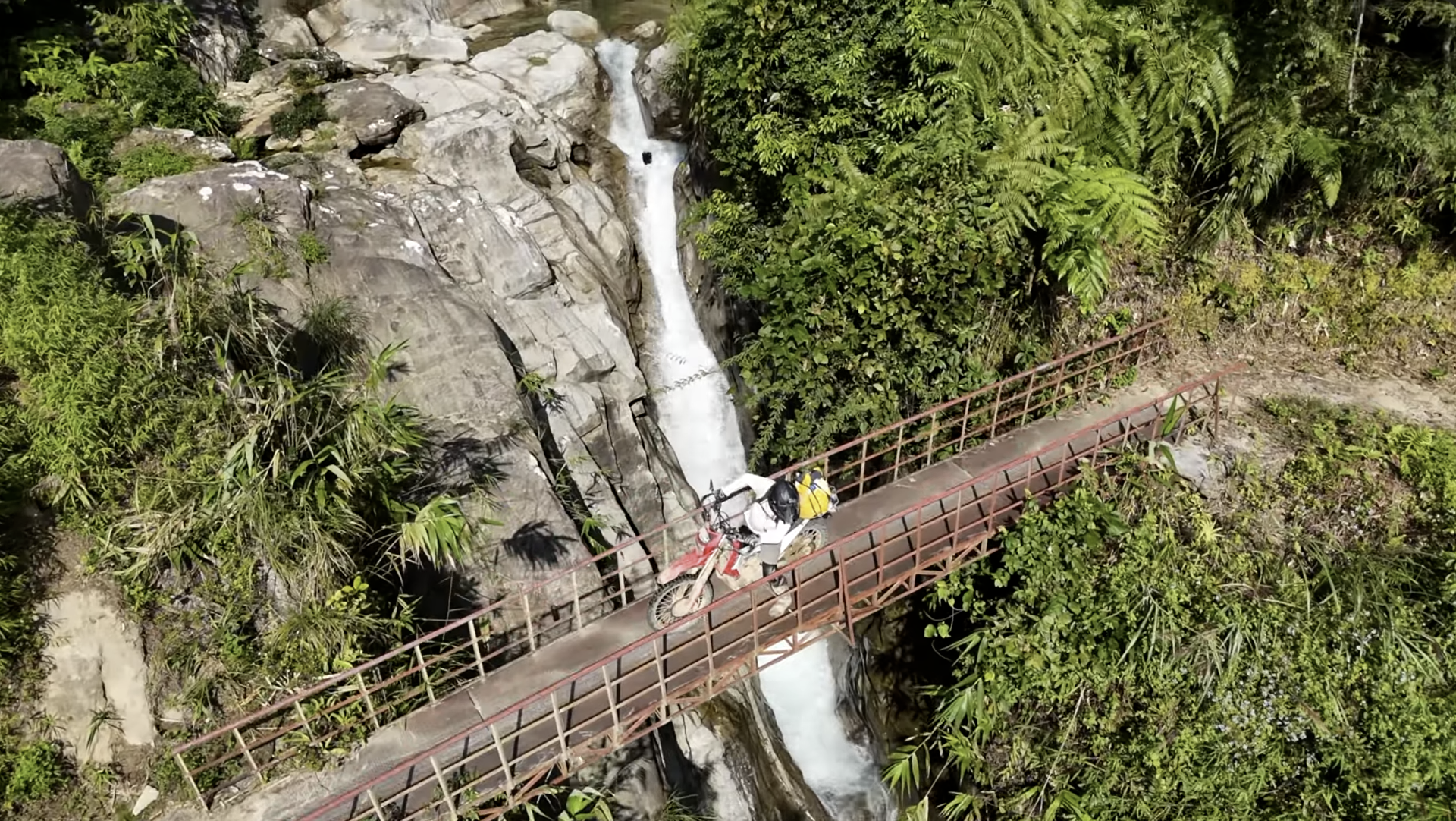
Transfers are easy to overlook because they occur outside the riding portion of the itinerary. They can still alter both cost and timing.
Clarify whether the package includes airport pickup, a hotel transfer, luggage storage and transport back to the starting point. For a one-way Hanoi to Hoi An route, ask how the motorcycle is handled after the tour and whether the rider’s luggage travels with the group.
Motorcycles may be transported separately for routes that begin away from the operator’s base. Riders may use a private vehicle, train or scheduled transport to reach the starting area. Each arrangement creates different arrival times and baggage limits.
Alex’s Ha Giang trip could start with riding directly from Hanoi or with a road transfer farther north. The first option gives Alex more time on the bike. The second may reserve more tour time for mountain roads. Comparing only the total number of days would miss that difference.
Confirm the meeting location and ending point in writing. “Hanoi departure” might refer to a central hotel, an operator’s base or a pickup within a defined district. Airport transfers should not be assumed unless they appear in the booking information.
Vietnam motorbike tour cost comparison table
Use one table for every quote you receive. Replace vague descriptions with written answers before choosing.
| Cost component | What to confirm | Common reason the final cost changes |
|---|---|---|
| Guide | Guide ratio, language and days of support | Private departures and extra guides cost more |
| Motorcycle | Bike category, rental period and upgrade terms | Larger or specialist bikes may carry an added charge |
| Fuel | Included, capped or paid at each stop | Distance, terrain and motorcycle consumption vary |
| Accommodation | Exact nights, room type and sharing basis | Solo rooms and city upgrades can cost extra |
| Meals | Number of breakfasts, lunches and dinners | Drinks, snacks and free evenings may be excluded |
| Permits and entry | Route permits, parks and attractions | Optional visits may be paid locally |
| Transfers | Airport, hotel, luggage and one-way transport | Remote starts and finishes require more logistics |
| Protection | Insurance, deposit and damage responsibility | Rider-caused damage may remain payable |
| Optional spending | Gear, tips, laundry and extra nights | Personal preferences differ considerably |
For Alex, the correct comparison is not “Quote A versus Quote B.” It is the total expected trip cost for the same room arrangement, riding duration and support level.
If Quote A omits fuel and the final Hanoi night, Alex should add realistic allowances for both before comparing it with an inclusive offer. If Quote B includes a support vehicle that Alex does not need, the higher price may not represent better value for this particular trip.
Optional costs to budget for before booking
Optional does not mean unlikely. Riding gear, tips, personal drinks and extra hotel nights are predictable expenses for many travelers.
Protective equipment should be checked first. Confirm whether the package provides a helmet and whether jackets, gloves, trousers, boots or rain layers are available. Fit matters. A supplied jacket that does not fit is not useful protection, so experienced riders may prefer to bring their own core equipment.
International flights, visas and travel insurance normally sit outside the riding package unless a booking states otherwise. Medical checks, vaccinations and personal medication are also the traveler’s responsibility.
Tips should remain discretionary unless a stated service charge applies. Ask whether the operator provides guidance for guide and support staff gratuities. Build an allowance into the personal budget without treating it as part of the advertised tour price.
Other possible expenses include laundry, souvenirs, alcohol, room upgrades, extra nights, independent activities and transport after the official finish. Riders should also keep access to emergency funds. A weather disruption, illness or missed onward connection can create costs that no normal package covers.
How booking with Cuongs Motorbike Adventure clarifies the cost
The do-it-yourself comparison process involves several messages, a route spreadsheet and careful checking of terms. A direct booking discussion with Cuongs Motorbike Adventure starts with the route and dates because those details determine the practical arrangement.
First, provide the number of riders, riding experience and preferred region. A Ha Giang mountain tour, a northwest route and a longer Ho Chi Minh Trail itinerary do not create the same motorcycle, accommodation or transfer requirements.
Next, confirm the duration in operational terms. Count full riding days, partial days and non-riding transfer periods. Then identify where the tour starts and finishes. This prevents an arrival day from being mistaken for a complete day on the motorcycle.
The booking information should then be read by category: guide support, motorcycle, fuel, accommodation, meals, permits and transfers. Keep that written list. It becomes the reference if a package description and an informal message appear to conflict.
After the core inclusions are clear, ask about optional choices that apply to your booking, such as a private room, motorcycle preference, extra hotel nights or additional transport. Prices and availability can vary by route and date, so the current written quote should control the decision.
Finally, review payment, cancellation and rider-damage terms before sending a deposit. Do not wait until arrival to ask what happens after a fall or whether a route can change because of unsafe weather.
Travelers still comparing regions can monitor the Cuongs Motorbike Adventure blog for route planning material as it is published. The booking conversation should remain specific to the chosen dates and riders rather than relying on a generic cost estimate.
Common mistakes when comparing Vietnam motorcycle tour packages
The first mistake is dividing the advertised amount by the tour’s named duration without checking how many days are actually spent riding. Arrival, briefing and return-transfer days may be necessary, but they should not be counted as full riding days in a value comparison.
Another mistake is treating every motorcycle as equivalent. A light trail bike and a larger road-oriented motorcycle serve different riders and routes. Paying for an upgrade that makes a technical route harder is not good value.
Travelers also overlook room assumptions. Two quotes can look similar until a solo rider discovers that one uses twin sharing and the other includes a private room. Record the single supplement before comparing totals.
A more serious failure is assuming that tour participation provides insurance. Medical treatment, evacuation, motorcycle damage, third-party liability and trip cancellation are separate risks. One policy may cover some and exclude others.
Finally, avoid choosing solely from photographs. Images show scenery, not guide ratios, maintenance procedures or cancellation terms. Ask operational questions.
Competitors such as Frontier Travel Vietnam, Motorbike Tour Expert and Offroad Vietnam may structure packages differently. Compare their current written inclusions using the same table, and check each vendor’s own pricing page for current figures. Do not transfer assumptions from one operator to another.
How to choose the right level of support
A supported private tour is useful for riders who want control over pace, stops and route difficulty. It can also suit couples or friends with similar expectations. The added cost pays for less shared guide time and greater scheduling flexibility, subject to road and accommodation constraints.
A group departure may be a better fit for a solo traveler who values company and is comfortable following a fixed plan. Ask about maximum group size and how the operator handles differences in riding speed.
Full support is most valuable when the route is remote, luggage is substantial or riders want a fallback vehicle. It can be unnecessary on every trip. Vehicles may not follow narrow trails, and their presence can constrain route choices.
Off-road tours demand more than a different tire pattern. They can increase fatigue, fall risk and the chance of minor bike damage. Describe your experience honestly, including the surfaces you have ridden and how recently. A route that is enjoyable for an active trail rider may be exhausting for someone whose experience is limited to city scooters.
Choose the package whose support matches the real risk and comfort level of the group. Do not pay for prestige labels that are not connected to a concrete service.
Vietnam motorbike tour cost FAQ
How much should I budget for a Vietnam motorbike tour?
There is no reliable single amount without dates, route, duration, group size, motorcycle and room preference. Request a current itemized quote, then add flights, visa costs, insurance, riding equipment and personal spending. Keep an emergency reserve separate from the normal tour budget.
Are fuel and accommodation included in guided Vietnam motorbike tours?
They may be, but inclusion policies differ between operators and packages. Confirm fuel in writing and count every hotel or homestay night. Check whether accommodation is based on twin sharing and whether pre-tour or post-tour nights are included.
Does a Ha Giang guided tour include permits?
Do not assume so. Ask whether the operator arranges and pays for permits required by the planned route, and whether entrance fees for optional attractions are separate. You remain responsible for your visa, driving eligibility and suitable insurance.
Do I need to pay a motorcycle damage deposit?
That depends on the booking terms. Ask whether a deposit, card authorization or passport hold is required, what damage the rider must pay for and how existing marks are recorded. Photograph the motorcycle at handover.
Is a private tour worth the extra cost?
It can be worthwhile when the riders want a specific pace, flexible stops or a route selected around their experience. A scheduled group is often a better choice when shared travel and a lower per-person cost matter more than control.
Can beginners join a northern Vietnam motorcycle tour?
Some routes and motorcycles are more accessible than others, but northern roads can include steep gradients, tight bends, traffic, broken surfaces and rapidly changing weather. Give the operator an accurate riding history. A passenger arrangement or less technical itinerary may be safer than learning on a demanding mountain route.
What happens if bad weather changes the itinerary?
The guide may need to replace a road, shorten a section or change accommodation. Ask before booking whether safety-related changes create extra charges and how unused services are handled. Route flexibility is normal, but the financial terms should not be a surprise.
What should be written on my final quote?
The final quote should identify dates, riders, route, riding days, guide support, motorcycle allocation, fuel policy, accommodation basis, included meals, permits, transfers, optional additions and total payment terms. It should also state the main exclusions and cancellation conditions.
The practical choice is straightforward: book only when the written package lets you calculate the complete trip cost and understand who is responsible when plans change. For a route-specific answer, contact Cuongs Motorbike Adventure with your dates, group size, riding experience and room preference.
Add cuongs-motorbike-adventure.com to your preferred sources in Google
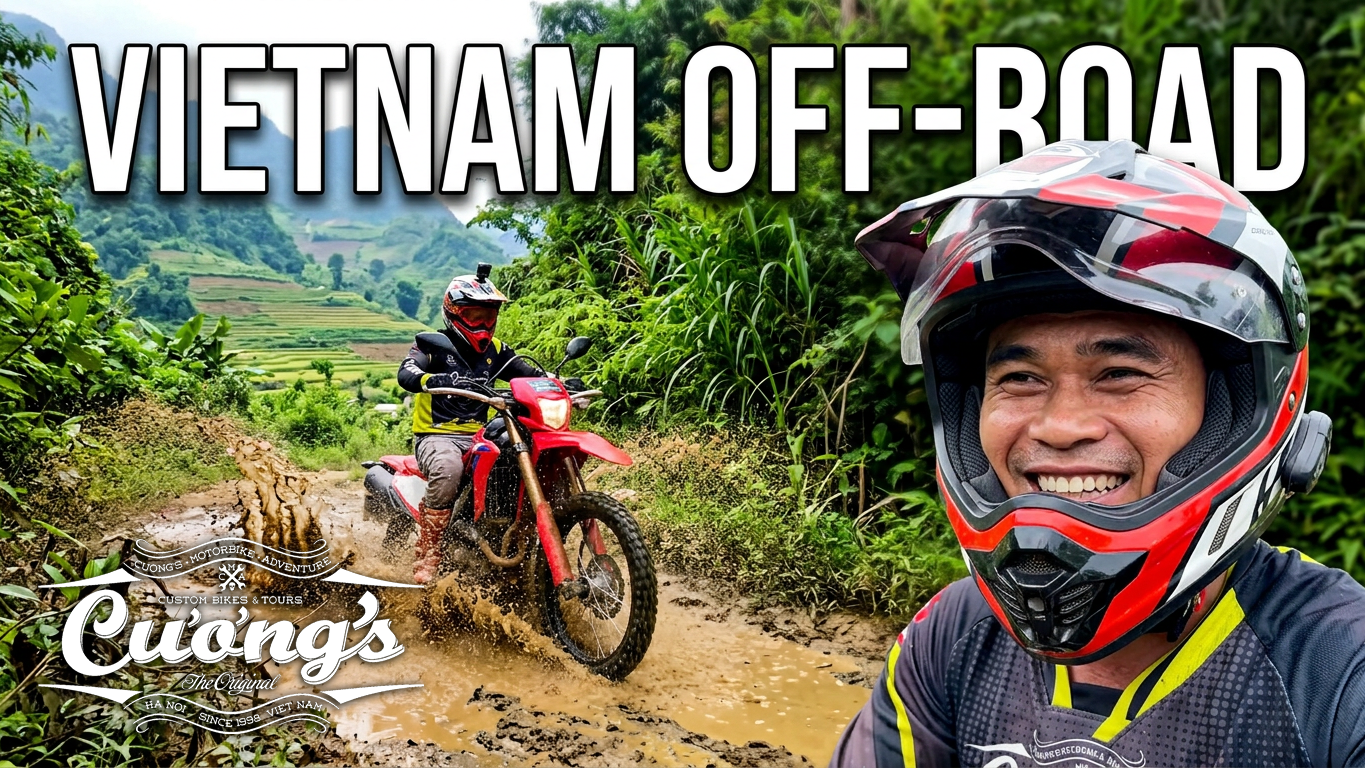
8 Days Riding Hard Enduro & Mountain Passes Across Northwest Vietnam
8 Days Riding Hard Enduro & Mountain Passes Across Northwest Vietnam
Taming the Wild Northwest: Single Tracks, Sticky Mud, and Full-Throttle Smiles
If you think you know Northern Vietnam, wait until you ditch the tarmac and aim a Honda CRF300L straight up a jungle ridgeline.
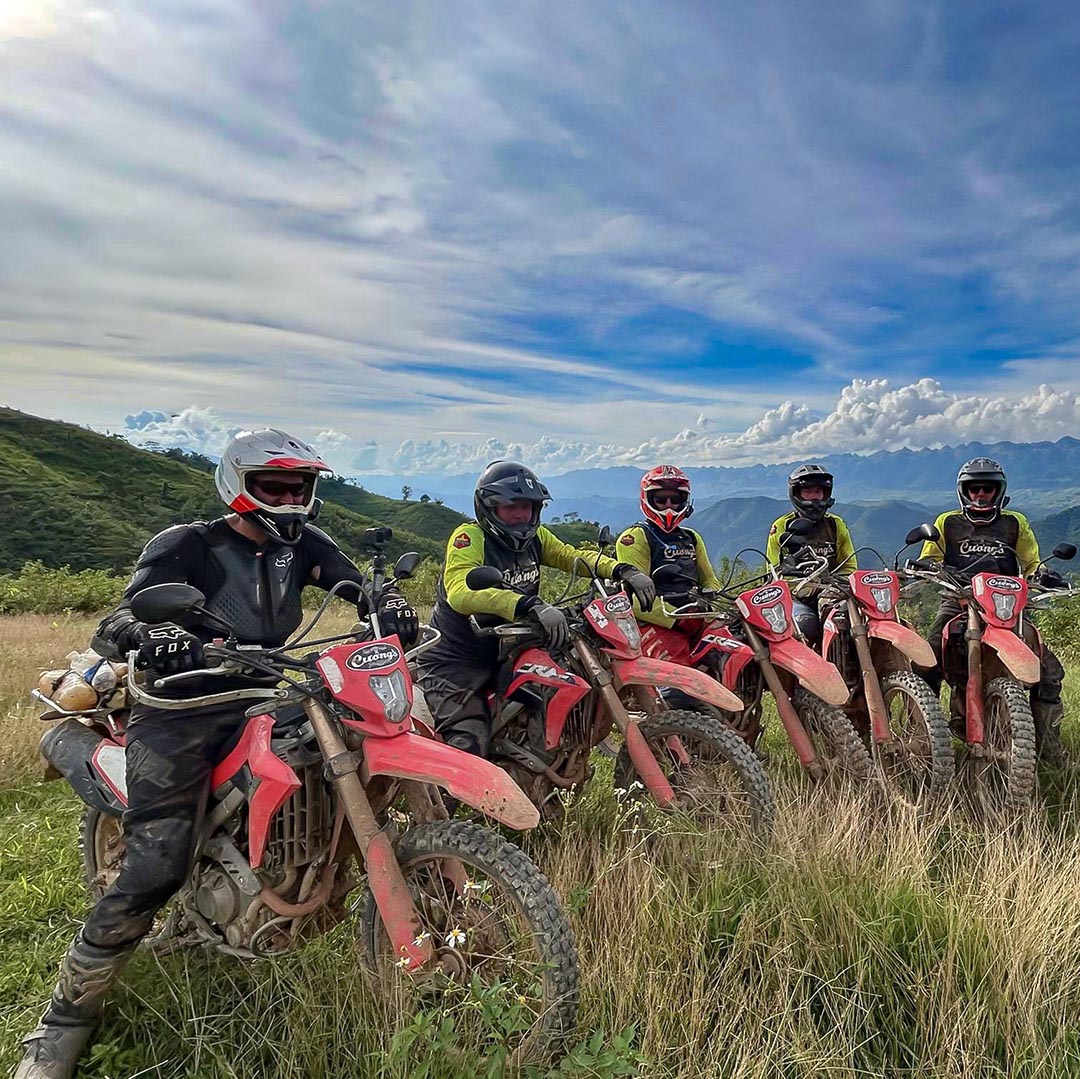
In our latest ride out into the rugged mountains of Northwest Vietnam, our crew traded smooth highways for slick red clay, rocky riverbeds, and goat tracks carved high above the clouds. With Cuong charting the line out front and Diep—the undisputed wizard of trailside mechanics—watching our six, the squad took on one of the rawest enduro playgrounds Southeast Asia has to offer.
Between clutching up steep bamboo climbs and threading through remote hill tribe villages where kids lined the trails to high-five mud-splattered gloves, this tour tested everyone’s stamina. There were stalls, sweat, and a couple of graceful mud naps, but the reward? Sweeping views across terraced valleys, piping-hot bowls of countryside pho, and cold beers around the fire with the local families who welcomed us in.
Hit play to catch the highlights of the ride, watch Diep work his mechanical magic on the fly, and see why the CRF300L is built for this madness.
Got mud in your blood? Check out the full route and secure your saddle for the next run:
>> Explore the Northwest Vietnam Off-Road Tour
Check out all our Off-Road Tours
>> Off-Road Motorbike Tours
Ultimate Guide: The 5 Best Motorbike Rides in Northern Vietnam for 2027
vietnam off road motorbike tours
Ultimate Guide: The 5 Best Motorbike Rides in Northern Vietnam for 2027
Trekking through the misty mountain passes, navigating single-track dirt trails, and carving along the sheer limestone cliffs of Southeast Asia is the ultimate dream for dual-sport and adventure riders. When it comes to two-wheeled exploration, Northern Vietnam stands as the undisputed motorcycling capital of the world.
However, as travel landscape dynamics evolve into 2027—with stricter government enforcement on licensing, increased tourist traffic on main highways, and a heavy crackdown on illegal backpacker rentals—finding authentic off-road tracks, legal border passes, and untouched hill tribe trails requires serious insider knowledge.
To experience the raw beauty of Vietnam without getting caught in slow-moving tour convoys, you need to ride with experts who know where the pavement ends and the real adventure begins.
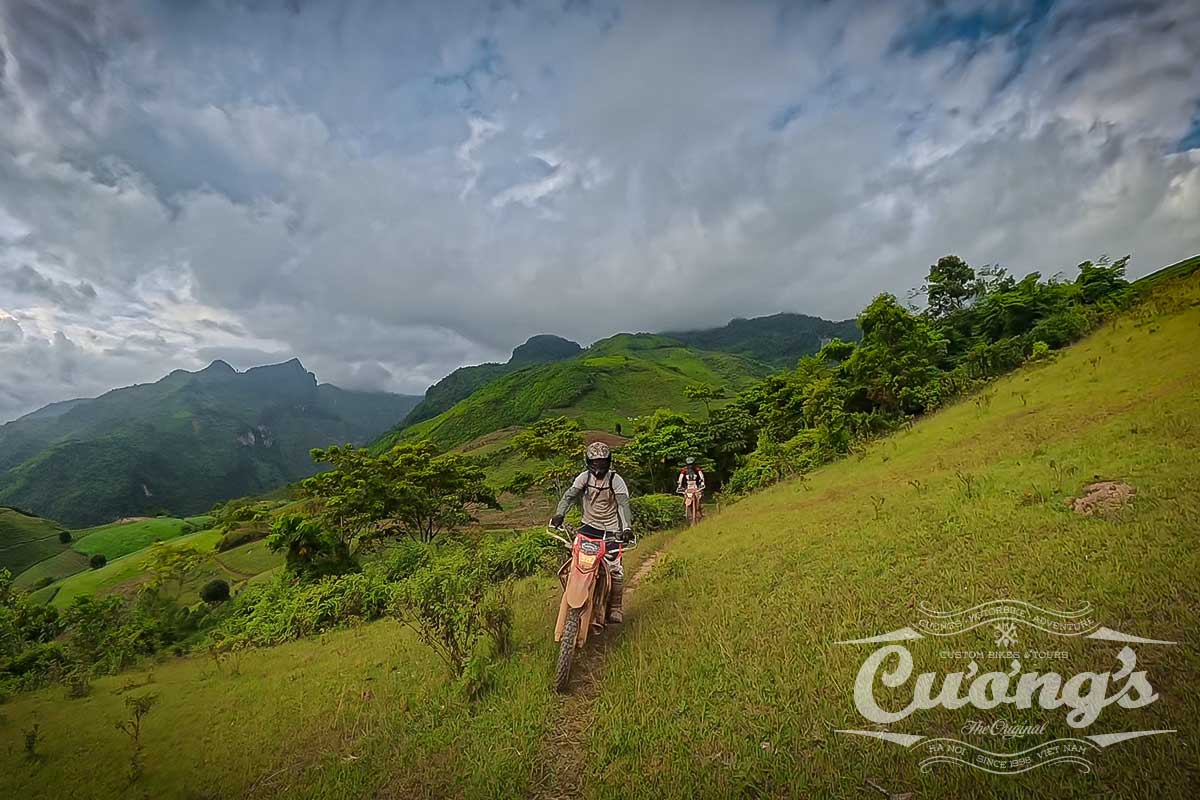
Table of Contents
- Why Ride Northern Vietnam in 2027?
- Why Tour With Cuong’s Motorbike Adventure?
- Our Premier Fleet: Honda CRF 300L & Vintage US Army Jeeps
- 1. Northeast Border Tour (5D/4N): Ban Gioc & Ba Be National Park
- 2. Ha Giang Off-Road Adventure Ride (8D/8N): Beyond the Crowds
- 3. Northwest Vietnam Off-Road Adventure Ride (7D/7N): Mai Chau to Sapa
- 4. Mai Chau & Moc Chau Off-Road Lao Border Explorer (4D/3N)
- 5. Ho Chi Minh Trail: Hanoi to Hoi An via Phong Nha & DMZ
- Essential Booking & License Requirements for 2027
Why Ride Northern Vietnam in 2027?
Northern Vietnam is home to some of the most dramatic geography on the planet:
- The Dong Van Karst Plateau: Vertical limestone monoliths and endless switchbacks.
- Terraced Rice Valleys: World Heritage-level agricultural engineering in Mu Cang Chai and Sapa.
- Thundering Waterfalls: Cascades like Ban Gioc lining the international border.
- Ethnic Minority Cultures: H'Mong, Red Dao, Tay, and Giay tribes preserving centuries-old traditions.
While main highways like the standard Ha Giang Loop have seen an influx of mass tourism, the remote mountain ranges bordering China and Laos remain wild, rugged, and completely untamed. The key to unlocking these regions in 2027 lies in choosing off-road routes, technical single-track trails, and legal border-zone transit options.
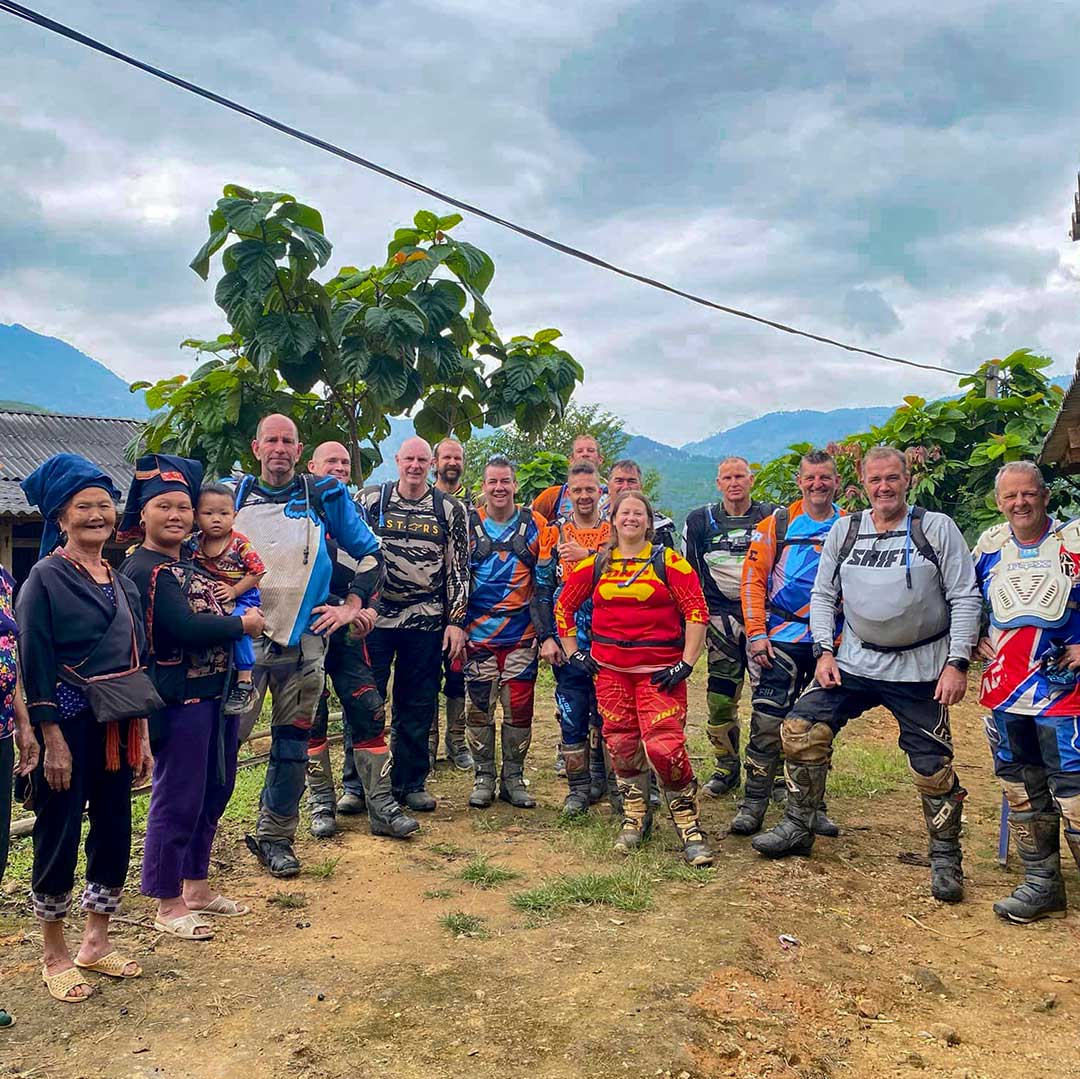
Why Tour With Cuong’s Motorbike Adventure?
When it comes to motorcycling in Vietnam, Cuong’s Motorbike Adventure is the pioneer.
| The Cuong's Adventure Legacy |
|---|
| • Operating Since 1998: Vietnam's oldest & longest-running tour firm |
| • Handled BBC Top Gear Team's: Iconic 2008 Vietnam Special |
| • Trusted Celebrity Clients: Motorcycle legends like Charley Boorman & Gordon Ramsay |
| • Premium Fleet: Modern Honda CRF 300L dual-sports & vintage US Army Jeeps |
| • Complete Support: Full legal border paperwork, support trucks, & expert mechanics |
Started in the late 1990s by master mechanic Cuong—a central figure in founding Hanoi's legendary Minsk Club—this operation literally built motorcycle touring in Vietnam from the ground up.
When the BBC needed someone to build, modify, and maintain the bikes for the world-famous BBC Top Gear Vietnam Special, they called Cuong. He designed the amphibious motorbikes that Jeremy Clarkson and the team took into Ha Long Bay and kept their vintage scooters running throughout the grueling shoot. Additionally, global adventurers like Charley Boorman and celebrity chef Gordon Ramsay have relied on Cuong for their high-profile motorcycle expeditions across Southeast Asia.
Choosing Cuong's means riding with highly trained English-speaking road captains, dedicated sweep mechanics, and support vehicles that guarantee absolute safety and seamless logistics.
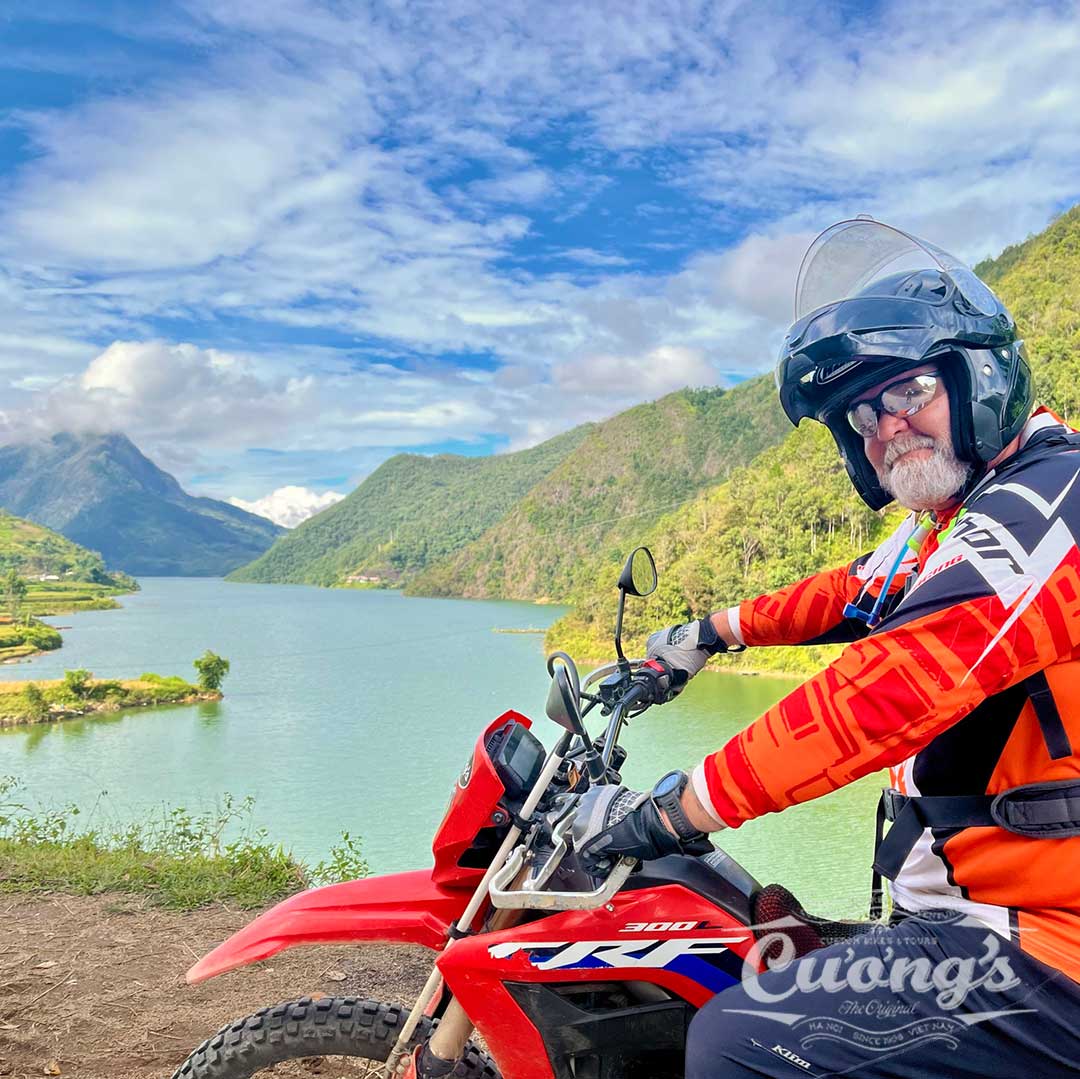
Our Premier Fleet: Honda CRF 300L & Vintage US Army Jeeps
To conquer the extreme terrain of Northern Vietnam, you need equipment built for performance, reliability, and comfort.
The Honda CRF 300L Dual-Sport
The modern Honda CRF 300L is the undisputed king of Vietnamese off-road riding. Featuring plush long-travel suspension, light curb weight, and crisp fuel-injected power delivery, the CRF 300L glides over rocky river crossings, muddy mountain single-tracks, and paved hairpin turns with equal ease.
Classic US Army Jeeps & Support Vehicles
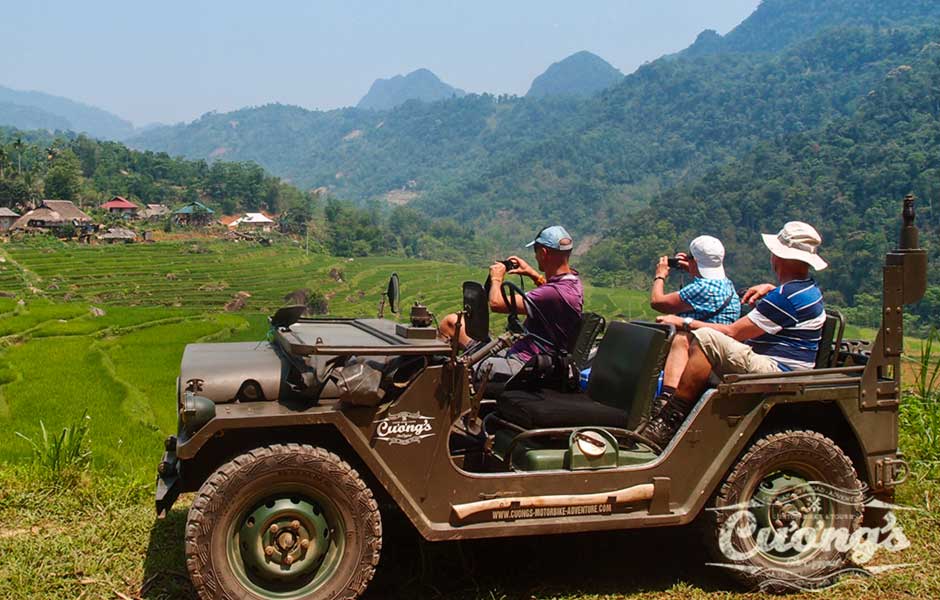
For non-riding partners, photographers, or groups looking for an iconic vintage experience, Cuong’s operates a restored fleet of classic 4x4 US Army Jeeps. These open-air vehicles navigate the exact same rugged routes alongside the bikes, carrying luggage, spare parts, cold drinks, and passengers in style.
| Vehicle Type | Best Suited For |
|---|---|
| Honda CRF 300L | Technical off-road, mountain passes, single-track dirt |
| Vintage US Army Jeep | Non-riders, support crew, photographers, group comfort |
| Ural 650 Sidecars | Nostalgic scenic cruising, classic motorcycle enthusiasts |

1. Northeast Border Tour (5D/4N): Ban Gioc & Ba Be National Park
- Duration: 5 Days / 4 Nights
- Riding Terrain: Sealed backroads, limestone valley dirt trails, border tracks
- Highlights: Ba Be Lake, Ban Gioc Waterfall, Pac Bo Cave, Cao Bang Global Geopark
- Official Itinerary Page: Northeast Border Ride 5D/4N
Hanoi ──> Ba Be National Park ──> Cao Bang ──> Ban Gioc Waterfall ──> Lang Son ──> HanoiTour Overview
If you want to experience dramatic karst scenery without the heavy tourist traffic of main highway loops, the Northeast Border Tour delivers an incredible blend of nature, culture, and smooth flowing riding.
Setting off northeast from Hanoi, this 5-day route quickly leaves industrial urbanization behind as you head toward Ba Be National Park, home to Vietnam’s largest natural freshwater lake. Here, you'll cross the lake by local boat, stay in traditional Tay ethnic stilt houses right over the water, and dine on freshly caught river fish and farm-to-table mountain specialties.
The Border Highlights
From Ba Be, the route carves up into the Cao Bang UNESCO Global Geopark. You’ll track along single-lane mountain passes and border patrol roads directly adjacent to China. The ultimate climax of this ride is Ban Gioc Waterfall, a massive 30-meter-tall, 300-meter-wide multi-tiered natural wonder spanning the international boundary between Vietnam and China.
| Northeast Border Tour Quick Stats | |
|---|---|
| Total Distance Covered | Approx. 950 - 1,100 KM |
| Off-Road Ratio | 30% Off-Road / 70% Sealed Backroads |
| Accommodation Style | Lakeside Homestays & Boutique Mountain Hotels |
| Physical Difficulty Level | Moderate (Ideal for intermediate adventure riders) |
2. Ha Giang Off-Road Adventure Ride (8D/8N): Beyond the Crowds
- Duration: 8 Days / 8 Nights
- Riding Terrain: Technical off-road, rocky mountain single-track, dirt trails, pass carving
- Highlights: Ma Pi Leng Pass, Dong Van Karst Plateau, Du Gia, Lao Cai border trails
- Official Itinerary Page: Ha Giang Border Motorbike Tour 8D/8N
Hanoi ──> Vu Linh ──> Ha Giang ──> Dong Van ──> Meo Vac ──> Bao Lac ──> Lao Cai ──> HanoiBypassing Mass Tourism
While standard tours take tourists down congested asphalt roads, Cuong's Ha Giang Off-Road Expedition takes you deep into the wilderness along remote border tracks, high-altitude rocky trails, and hidden hill tribe passes. This itinerary is specifically engineered for riders who want to tackle the extreme topography of Northern Vietnam far away from the commercial party crowd.
The Ultimate Mountain Odyssey
Starting with an escape from Hanoi toward Thac Ba Lake, the ride progresses rapidly into the towering cliffs of Ha Giang province. You'll tackle legendary routes like the Ma Pi Leng Pass—often referred to as the king of Vietnamese passes—hanging hundreds of meters above the neon-turquoise Nho Que River.
Instead of turning back on paved roads, Cuong’s guides lead the group west across rugged mountain ridges toward Lao Cai and Sapa. You’ll ride along single-tracks through remote H'Mong, Dao, and Lolo villages where Western travelers remain a rare sight. Expect rocky climbs, slick clay trails, cliffside traverses, and breathtaking high-altitude panoramas every single day.
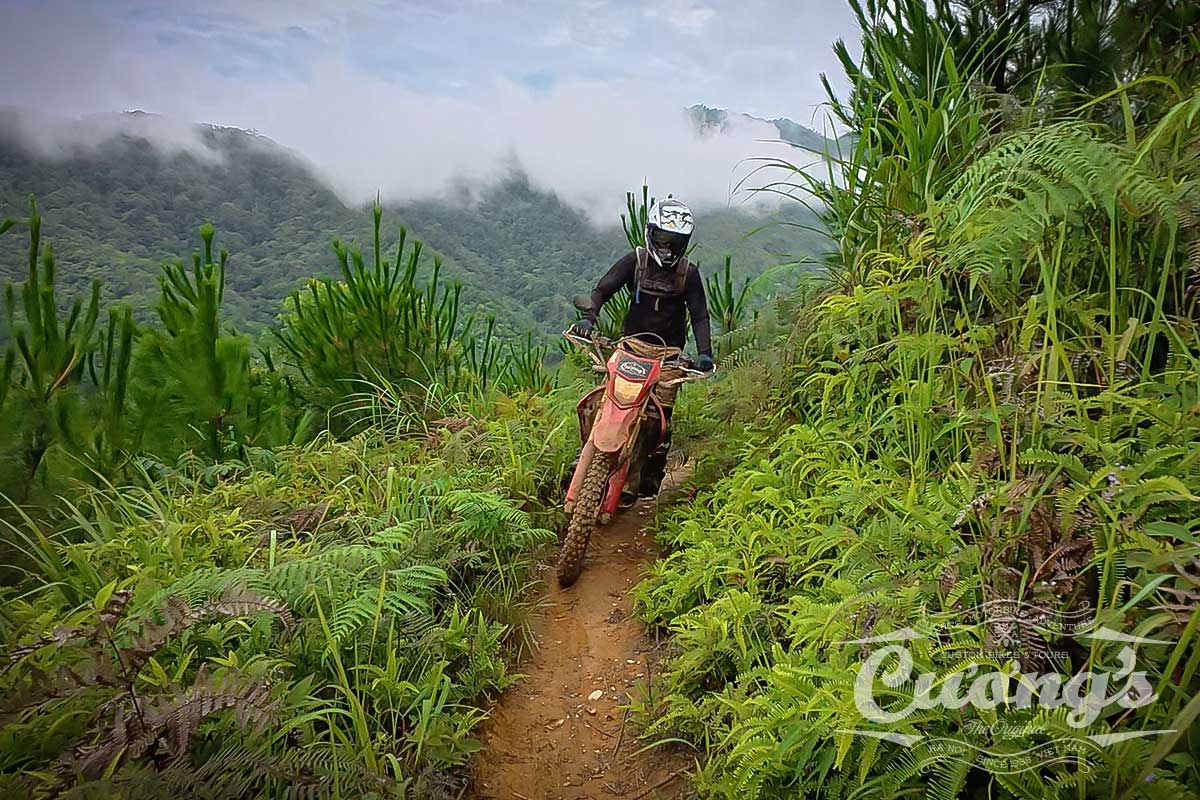
3. Northwest Vietnam Off-Road Adventure Ride (7D/7N): Mai Chau to Sapa
- Duration: 7 Days / 7 Nights
- Riding Terrain: Mountain off-road, clay tracks, deep valley passes, rice terrace ridges
- Highlights: Mai Chau Valley, Moc Chau Tea Plantations, Mu Cang Chai Rice Terraces, O Quy Ho Pass, Sapa
- Official Itinerary Page: Northwest Vietnam Tour 7D/7N
Hanoi ──> Mai Chau ──> Moc Chau ──> Phu Yen ──> Mu Cang Chai ──> Than Uyen ──> SapaThe Land of Golden Rice Terraces & Giant Peaks
The Northwest region of Vietnam hosts the country's highest mountain ranges, including Fansipan (the "Roof of Indochina"). This 7-day tour is a masterclass in mountain dual-sport riding, guiding you through the most iconic agricultural and geological landscapes in Asia.
| Location | Route Highlight |
|---|---|
| Mai Chau Valley | Emerald-green rice paddies surrounded by White Thai stilt villages |
| Moc Chau Plateau | Rolling green tea hills, misty mountain tracks, Lao border trails |
| Mu Cang Chai | UNESCO-recognized rice terrace amphitheaters carved into mountains |
| O Quy Ho Pass | One of Vietnam's longest mountain passes reaching over 2,000m |
Riding the Terraces & High Passes
Beginning with a scenic descent into the tranquil valley of Mai Chau, the route quickly climbs onto the cool plateau of Moc Chau. From there, you’ll push north across technical river crossings and ridge-line dirt trails into Mu Cang Chai. Here, millions of hand-carved rice terraces blanket entire mountain valleys.
After conquering challenging off-road climbs through remote H'Mong settlements, you’ll ascend the legendary O Quy Ho Pass, soaring high above the clouds before descending into the alpine valley town of Sapa.
For visual inspiration on these off-road routes, watch Vietnam Off-Road Motorbike Expedition Footage, which offers a first-hand view of the terrain and dirt tracks in Northwest Vietnam.
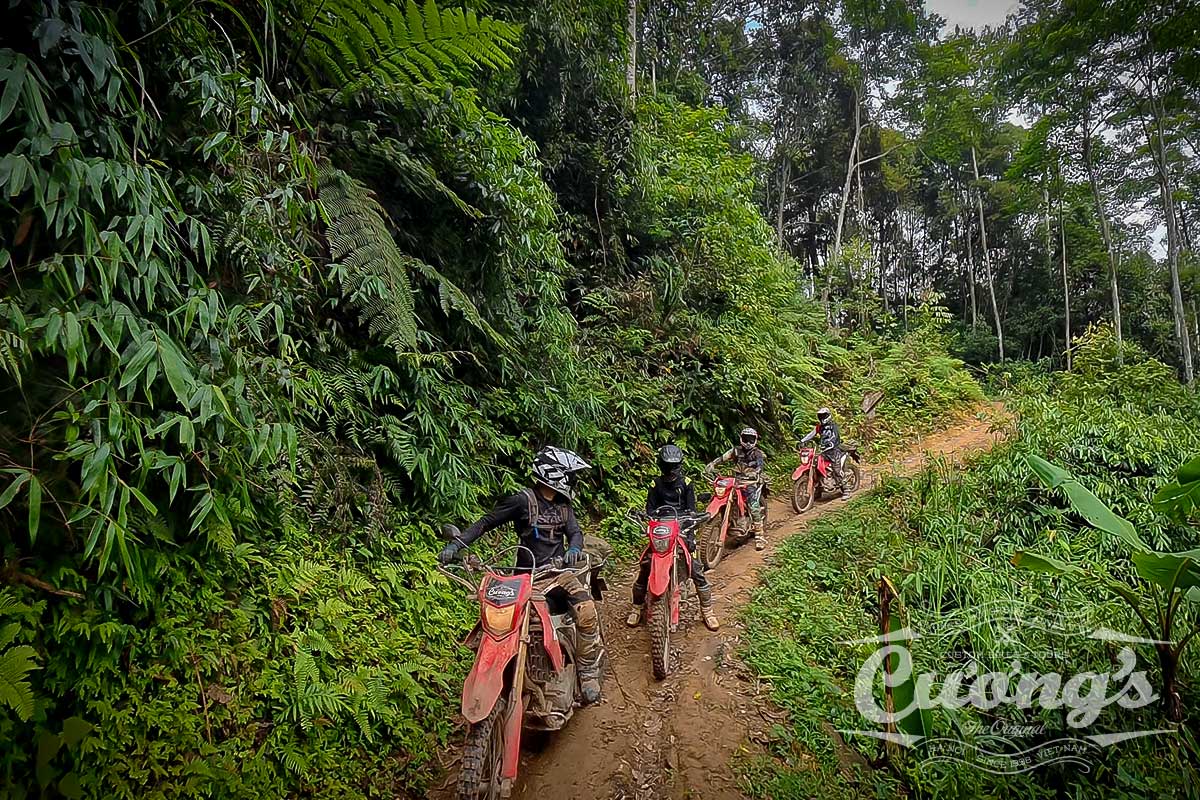
4. Mai Chau & Moc Chau Off-Road Lao Border Explorer (4D/3N)
- Duration: 4 Days / 3 Nights
- Riding Terrain: Off-road dirt, bamboo forest tracks, mountain cloud passes
- Highlights: Ta Xua Cloud Sea, Moc Chau Tea Estates, Lao Border trails, Pu Luong Nature Reserve
- Official Itinerary Page: Mai Chau Ta Xua Off-Road 4D/3N
Hanoi ──> Pu Luong / Mai Chau ──> Moc Chau ──> Ta Xua ──> HanoiThe Ultimate Short-Duration Off-Road Escape
Don't have a full week or two to spare? The 4-day Lao Border & Ta Xua Cloud Explorer is designed for time-conscious riders who want maximum off-road excitement without spending weeks on the road. Located just a short distance southwest of Hanoi, this ride enters rugged wilderness within hours of departure.
Hunting Clouds in Ta Xua
This itinerary takes you through the lush limestone canyons of Pu Luong Nature Reserve and the rolling green hills of Moc Chau, before tackling border trails running along the frontier of Laos. The crown jewel of this trip is ascending to Ta Xua, famously known as the "Valley of Clouds." Riders navigate narrow, spine-like mountain ridges high above dense layers of white clouds settling in the valleys below. Staying in authentic homestays, drinking local mountain tea, and conquering technical dirt elevation gains make this 4-day tour an unforgettable adventure.
 5. Ho Chi Minh Trail: Hanoi to Hoi An via Phong Nha & DMZ
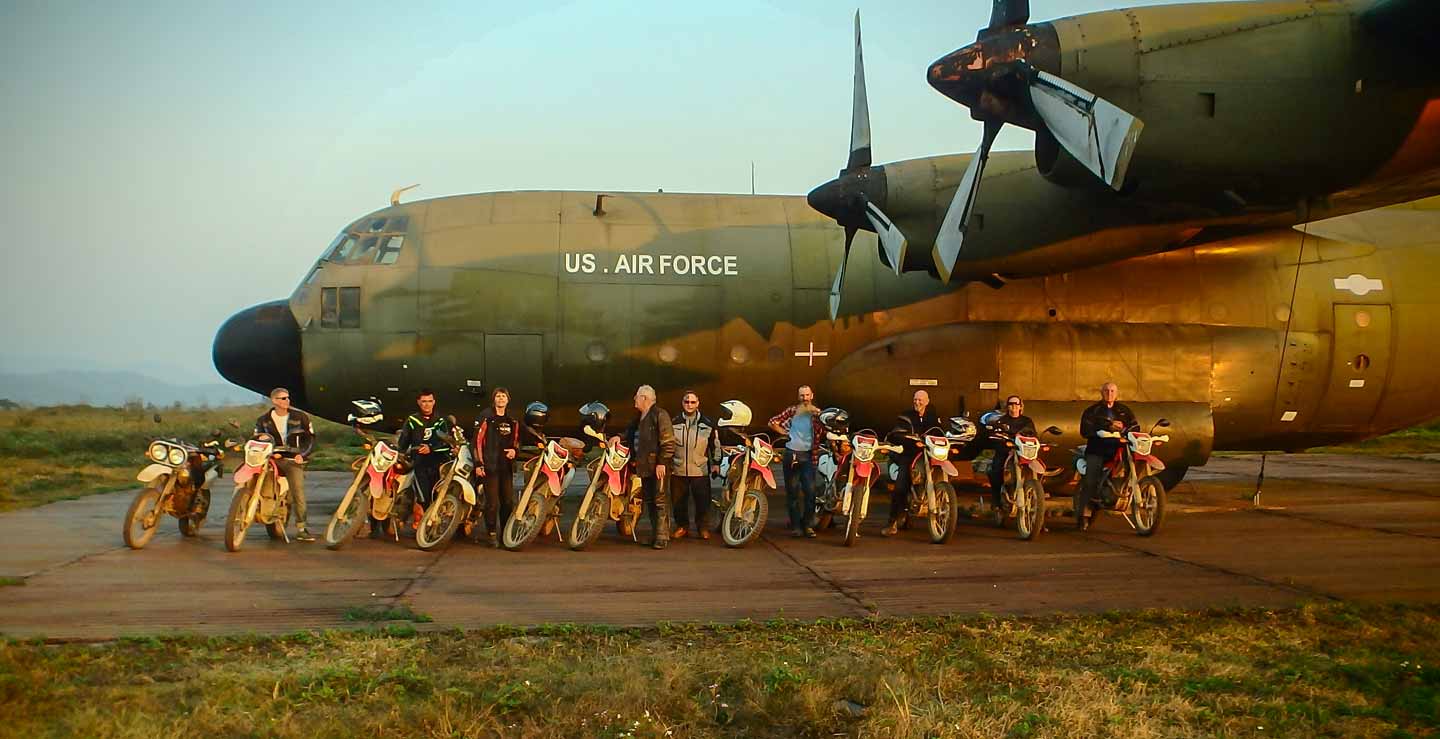
- Duration: 7 to 8 Days
- Riding Terrain: Smooth asphalt curves, remote mountain highway, jungle tracks
- Highlights: Phong Nha-Ke Bang Caves, Khe Sanh Combat Base, DMZ, Truong Son Cemetery, Hai Van Pass
- Official Itinerary Page: Ho Chi Minh Trail Phong Nha Tour
Hanoi ──> Tan Ky ──> Phong Nha ──> Khe Sanh ──> Hue ──> Hai Van Pass ──> Hoi AnThe Ultimate Historic Trans-Vietnam Ride
For history buffs and long-distance touring enthusiasts, no ride on Earth compares to the Ho Chi Minh Trail. This legendary supply network—which once carried troops and supplies through dense jungle during the war—has been transformed into one of the world's most scenic motorcycling highways.
| Site / Landmark | Historical Significance |
|---|---|
| Phong Nha-Ke Bang | World's largest cave systems set inside primeval national parks |
| Khe Sanh Base | Historic battlefield overlooking the Laotian border mountain range |
| The 17th Parallel | The former DMZ (Demilitarized Zone) and Hien Luong Bridge |
| Hai Van Pass | "Ocean Cloud Pass" made world-famous by the BBC Top Gear Special |
From Jungle Caves to Ocean Passes
Departing Hanoi, you'll join the Western branch of the Ho Chi Minh Highway, carving through untamed wilderness near the Laotian border with virtually zero traffic. Stop at Phong Nha-Ke Bang National Park, home to Son Doong (the largest cave on Earth), before exploring key historical sites across the 17th Parallel and the former Demilitarized Zone (DMZ).
After spending an evening soaking in the rich imperial history of Hue, you'll mount your bike for the iconic finale: ascending the Hai Van Pass. Sweeping around coastal cliffs with views of the ocean, you'll roll into the ancient trading port of Hoi An to complete a true cross-country journey.
Essential Booking & License Requirements for 2027
Motorcycle touring regulations across Vietnam are strictly enforced. Before booking your 2027 adventure, make sure you meet the legal requirements:
2027 Legal Checklist for Riders
- Passport: Valid for at least 6 months beyond intended departure.
- Driving License: Home country motorcycle license (Category A).
- International Driving Permit (IDP): 1968 Vienna Convention IDP with valid Motorcycle endorsement.
- Travel Insurance: Comprehensive medical policy covering 300cc+ motorcycle riding and emergency medical evacuation.
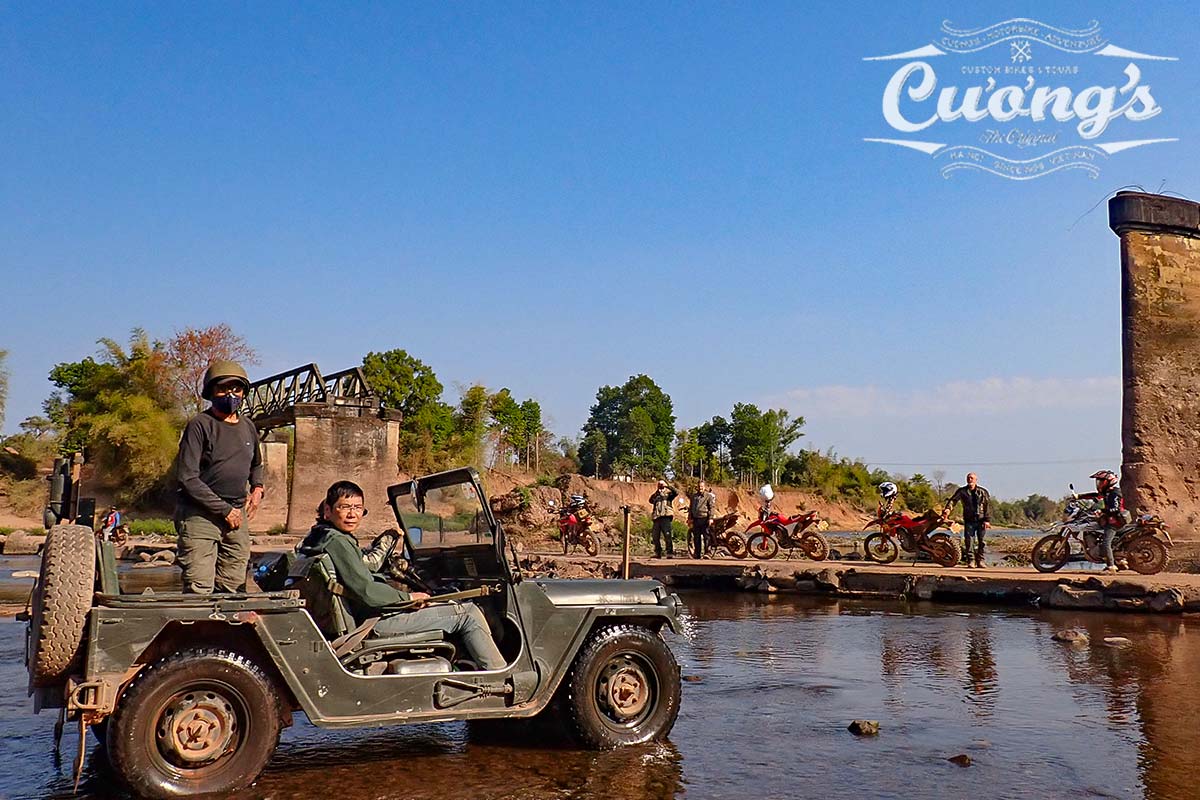
Why Book With a Licensed Operator?
Attempting to rent bikes independently without proper licensing or permits can lead to heavy police fines, vehicle impoundments, or voided insurance coverage. When you tour with Cuong’s Motorbike Adventure, their team manages all mandatory border zone permits (Giấy phép vào khu vực biên giới), local police clearances, mechanical sweep support, and riding logistics.
Plan Your 2027 Route Today
Whether you want to climb rocky single-track trails in Ha Giang, ride alongside tea plantations near Laos, or trace history down the Ho Chi Minh Trail, Vietnam is ready to be explored.
- Website: cuongs-motorbike-adventure.com
- Learn More About Cuong: Our Story & Top Gear History
Secure your 2027 departure early to guarantee bike availability on Honda CRF 300L models and custom Jeep support units!

Ho Chi Minh Trail Motorbike Tour: The Ultimate Historical Adventure Ride
Ho Chi Minh Trail Motorbike Tour: The Ultimate Guided Adventure Through Vietnam & Laos
If you are searching for the definitive Ho Chi Minh Trail motorbike tour, you have just found it. Riding the legendary Ho Chi Minh Trail is not simply a motorcycle trip—it is a pilgrimage through one of the most historically significant and visually spectacular corridors in Southeast Asia. At Cuong’s Motorbike Adventure, Vietnam’s longest-running motorbike tour company, we have spent over two decades refining what we believe is the most complete, safest, and most rewarding Ho Chi Minh Trail experience on the market.
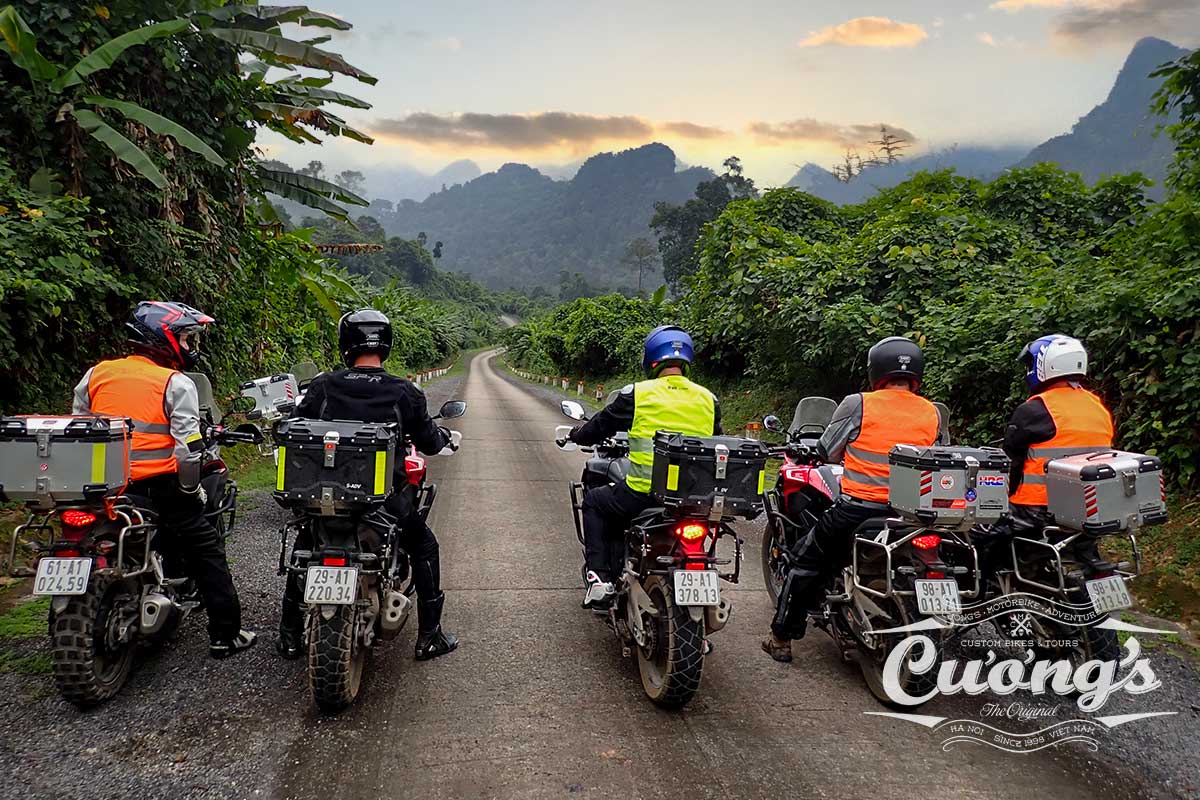
Whether you dream of carving through jungle tracks in Phong Nha-Ke Bang National Park, crossing into the remote mountains of Laos, or tracing the same supply routes that changed the course of history, our fully guided Ho Chi Minh Trail motorbike tours deliver an adventure that budget operators simply cannot match.
Trusted by BBC Top Gear, featured on CNN, and chosen by professional riders and celebrities including Gordon Ramsay and Charley Boorman, Cuong’s Motorbike Adventure sets the gold standard for Vietnam motorbike tours. This is not tourism. This is expedition-grade adventure riding, built for riders who demand authenticity, safety, and zero compromises.
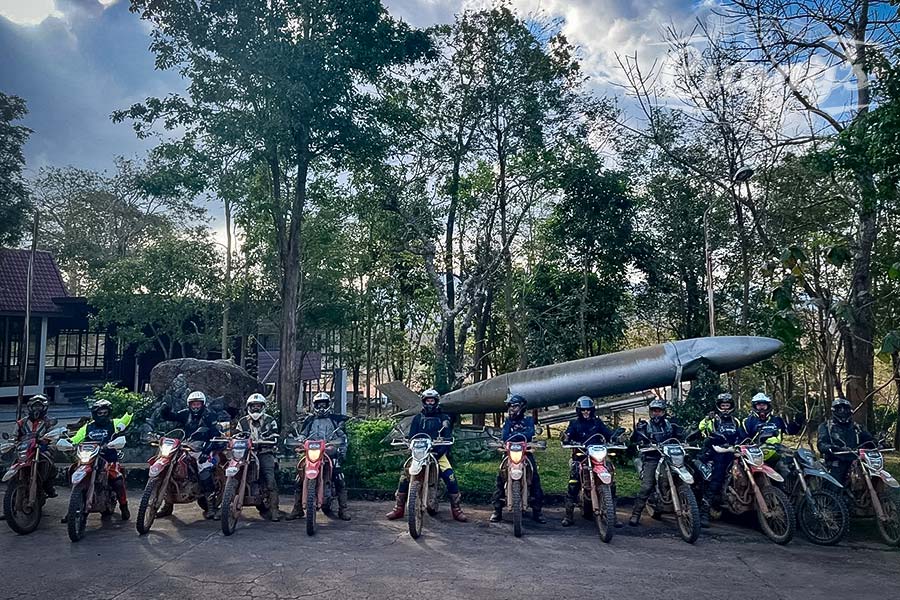
Table of Contents
- What Is the Ho Chi Minh Trail & Why Ride It?
- Why Cuong’s Ho Chi Minh Trail Tour Is Different
- Phong Nha Motorbike Tour: The Jewel of the Trail
- The Laos Cross-Border Expedition: 12 Days of Pure Adventure
- Our Bike Fleet: Honda CRF250L, CRF300L, CB500X & Ural 650
- Riding Difficulty & Who This Tour Is For
- Safety, Support & the Guide + Mechanic System
- Food, Accommodation & the Cuong’s Difference
- Cultural Immersion: Hill Tribes, War History & Local Life
- Pricing, What’s Included & Transparent Costs
- How to Book Your Ho Chi Minh Trail Motorbike Tour
- Frequently Asked Questions
1. What Is the Ho Chi Minh Trail & Why Ride It?
The Ho Chi Minh Trail is arguably the most famous military supply route in modern history. During the Vietnam War, this vast network of roads, tracks, and jungle paths stretched from North Vietnam through Laos and into South Vietnam, enabling the movement of troops and supplies that would ultimately shape the outcome of the conflict. Today, the trail has been transformed into one of the most exhilarating long-distance motorbike routes on the planet.
But riding the Ho Chi Minh Trail in 2026 is about far more than war history. It is about immersion in untouched wilderness. It is about navigating limestone karsts that have evolved for over 400 million years in Phong Nha-Ke Bang National Park—a UNESCO World Heritage site and the oldest major karst area in Asia. It is about crossing mist-shrouded mountain passes, fording rivers in remote Laos, and sharing rice wine with hill tribe families who have called these mountains home for generations.
For adventure motorcyclists, the Ho Chi Minh Trail represents the perfect synthesis of challenge and reward. The terrain varies from smooth, winding paved roads that cut through emerald valleys to rugged dirt tracks, rocky river crossings, and jungle corridors where you might not see another vehicle for hours. It is a route that demands respect, rewards preparation, and delivers memories that last a lifetime.
Unlike the crowded tourist loops of Southern Vietnam or the well-trodden coastal highway, the Ho Chi Minh Trail remains raw, authentic, and largely undiscovered by mass tourism. That is precisely why riders who have conquered the Alps, the Andes, or the Atlas Mountains are now adding the Ho Chi Minh Trail to their bucket lists. There is simply nothing else like it.
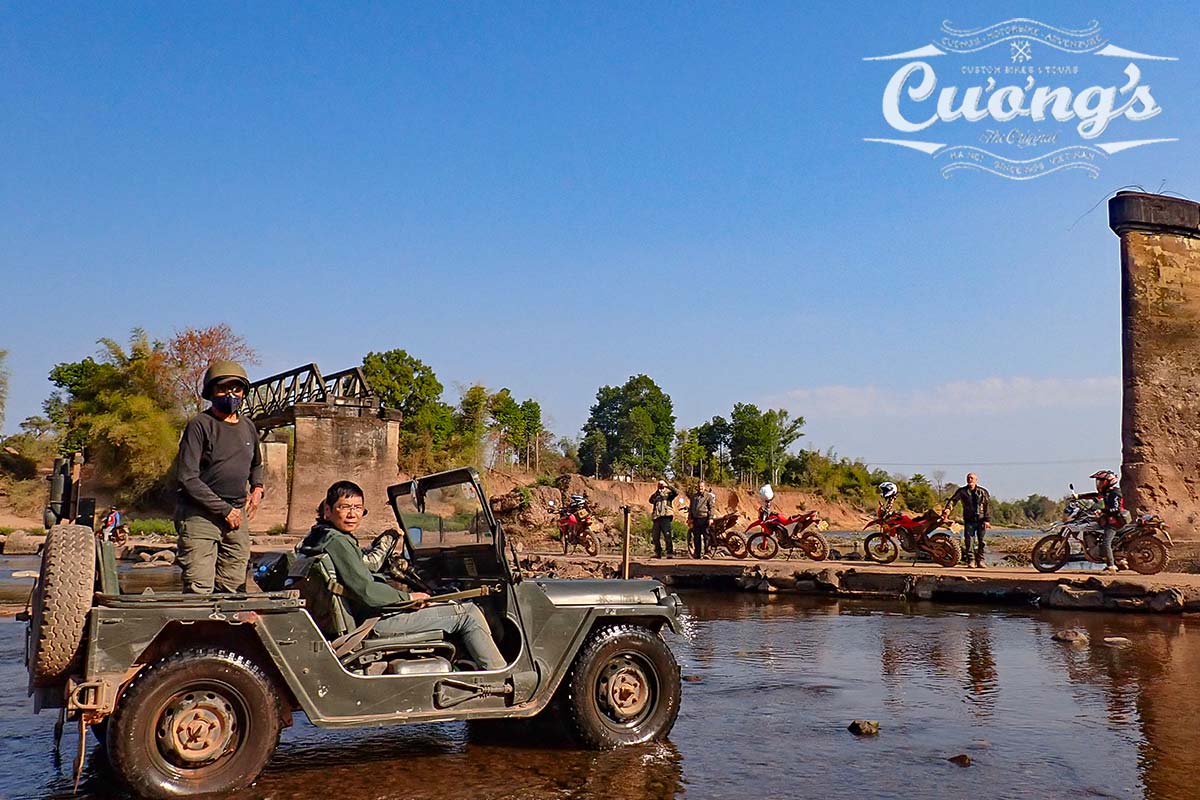
2. Why Cuong’s Ho Chi Minh Trail Tour Is Different
Let us be direct: not all Vietnam motorbike tours are created equal. The difference between an unforgettable expedition and a stressful, poorly managed trip comes down to infrastructure, experience, and integrity. At Cuong’s Motorbike Adventure, we do not cut corners on our bikes, your safety, your food, or your accommodations. Ever.
When the world’s biggest automotive celebrities came to Vietnam to film the BBC Top Gear Vietnam Special in 2008, they called on Cuong for full mechanical support. Cuong personally designed and built the amphibious motorbikes that carried Jeremy Clarkson and the team out into Ha Long Bay. He can be seen nursing Clarkson’s Vespa back to life on screen. That same expertise, ingenuity, and obsessive attention to mechanical detail is built into every Ho Chi Minh Trail motorbike tour we run today.
We have also worked with Gordon Ramsay and Charley Boorman—twice—when they came to film in Vietnam. Professional filmmakers, chefs, and adventurers do not choose tour operators at random. They choose the best. They choose reliability. They choose the team that can handle anything the road throws at them. That is Cuong’s Motorbike Adventure.
Our Ho Chi Minh Trail tours are fully guided, all-inclusive, and professionally supported on every single departure. We are not a rental shop that hands you a map and wishes you luck. We are an expedition company. Every tour includes an experienced English-speaking road captain leading from the front and a professional mechanic riding sweep at the back. You travel at your own pace, stop when you want for photos, and never worry about getting lost, breaking down, or being left behind.
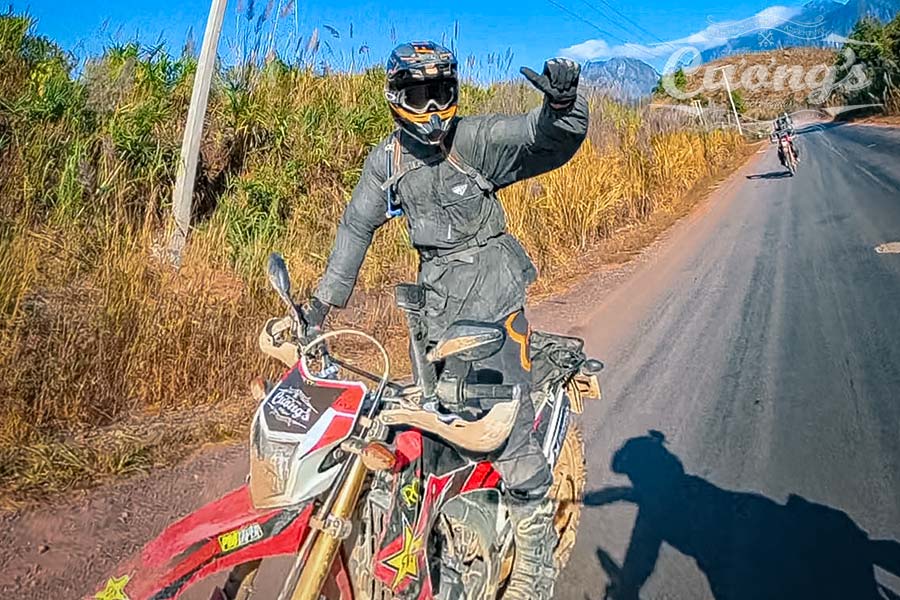
3. Phong Nha Motorbike Tour: The Jewel of the Trail
If you want to experience the single most dramatic section of the Ho Chi Minh Trail without committing to a full cross-border expedition, our Ho Chi Minh Trail Phong Nha motorbike tour is the answer. Phong Nha-Ke Bang National Park is the geographic and spiritual heart of the trail in central Vietnam, and it is a landscape that simply does not translate through a camera lens. You have to ride it to believe it.
The terrain here is approximately 80% sealed roads and 20% rural back roads, including historic sections of the original trail that wind through dense jungle and mountains. Daily riding averages five to eight hours, depending on distance and stops, making this tour suitable for intermediate to experienced riders who are comfortable with long distances on varied terrain. Passengers are also welcome and can comfortably join this route.
What makes the Phong Nha section extraordinary is the karst topography. Towering limestone formations rise from the jungle floor like ancient sentinels. Hidden caves—some of the largest in the world—pierce the mountainsides. The Western Ho Chi Minh Trail, which runs directly through the national park, follows a route that the US Army never successfully mapped for bombing. For more than 200 kilometers, you will see few other vehicles, but you will witness some of the most beautiful mountain scenery in Southeast Asia.
Key stops on this leg include the former US Marine Base at Khe Sanh, with its tunnels, airbase remnants, and museum; the Vinh Moc Tunnels, where entire villages lived underground for years; and the DMZ itself, a sobering reminder of the region’s divided past. This is not a history lecture from a textbook. It is history you can touch, ride through, and feel beneath your tires.
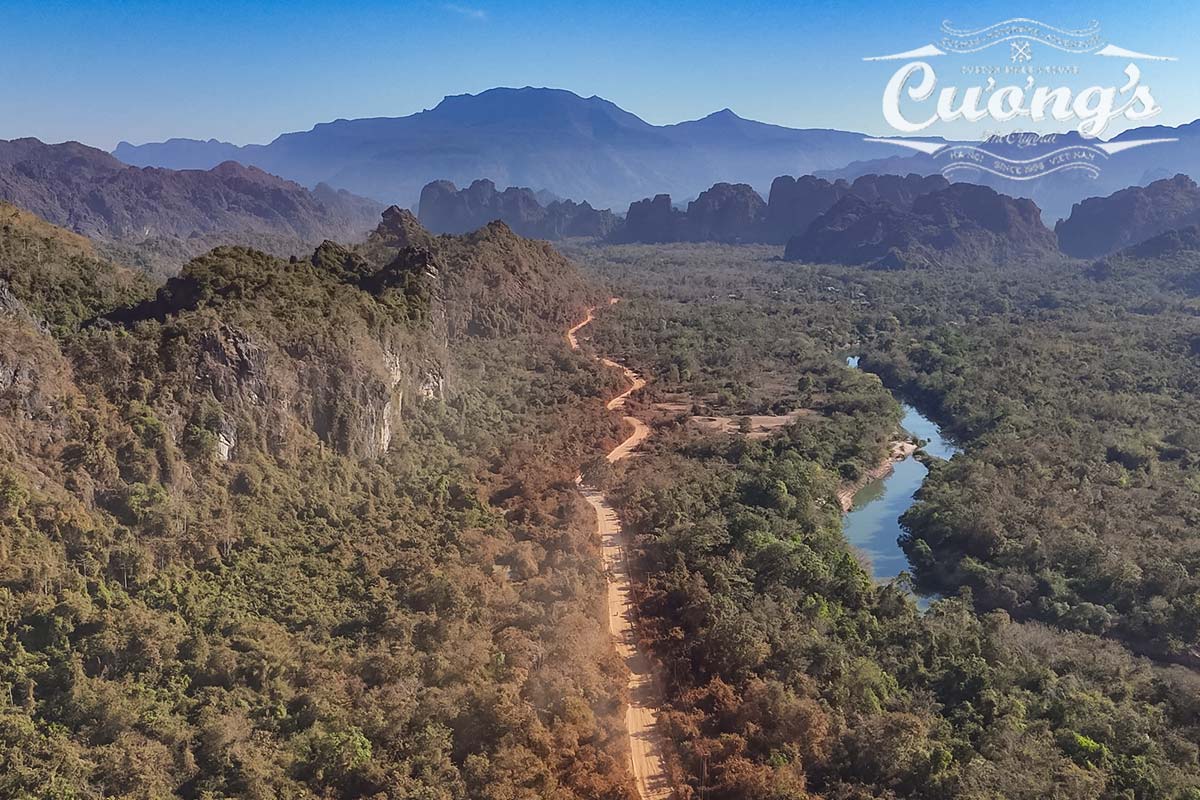
4. The Laos Cross-Border Expedition: 12 Days of Pure Adventure
For riders who want the full Ho Chi Minh Trail experience, our 12-day cross-border expedition from Hanoi to Da Nang via Laos is the ultimate journey. This is not a tour for beginners. It is a serious off-road motorbike adventure through jungle tracks, remote villages, and historic wartime routes that few Western riders have ever seen.
The route begins in Hanoi, where you receive your bike, briefing, and riding gear before heading toward Pu Luong Nature Reserve. From there, you cross into Laos at Xam Nuea, a quiet border town that feels worlds away from Vietnam. The trail then pushes deep into Laos through Phonsavan and the mysterious Plain of Jars, Vieng Thong’s jungle depths, the remote serenity of Nang Khang, and the riverine charm of Sekong before re-entering Vietnam and finishing on the beaches of Da Nang.
Each day brings a new ecosystem. One morning you are fording rivers on narrow jungle tracks; the next you are sharing tea with Hmong traders in a Laotian market. You will camp under stars so bright they seem unreal, sleep in family-run guesthouses where the hospitality is genuine, and ride terrain that ranges from smooth asphalt to mud, rocks, and river crossings that test every ounce of your skill.
The 2026 route has been refined with enhanced jungle tracks around Vieng Thong, deeper war history exploration in Phonsavan, and improved homestays in Ta Oi and Nong that blend comfort with authenticity. Our Vietnam motorbike tours team has ridden every kilometer of this route multiple times, and it shows in the seamless logistics, perfectly timed rest stops, and hidden viewpoints that no GPS will ever reveal.
Not ready for two wheels the entire way? We also offer a Ho Chi Minh Trail Jeep Tour option, where passengers can ride in an open-top US Army Jeep MUTT M151A2 while still experiencing every kilometer of the historic route.
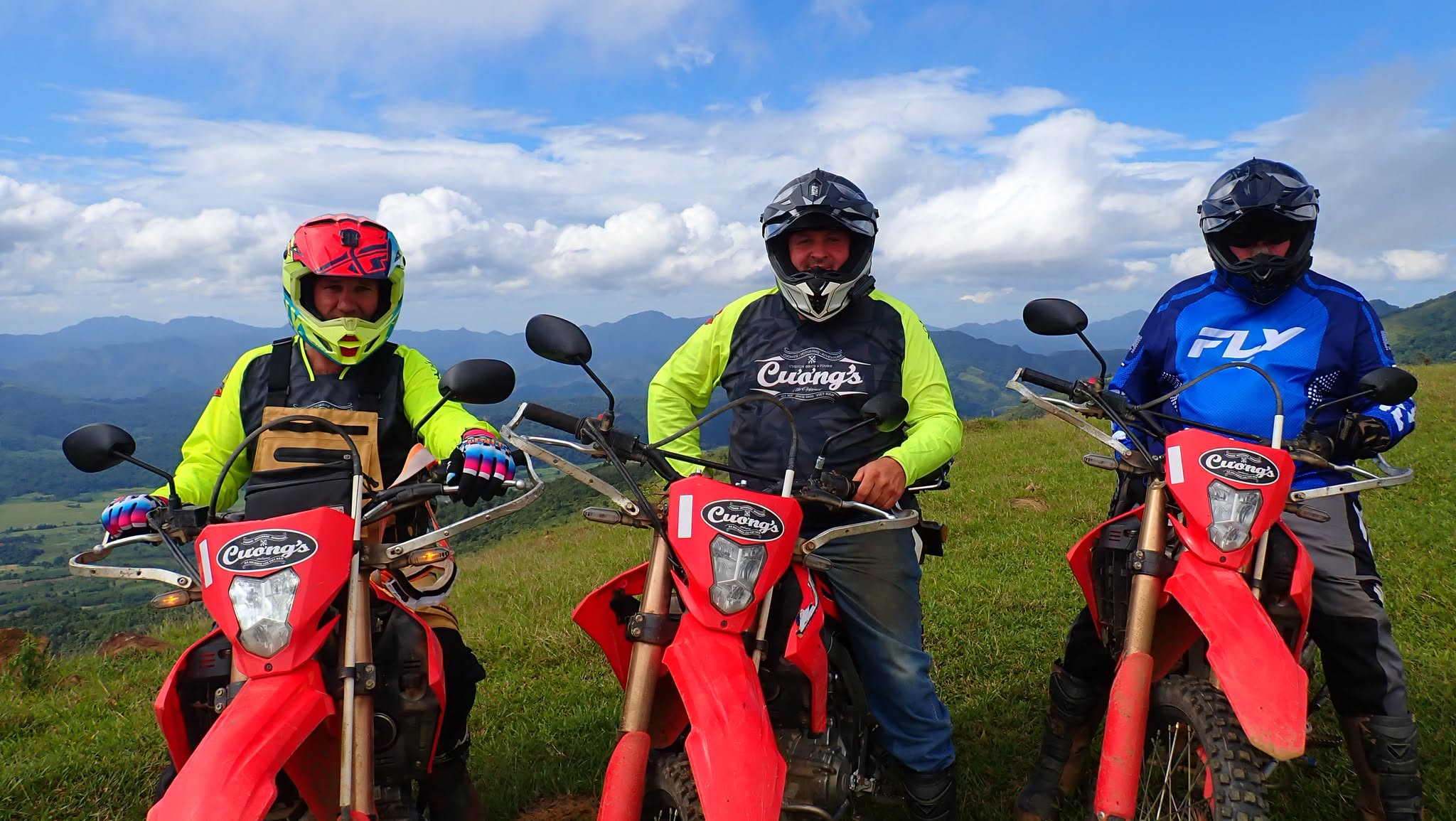
5. Our Bike Fleet: Honda CRF250L, CRF300L, CB500X & Ural 650
Your machine defines your experience. That is why Cuong’s Motorbike Adventure maintains the largest and most diverse fleet of any tour company in Vietnam. We do not rent out worn-out scooters or underpowered commuter bikes. We provide purpose-built adventure motorcycles that are meticulously maintained and set up specifically for the demands of Vietnamese terrain.
Honda CRF250L & CRF300L: These are our workhorses for off-road and mixed-terrain Vietnam motorbike tours. Light, nimble, and virtually bulletproof, the CRF series handles everything from paved mountain passes to rocky single-track, mud, and river crossings. We have Vietnam’s only fleet of CRFs, and they are the preferred choice for riders tackling the Ho Chi Minh Trail’s more demanding sections. The CRF300L’s upgraded suspension makes light work of the rough stuff around Vieng Thong and Nong.
Honda CB500X: New to Vietnam and now a core part of our fleet, the Honda CB500X is the ideal adventure touring bike for riders who want long-distance comfort without sacrificing capability. Set up for on-road and light dirt-track touring, the CB500X is perfect for the Ho Chi Minh Trail’s paved sections and smoother back roads. It is not built for hard-core single-track, but for the rider who values comfort, wind protection, and highway stability on a multi-day journey, it is unbeatable.
Ural 650: For something completely different, we have Vietnam’s only fleet of Ural 650 motorcycles, available with or without sidecars. These rugged, retro machines turn every head on the road and offer a riding experience that is as much about character as it is about covering ground. To drive a Ural on tour, you must have a sidecar license and prior sidecar experience.
Every bike is serviced before departure, equipped with protective gear, and backed by our mechanic sweeper who carries spare parts and tools for roadside repairs. We also offer optional comprehensive damage insurance that covers loss, theft, or damage caused by accident or fall—something almost no budget operator provides.
6. Riding Difficulty & Who This Tour Is For
Our Ho Chi Minh Trail motorbike tours are designed for intermediate to experienced riders. You should be comfortable riding long distances on varied terrain, including sealed roads, gravel, dirt, and occasional rougher sections. Daily riding time averages four to eight hours depending on the specific route and conditions.
The Phong Nha-focused tour is the most accessible, with approximately 80% paved roads and 20% rural or back roads. It is ideal for confident road riders who want a taste of adventure without extreme technical demands. Passengers can join comfortably on this route.
The 12-day cross-border expedition into Laos is significantly more demanding. It includes genuine off-road sections: dirt tracks, rocky trails, mud, river crossings, and technical mountain paths. This is a challenging to advanced ride that requires physical fitness, solid off-road fundamentals, and the mental stamina for multi-day remote travel. If you are unsure about your readiness, contact our team and we will help you choose the right route and bike.
All riders must hold a valid motorbike license from their home country. We require that you also carry personal health insurance or travel insurance that explicitly covers motorbike riding in Vietnam. We strongly recommend providers like World Nomads, but we are happy to discuss options with you before booking.
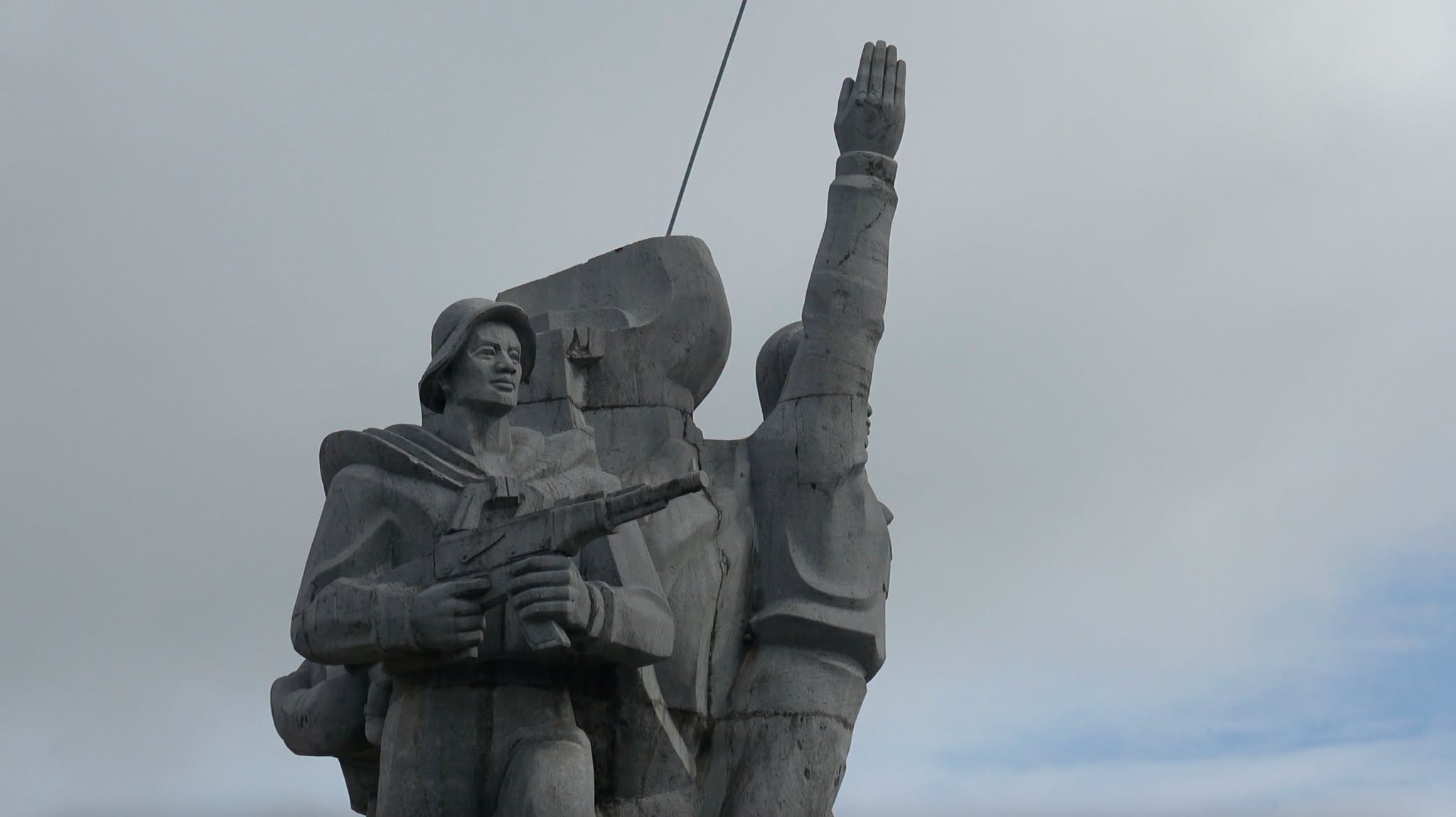
7. Safety, Support & the Guide + Mechanic System
Safety is not a feature we add on. It is the foundation of everything we do. Every Cuong’s tour operates with a unique two-person support system: an experienced English-speaking guide leading from the front, and a professional mechanic sweeping from the back.
This setup transforms the riding experience. You do not have to keep up with a group. You do not have to worry about missing a turn. You do not have to stress about what happens if your bike develops a mechanical issue twenty kilometers from the nearest village. The guide sets the route, reads the road conditions, and shares deep knowledge of local culture, history, and landmarks. The mechanic ensures every bike is running perfectly and can perform roadside repairs on the spot.
We also travel with a support vehicle on many departures, capable of carrying luggage, transporting injured riders if necessary, and hauling spare bikes or parts. Before every tour, we conduct thorough safety briefings, inspect every motorcycle, and fit riders with proper protective gear.
The gear we provide is not an afterthought. Every rider receives a padded motorbike jacket, BMW Motorrad padded summer pants, waterproof rain gear, a 40L dry bag, and a choice of HJC helmets—including open-face helmets with clear and retractable tinted visors, or motocross-style helmets with tinted visors. Sizes range from S to XXL to ensure proper fit. We also strongly recommend bringing your own helmet if you have one, as fit and comfort are personal.
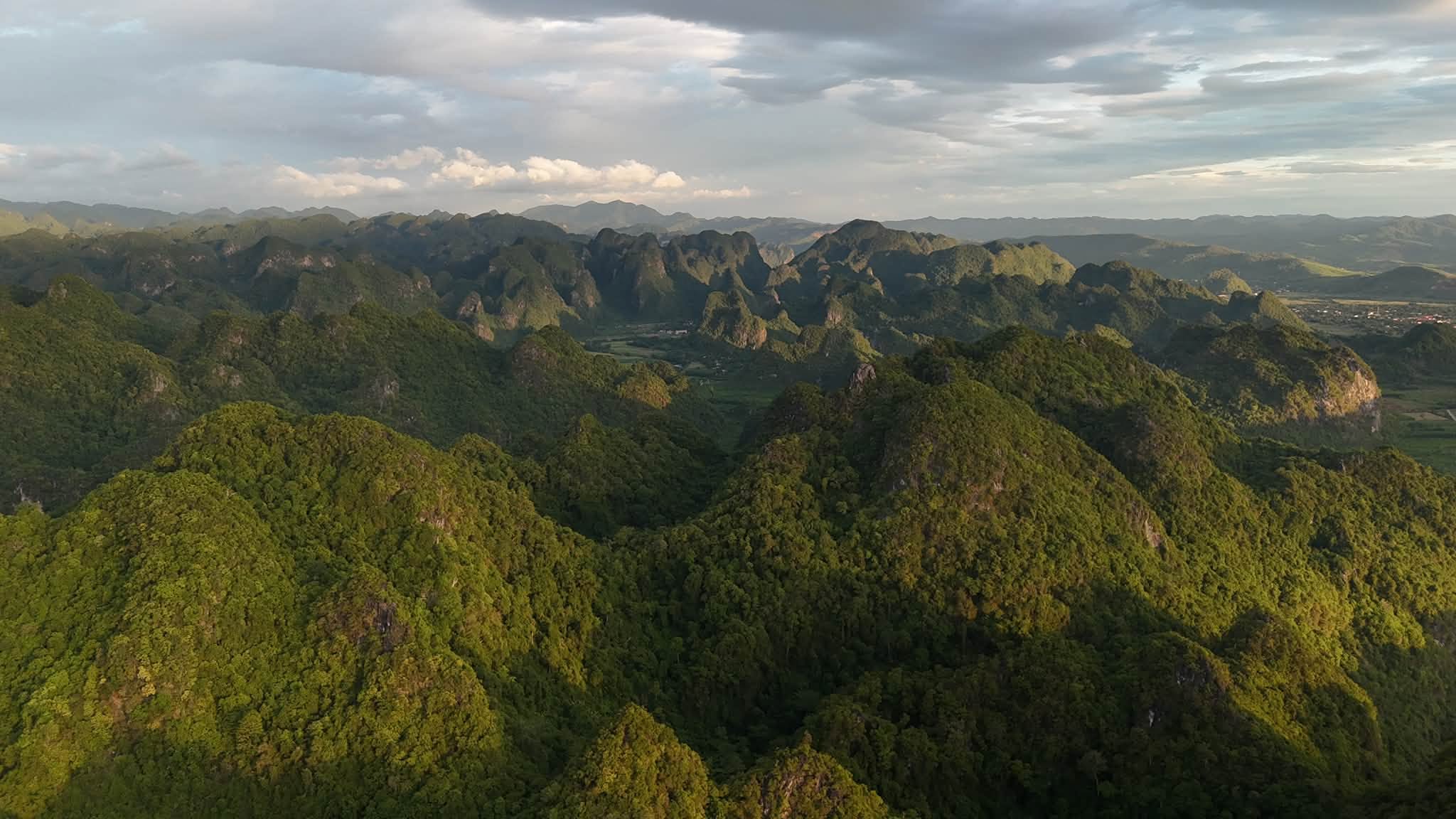
8. Food, Accommodation & the Cuong’s Difference
After a hard day on the trail, you deserve more than a stale sandwich and a dormitory bed. Cuong’s Motorbike Adventure is famous for the quality of our food and accommodations, and it is an area where we deliberately invest more than any budget competitor.
Culinary Excellence: Our tours include all meals and non-alcoholic beverages. Breakfasts are hearty and fuel-focused. Lunches alternate between carefully selected local Vietnamese restaurants—chosen specifically for clean, delicious, authentic food—and our legendary imported picnic lunches. When the route takes us away from towns, we set up picnics in stunning natural locations featuring sliced meats, cheeses, fresh bread, seasonal fruit, and freshly brewed coffee. These are not packed lunches. They are experiences. Eating a European-style picnic while overlooking a Laotian river valley or a Vietnamese terraced hillside is a moment of pure luxury that defines the Cuong’s experience.
Superior Accommodations: We meticulously select the best hotels, guesthouses, resorts, and homestays available in every location. In towns, you stay in private rooms with air conditioning, en-suite bathrooms, and hot water. In remote villages, we arrange authentic homestays with local families, where you sleep on a mattress with a mosquito net in a traditional stilt house. It is immersive, but never uncomfortable.
Here is what truly sets us apart: we dispatch extra staff ahead of the group to every accommodation. They check that the air conditioning works, confirm hot water is running, deliver your luggage directly to your room, and prepare evening cocktails and cold beers for your arrival. You walk in, drop your gear, and relax. No hassles. No surprises. No hunting for a working shower after eight hours in the saddle.
10. Pricing, What’s Included & Transparent Costs
We believe in all-inclusive, transparent pricing. When you book a Ho Chi Minh Trail motorbike tour with Cuong’s, you know exactly what you are paying for—and what you are not.
Our tours include:
- Motorcycle rental (Honda CRF250L, CRF300L, CB500X, or Ural 650 depending on tour and preference)
- All petrol, oil, and routine maintenance
- All meals and non-alcoholic beverages
- Accommodation in single rooms, twin-share hotels, or authentic homestays
- English-speaking guide and mechanic sweeper
- All road fees, tolls, and national park entrance tickets
- Full protective riding gear and 40L dry bag
- 3rd party liability insurance on our vehicles
- Lao entry visa (for cross-border tours)
- Motorbike shipping back to Hanoi (where applicable)
- Airport or hotel transfers in Hanoi
- Free Cuong’s Motorbike Adventure T-shirt
Optional upgrades: Comprehensive damage insurance covers loss, theft, or major damage to the motorcycle caused by accident or fall. This is highly recommended and available at competitive rates. For example, coverage on a Honda CRF250L is approximately $200–$240 for a multi-day tour, depending on duration.
Not included: Alcohol, personal health/travel insurance, personal expenses, tips and gratuities, and third-party liability coverage for accidents involving other vehicles or persons.
Our Ho Chi Minh Trail Phong Nha tour and standard Ho Chi Minh Trail tour start from approximately $1,890 USD per person. The 12-day cross-border Laos-Vietnam expedition is priced according to bike choice and inclusions. Group discounts are available—contact us for a custom quote.
11. How to Book Your Ho Chi Minh Trail Motorbike Tour
Booking your Ho Chi Minh Trail adventure is straightforward. Visit our dedicated Ho Chi Minh Trail motorbike tours hub page to compare routes, check availability, and review detailed itineraries. You can also jump directly to the Phong Nha motorbike tour page if you are focused on the central Vietnam experience.
If you have questions about bike selection, riding difficulty, insurance requirements, or visa arrangements, we encourage you to reach out directly. Our team has guided thousands of riders from every corner of the globe, and we are happy to advise you on the best tour for your experience level, travel dates, and adventure goals.
We recommend booking at least two to three months in advance for peak season departures (September through April), as our small group sizes fill quickly. Custom private departures can also be arranged for groups of friends, corporate teams, or film crews.
12. Frequently Asked Questions
Do I need an international motorbike license?
Your home country motorbike license is sufficient for our tours. Vietnam accepts international driving permits from most countries. However, in the event of a police investigation following an accident, you may be asked to produce a valid license. We always recommend carrying your original license and an international permit if possible.
What happens if I damage the bike?
Minor scratches and normal wear and tear are expected and accepted. We are primarily concerned with major damage that renders the bike inoperable. We offer optional comprehensive damage insurance that covers the full replacement cost if a bike is lost, stolen, or damaged beyond repair. Without this insurance, you are liable for major repair or replacement costs.
Is the Ho Chi Minh Trail safe to ride?
With Cuong’s, yes. Our guide-and-mechanic system, well-maintained bikes, thorough safety briefings, and support vehicle infrastructure make this one of the safest ways to experience remote Vietnam and Laos. We ride at a safe pace, never race, and prioritize rider wellbeing over schedule every time.
What is the best time of year to ride?
The best time for northern and central Vietnam motorbike tours is generally September through April, when weather is drier, visibility is clearer, and road conditions are safest. The Ho Chi Minh Trail can be ridden year-round, but the dry season offers the most predictable conditions for off-road sections.
Can a passenger join?
Yes. Passengers are welcome on many of our tours, including the Phong Nha route. For the more demanding cross-border off-road expeditions, we recommend that passengers have a sense of adventure and physical stamina. Pillion seats are available, and we can also arrange for passengers to travel in our support vehicle or Jeep on select departures.
What should I pack?
We provide all riding gear, helmets, and dry bags. You should pack lightweight, quick-dry clothing for evenings, sunscreen, insect repellent, a basic first-aid kit, and any personal medications. A good camera is essential—this is one of the most photogenic routes on Earth. Leave valuables and unnecessary electronics at home or in our secure Hanoi storage facility.
Ready to Ride the Ho Chi Minh Trail?
The Ho Chi Minh Trail is waiting. The jungle corridors, the mountain passes, the war history, the hill tribe villages, and the open road are all out there, ready for riders brave enough to seek them. But the difference between a good trip and an extraordinary one is the team behind you.
At Cuong’s Motorbike Adventure, we have guided more riders along this trail than any other company in Vietnam. We have the bikes, the guides, the mechanics, the relationships, and the experience to turn your dream ride into reality—safely, comfortably, and authentically.
Do not settle for a budget operator that cuts corners on bikes, safety, food, or accommodations. Do not attempt this route alone without local knowledge and mechanical backup. Choose the company that BBC Top Gear, Gordon Ramsay, and Charley Boorman trusted. Choose the original. Choose the best.
Book your Ho Chi Minh Trail motorbike tour today and discover why riders from around the world call Cuong’s Motorbike Adventure the definitive Vietnam motorbike tour experience.

Northwest Vietnam Off-Road Ride Report – 8 Days Through Vietnam's Wild Mountains
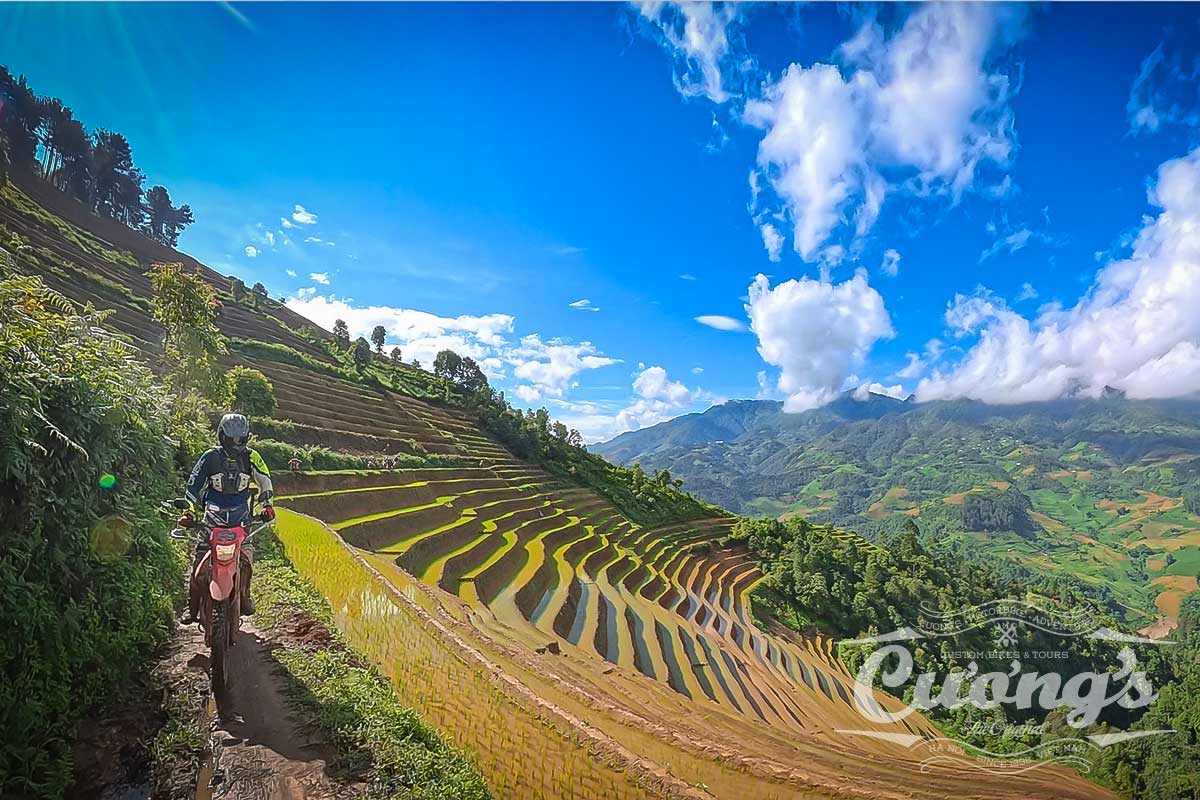
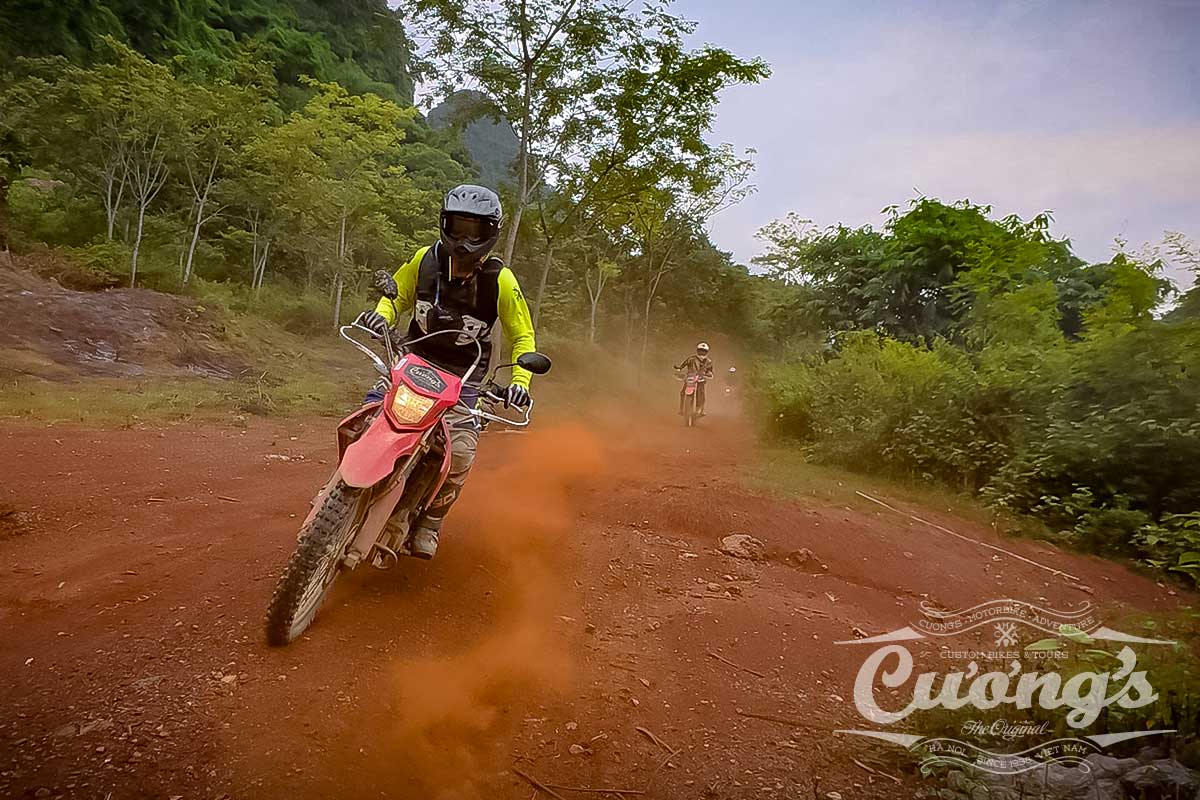
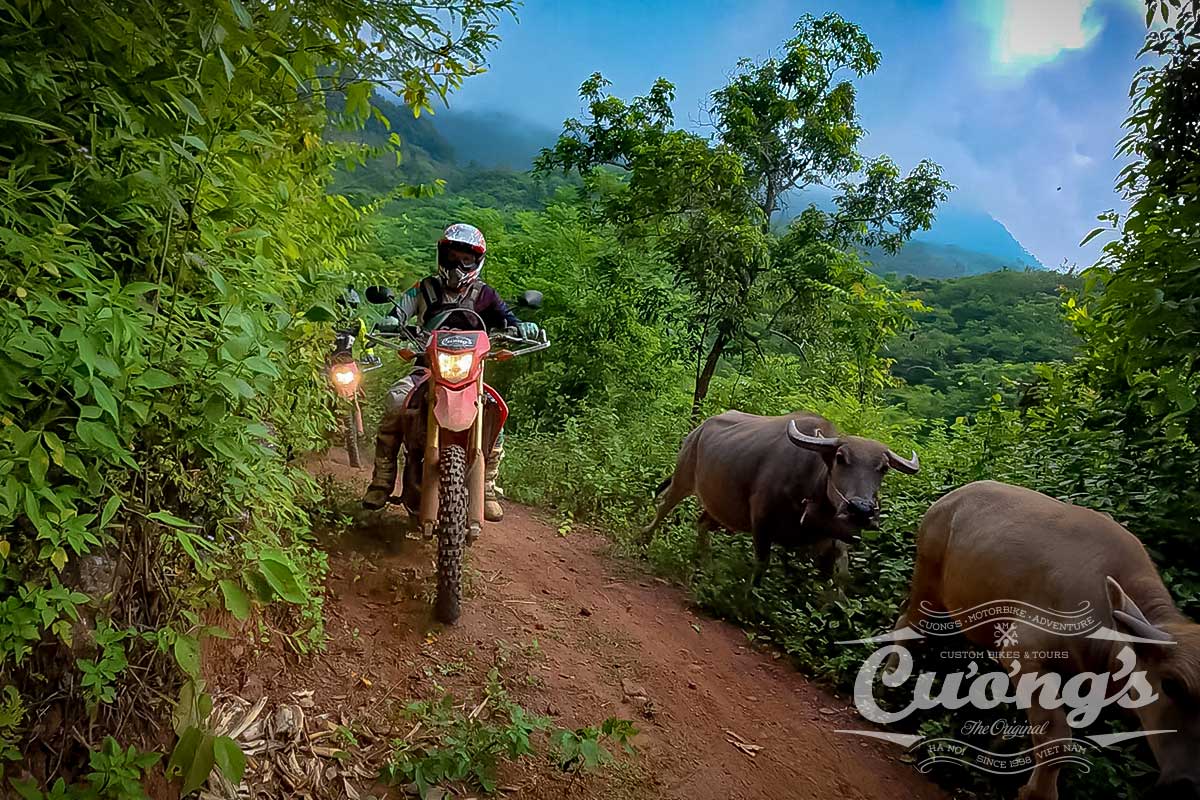
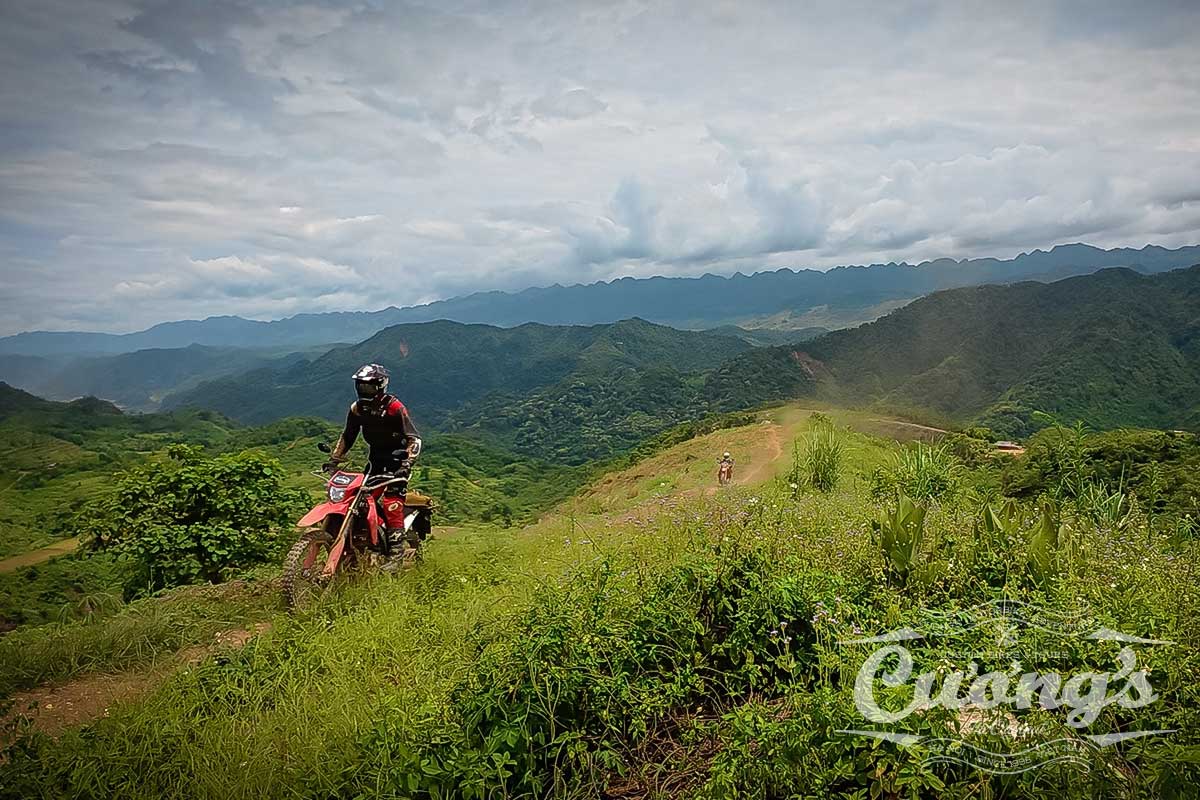
Northwest Vietnam Off-Road Ride Report – Eight Days Through Vietnam’s Wild Mountains
Some motorcycle trips are simply good holidays. You ride a few decent roads, take some photos, have a couple of beers and head home with another stamp in your passport.
Other trips become stories you will still be telling twenty years later.
Our eight-day Northwest Vietnam Off-Road Motorbike Tour with Cuong and his crew definitely belongs in the second category.
There were eight of us from New Zealand, all mates and experienced riders, although our riding backgrounds varied. Some had spent years racing and riding dirt bikes, while others had done more adventure touring, farm riding and long-distance gravel routes back home.
We had all heard stories about riding in Vietnam: steep mountains, wild traffic, tiny village tracks, river crossings, rice terraces and roads that could change completely after one tropical downpour.
That sounded like a bit of us.
We did not want to spend the trip following tourist buses along the main roads. We wanted to get into the backcountry, ride proper dirt and see the side of Vietnam that most visitors never reach.
That was how we ended up booking one of Cuong’s fully supported Vietnam off-road motorbike tours.
It turned out to be a bloody good decision.
Why We Chose Northwest Vietnam
Before booking, most of us knew about Ha Giang. It appears everywhere online, with photos of giant limestone peaks and motorcycles parked above deep valleys.
Northwest Vietnam seemed different.
The region offered remote dirt trails, huge mountain ranges, terraced rice fields, forest tracks, tea-growing country and traditional ethnic minority villages. It also appeared far less developed as a motorcycle tourism destination.
We wanted to explore places such as Pu Luong, Mai Chau, Moc Chau, Tram Tau, Ngoc Chien, Mu Cang Chai and Sapa without being trapped in a procession of rented scooters.
Cuong’s Northwest Vietnam motorbike tours were exactly what we were looking for. The route travelled from Hanoi through the western mountains before finishing in Lao Cai, with the bikes and riders returning to Hanoi aboard the overnight train.
More importantly, the off-road version was built for experienced riders. This was not a scenic road tour with the occasional gravel shortcut. It promised dirt roads, jungle tracks, loose climbs, river crossings, mud, remote single track and long days in the saddle.
Sweet as.
Arriving in Hanoi and Meeting Cuong’s Crew
We arrived in Hanoi during the summer of 2026 and immediately discovered that the city operates at a completely different pace from anything back home.
Motorbikes flowed through the streets in every direction. Scooters carried families, boxes, furniture, building materials and loads that looked physically impossible. Horns sounded constantly, although nobody seemed angry. It was simply how everyone communicated.
Crossing the road on foot felt more dangerous than anything we expected to ride in the mountains.
The evening before departure, we met Cuong and the support crew, checked our equipment and went over the route. It became obvious very quickly that these guys knew exactly what they were doing.
Cuong has spent decades exploring and developing motorcycle routes across Vietnam. His team knew the mountains, the trails, the weather patterns and the villages along the way. They also understood how to manage a group of foreign riders with different speeds and riding styles.
There was no big sales pitch and no unnecessary drama. We talked through the route, discussed safety procedures, checked our gear and sorted the motorcycles.
Everything was organised.
That gave us a lot of confidence before the ride had even begun.
The Honda CRF300L – The Right Bike for the Job
Our main weapons for the ride were Honda CRF300L motorbikes.
The CRF300L is not a giant horsepower machine, but that is exactly why it works so well in the mountains of northern Vietnam. It is light, predictable, reliable and easy to control when the track becomes steep, slippery or narrow.
On some of the more technical sections, a heavier adventure bike would have been hard work. The Honda could be guided through rocks, mud and deep ruts without exhausting the rider.
It had enough power for the paved mountain roads but remained manageable when we needed to pick our way through a rough climb or paddle across a slippery stream.
The team also offered the Honda CRF250L, another proven machine for this type of terrain. Both models have the reliability needed for long rides through remote regions where the nearest proper workshop may be hours away.
Our bikes were well prepared, and the support crew carried tools and essential spares throughout the journey. With Cuong leading and the mechanic riding sweep behind us, nobody was left alone to deal with a problem.
All we needed to do was ride.
Day One – Hanoi to Pu Luong
There was no mucking around on the first morning.
We left Hanoi early, joining the flow of commuters as the city came to life around us. For the first section, the main objective was simply to escape the urban sprawl and get into the countryside.
Riding through Hanoi required concentration, but the traffic moved more naturally than it first appeared. Instead of expecting everyone to obey rigid lanes, you watched the flow, held a predictable line and moved with it.
Once we reached the edge of the city, the buildings began to thin out. The roads became quieter, the air felt fresher and the mountains slowly appeared ahead of us.
The transformation was remarkable.
One moment we were surrounded by buses, scooters and shopfronts. A short time later we were riding past rice paddies, small farming villages and green hills.
This was where the real Vietnam motorbike tour began.
Leaving the Main Roads Behind
After the first transport section, Cuong turned away from the larger road and led us onto a network of narrow country lanes.
The surface changed immediately.
Clean asphalt became broken concrete. Broken concrete became gravel. Gravel eventually became dirt.
Everyone stood on the footpegs, loosened their grip and settled into the bikes.
Now we were smiling.
The route wound through low hills and farming communities, crossing small bridges and following tracks between fields. Local riders passed us on basic scooters, often wearing sandals and carrying enormous loads.
They made the rough roads look completely normal.
Whenever we stopped, people came over to look at the bikes. Children waved from the roadside, and farmers paused their work to watch eight foreigners rumble past in dusty riding gear.
There was none of the commercial atmosphere found in major tourism centres. These were working villages where visitors remained unusual.
Entering Pu Luong Nature Reserve
As we approached Pu Luong, the landscape became steeper and greener.
Forested limestone mountains rose above valleys filled with rice fields. Traditional wooden homes stood on stilts along the hillsides, surrounded by gardens, bamboo and small plots of farmland.
The road climbed higher before dropping into another hidden valley. Around almost every corner there was another view that made someone stop for a photo.
It was our first day, so we still believed we could photograph everything.
We soon learned that this was impossible in Northwest Vietnam.
The scenery never really stopped.
The afternoon included our first proper stretches of mountain dirt. Some sections were dry and flowing, allowing us to carry a comfortable rhythm. Others were rocky and rutted, forcing us to choose lines carefully.
Nothing was extreme yet, but it was enough to remind us that this was a genuine off-road ride.
By the time we reached our accommodation in Pu Luong, everyone was dusty, hungry and buzzing.
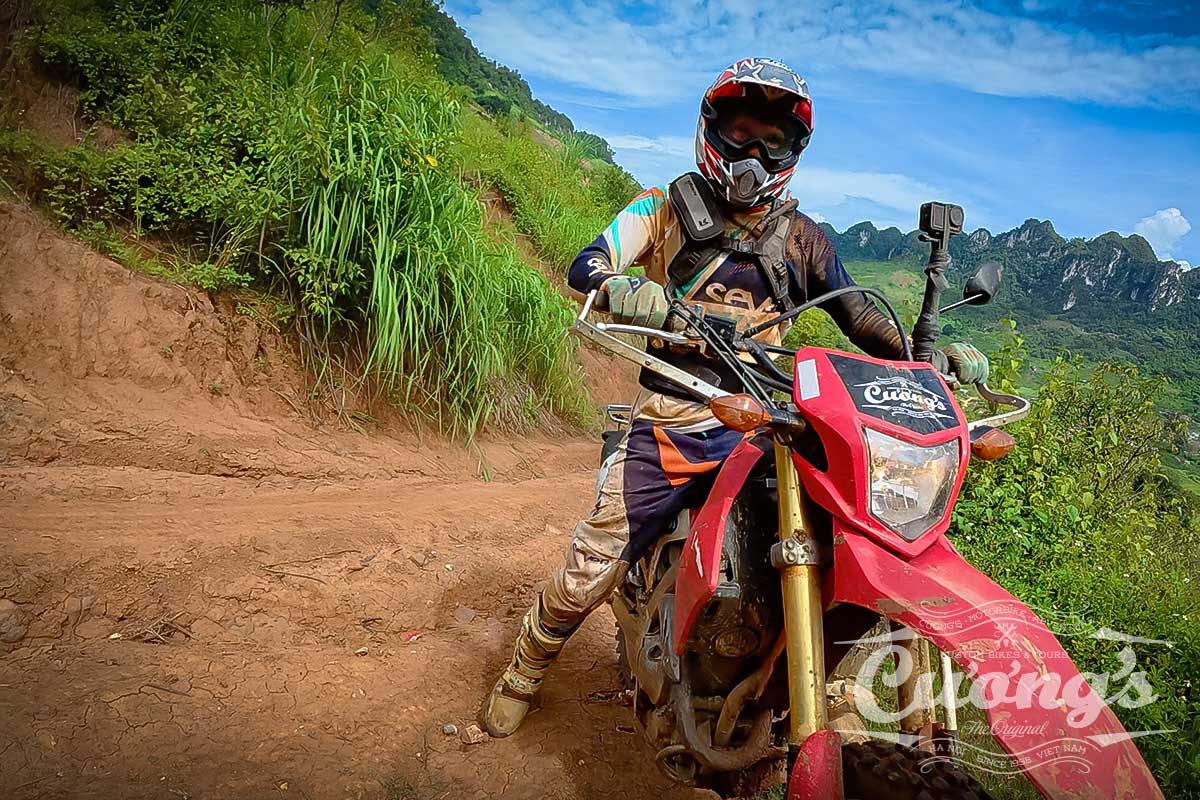
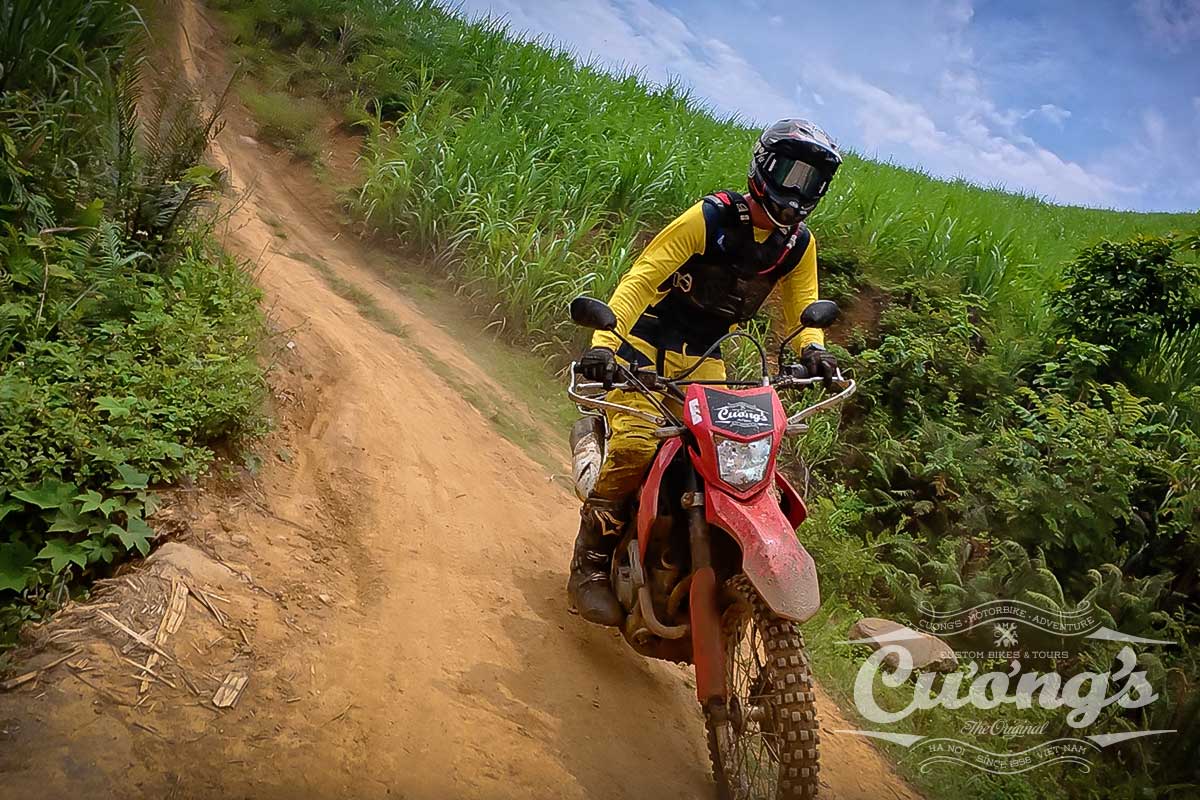
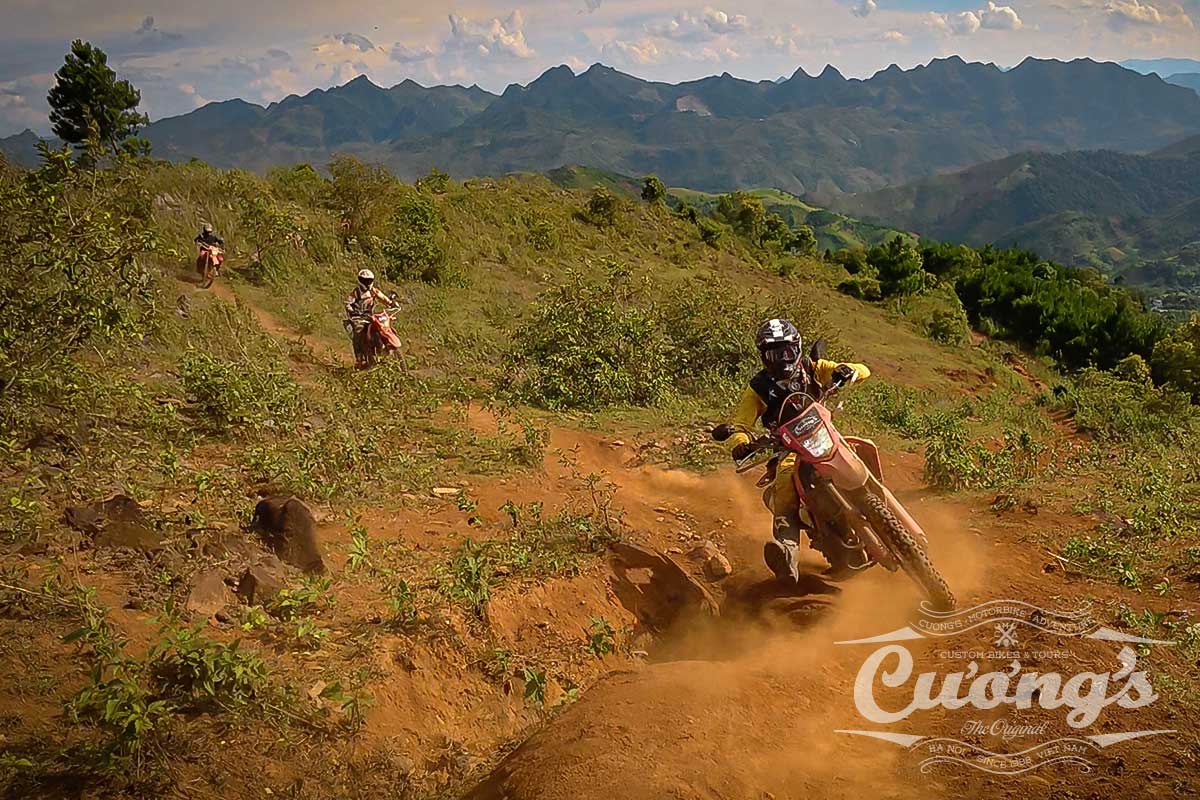
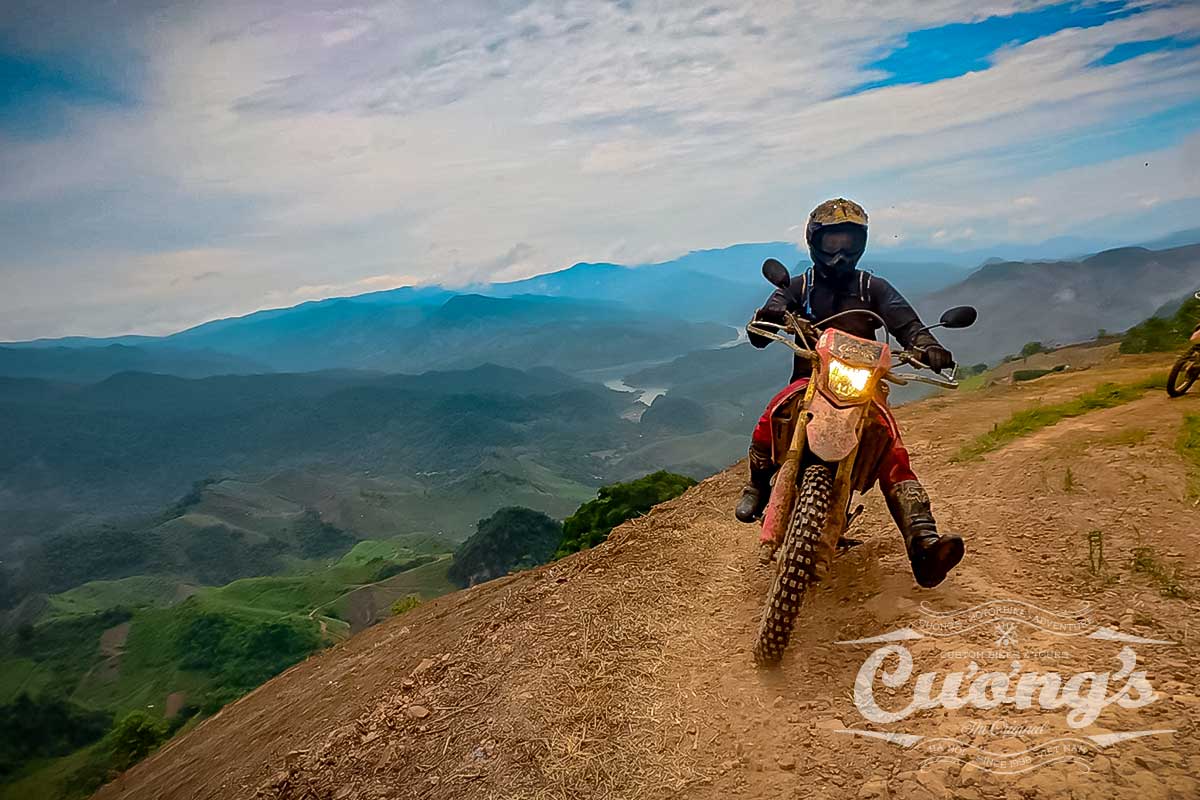
Our First Night in the Mountains
That evening set the pattern for the rest of the tour.
The bikes were checked while we cleaned up and changed. Luggage had already arrived, rooms were organised and cold drinks appeared without any fuss.
Dinner was a spread of local dishes served around a shared table: grilled meat, chicken, rice, fresh vegetables, spring rolls and several things we could not immediately identify but happily ate anyway.
The food was fresh, generous and full of flavour.
After dinner, a bottle of local rice wine appeared.
Then another one.
Cuong explained more about the region and what we could expect over the next few days. There was plenty of banter as we replayed every loose corner, missed line and near-disaster from the day.
Nobody had actually fallen off yet, although a few blokes had already experienced what we politely called “moments.”
We went to bed knowing the easy introduction was probably over.
Day Two – Pu Luong to Mai Chau and Moc Chau
The next morning began with mist hanging over the valley.
From our accommodation, we could see layers of green mountains fading into the distance. Smoke rose from village kitchens while farmers and buffalo were already moving through the fields.
After breakfast, the team checked tyre pressures, chains and controls before we loaded up and headed back onto the trails.
The air was cool, the dirt had a little moisture in it and the bikes felt brilliant.
Riding Through Remote Thai and Muong Villages
The route between Pu Luong and Mai Chau passed through communities of Thai and Muong people who have lived in these valleys for generations.
Traditional stilt houses lined the tracks, often with livestock sheltering beneath the raised living areas. Rice, corn and other crops were spread out to dry beside the road.
The villages were connected by narrow lanes, suspension bridges and mountain tracks that twisted between forest and farmland.
Some sections were barely wider than the motorcycles.
One moment we were riding through dense bamboo. The next we emerged onto an open hillside with views across a huge valley of terraced fields.
This was the type of riding we had travelled for.
There were no buses and no queues at viewpoints. For long stretches, the only people we saw were local farmers and children walking home from school.
When we stopped for drinks, curious locals gathered around the motorcycles. There was usually no common language, but that never seemed to matter.
A smile, a handshake and some enthusiastic pointing at the bikes did most of the work.
Mai Chau Valley
We descended into Mai Chau around midday.
The valley was broader than Pu Luong, with rice fields spreading between steep mountains on both sides. Villages sat among the farmland, their roofs visible between palms and fruit trees.
Mai Chau is accessible from Hanoi and appears on many short northern Vietnam itineraries, but Cuong’s route did not simply follow the standard tourist road.
We used the valley as a gateway into a much larger network of western mountain tracks.
After lunch, the riding changed again as we began climbing towards the highlands of Moc Chau.
The Climb Toward Moc Chau
The road rose steadily from the valley floor, passing through cooler air and increasingly dramatic terrain.
There were fast paved corners where we could enjoy the handling of the CRFs, followed by abrupt turns onto dirt roads that disappeared into the hills.
The surface varied constantly.
We rode over loose stones, dry clay, broken concrete and hard-packed earth. Water had cut channels through some sections, creating deep ruts that demanded full attention.
On the steeper climbs, we spread out to avoid filling each other’s helmets with dust.
The trick was to maintain momentum without charging blindly into whatever waited around the next corner.
Most of the time, that worked.
One rider stalled halfway up a rough climb and began sliding backwards. Another took the enthusiastic approach to a rut and disappeared briefly into the vegetation.
No injuries, no damaged bikes and no shortage of abuse from the rest of us.
Standard procedure among Kiwi mates.
Day Three – Exploring Moc Chau’s Mountain Tracks
Moc Chau felt completely different from Pu Luong and Mai Chau.
The elevation brought cooler temperatures, while rolling hills replaced some of the sharper limestone scenery. The region is famous for agriculture, orchards, dairy farms and vast tea plantations.
From a distance, the rows of tea plants created flowing patterns across the hills.
It was peaceful, green and surprisingly open after the tight forest tracks of the previous day.
That did not mean the riding became easy.
Tea Plantations and Hidden Dirt Roads
We began the day on narrow roads through the tea-growing country before Cuong turned onto another barely visible track.
This became a regular feature of the ride.
We would be travelling along an obvious road when Cuong suddenly indicated, slowed down and disappeared through a gap between houses or into a line of trees.
What looked like a farm entrance often became an excellent off-road route across the mountains.
The Moc Chau trails included flowing red dirt, rocky climbs and narrow paths between plantations. Some sections allowed us to ride quickly and smoothly, while others became slower and more technical.
The weather also began to play a larger role.
Summer rain had left water in shaded sections, turning the red soil into slippery clay. A trail that looked straightforward could suddenly become greasy enough to send both wheels sideways.
The CRF300Ls handled it well, but only when treated with respect.
Too much throttle and the rear wheel spun. Too little momentum and the bike stopped halfway through the mud.
Finding the balance was part of the fun.
The Support Crew Kept Everything Moving
By the third day, we had developed a huge appreciation for the support crew.
The mechanic rode at the back, making sure nobody became separated from the group. If a bike was dropped, damaged or needed an adjustment, help arrived immediately.
The luggage travelled separately, meaning we did not have to wrestle loaded motorcycles through technical terrain. We carried only what we needed during the day and found our bags waiting when we reached the accommodation.
Fuel stops, meals and overnight arrangements were all planned around the route.
It allowed us to focus entirely on riding.
This level of organisation is what separates a professionally supported expedition from simply renting a bike and hoping for the best.
On remote trails in Northwest Vietnam, local knowledge matters. Tracks can be blocked by landslides, bridges can disappear, and summer weather can make a planned route temporarily impassable.
Cuong and his crew always had another option.
They had spent years exploring these mountains and refining the routes. When conditions changed, the plan changed with them.
Three Days In and Already Hooked
By the end of our third day, the group had settled into a comfortable rhythm.
We knew who liked to ride near the front, who preferred a steady pace and who could be relied upon to attempt the least sensible line through any obstacle.
Each evening followed a similar pattern: clean up, grab a cold beer, inspect any new bruises and gather around the dinner table.
The food remained outstanding, with each area introducing different local dishes. Accommodation ranged from comfortable guesthouses to traditional homestays, but it was always clean and welcoming.
We had already ridden through tropical forest, rice-growing valleys, ethnic minority villages and highland tea country.
Yet Cuong kept telling us the biggest mountains and best riding were still ahead.
From Moc Chau, our route would continue deeper into Northwest Vietnam toward Tram Tau, Ngoc Chien and the legendary rice terraces of Mu Cang Chai.
That was where the ride was about to become properly wild.
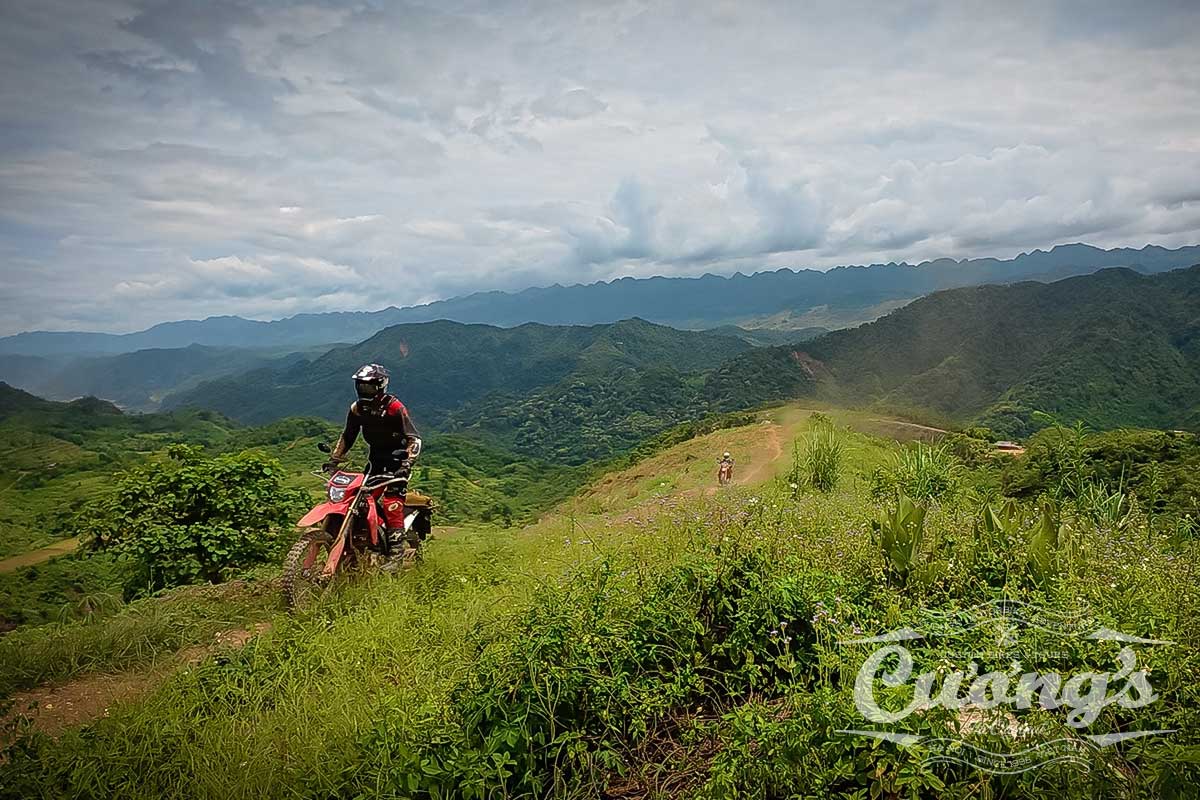
Day Four – Moc Chau to Tram Tau
Leaving Moc Chau, we knew the ride was about to step up another level.
The first three days had given us a solid introduction to riding in Northwest Vietnam, but the route toward Tram Tau took us farther away from the larger roads and deeper into the mountains.
Cuong had warned us that this would be a longer and more demanding day.
The morning started gently enough, with cool air, quiet mountain roads and sweeping views across Moc Chau’s farmland. Rows of tea plants followed the curves of the hills, and mist still hung in some of the lower valleys.
It would have been easy to settle into sightseeing mode.
Then Cuong turned off the road.
Within minutes, we were back on narrow dirt tracks, climbing through forest and farmland toward another remote mountain ridge.
From Fast Dirt to Technical Mountain Trails
The early sections were fast and flowing.
The surface was mostly firm, with enough loose gravel to keep the bikes moving underneath us. We spread out along the trail and found a good rhythm, standing on the footpegs and letting the Honda CRF300Ls work beneath us.
This was adventure riding at its best.
The track rose and fell through the hills, crossing streams and passing isolated farms. There was almost no traffic, apart from the occasional local scooter or small farm vehicle.
As the morning continued, the trails became narrower and rougher.
Deep rain channels cut across the track. Loose rocks collected on the steeper climbs, and sections of red clay remained slippery beneath the trees.
The riding required full concentration.
Every obstacle was manageable, but there was no room for switching off. A smooth line could carry you easily through a difficult section, while one badly placed front wheel could leave you fighting the bike in a rut.
There was a bit of friendly competition among our group, although nobody admitted it.
Every rider wanted to clear the climbs cleanly, especially when the rest of the boys were waiting at the top.
Nothing motivates a Kiwi rider quite like the knowledge that seven mates are watching and ready to take the mickey if it all goes wrong.
The First Proper Mud
Summer weather in Northwest Vietnam can transform a trail remarkably quickly.
A dry-looking track might remain firm in the open but become completely different beneath the trees, where water collected in the ruts and the clay stayed wet.
One section looked harmless from a distance.
It was not.
The first rider entered confidently, only for both wheels to begin sliding in different directions. He somehow kept the bike upright, although not with any dignity.
The rest of us stopped and reconsidered our approach.
The safest line ran along the edge of the track, but it was narrow and bordered by thick vegetation. The middle offered more space but contained deep, slippery mud.
One by one, we picked our way through.
Some made it cleanly.
Some used both feet.
One rider arrived at the other side wearing a generous portion of the trail.
It was the first proper mud of the trip, and it would not be the last.
Why the CRF300L Worked So Well
The more technical the trail became, the more we appreciated the motorcycles.
The Honda CRF300L was light enough to correct when it began sliding, but stable enough to handle rocky descents and faster open tracks.
The power delivery was smooth and predictable, which mattered when traction disappeared.
A larger, heavier motorcycle might have been comfortable on the paved sections, but it would have been a completely different story in deep ruts or on narrow mountain trails.
The CRFs could be lifted, pushed or turned around without turning every small mistake into a major recovery operation.
That made the ride more enjoyable and allowed us to tackle genuine off-road routes instead of being restricted to roads suitable for large adventure bikes.
Arriving in Tram Tau
By the time we approached Tram Tau, everyone was feeling the day in their arms and shoulders.
The district sits among steep mountains in western Yen Bai Province and remains far less visited than Vietnam’s better-known northern destinations.
That isolation was obvious.
The roads were quiet, settlements were scattered, and the surrounding mountains seemed to continue forever.
We arrived dusty and tired but completely satisfied.
It had been a proper day on the bikes.
After the usual checks, we cleaned up and gathered for dinner. The conversation quickly became a detailed analysis of every muddy section and rocky climb.
As usual, everyone remembered their own riding as being slightly more impressive than it probably was.
Day Five – Tram Tau to Ngoc Chien
The ride from Tram Tau to Ngoc Chien became one of the most memorable days of our entire Northwest Vietnam Off-Road Tour.
The landscape felt increasingly remote, and the trail network seemed to disappear deeper into the mountains with every kilometre.
We began with a mixture of broken roads and dirt tracks, climbing steadily through forests and highland villages.
The air became cooler as we gained elevation.
Cloud drifted across the ridges, sometimes hiding the mountains completely before clearing to reveal enormous valleys below us.
High Mountain Riding
Some of the higher tracks followed exposed slopes with clear views across the surrounding ranges.
There were no barriers and very little room for error, so this was not the place for heroics.
We rode at a controlled pace, leaving space between the bikes and concentrating on the trail ahead.
The scale of the landscape was difficult to understand until we stopped.
From the saddle, you focus on the next corner, rut or obstacle. Once the engines were switched off, we could see layers of mountains stretching toward the horizon.
Tiny villages sat far below us, connected by roads and paths that looked like thin lines drawn across the hillsides.
Back home, a road like this would probably have become a famous adventure route.
Here, it was simply how local people travelled between communities.
Meeting Local Riders on the Trail
One of the humbling parts of riding in Northwest Vietnam was seeing local people travel over difficult terrain on ordinary scooters.
We had proper off-road motorcycles, protective equipment, experienced guides and a mechanic.
Local farmers rode the same tracks on small scooters while carrying crops, tools, children and sometimes several live animals.
They rarely seemed bothered by mud, rocks or steep slopes.
On one narrow climb, we stopped to allow a local rider to pass. His scooter was loaded with sacks and looked completely unsuitable for the terrain.
He gave us a quick smile and rode straight up without putting a foot down.
That kept us humble.
Crossing Streams and Mountain Rivers
The route included several small water crossings where mountain streams cut across the trail.
Most were shallow, but the bottoms varied between loose stones, smooth rocks and soft mud.
Cuong crossed first and stopped on the far side to guide us toward the safest line.
The key was to enter steadily, remain relaxed and avoid sudden changes of direction.
That was the theory.
In practice, eight riders produced eight different techniques.
Some stood on the pegs and crossed smoothly.
Some sat down and paddled.
One rider attacked the crossing as if competing in an enduro, sending water over both himself and everyone standing nearby.
The crew had seen it all before.
They simply smiled and kept us moving.
A Remote Lunch Stop
Lunch was often served in small local restaurants that we would never have found on our own.
There was no printed menu in English and usually no obvious sign outside.
Cuong knew where to stop, what to order and how to make sure eight hungry riders were properly fed.
Meals usually included rice, pork or chicken, vegetables, soup and several shared dishes placed in the middle of the table.
The food was simple, fresh and exactly what we needed during long riding days.
There was never any danger of going hungry on this trip.
In fact, despite riding for six to eight hours most days, some of us suspected we might be gaining weight.
Descending Into Ngoc Chien
The final descent into Ngoc Chien was spectacular.
The valley appeared beneath us as the track dropped from the high mountains through forest and farmland.
Ngoc Chien is known for its traditional villages, terraced fields and natural hot springs. Wooden stilt houses are spread across the valley, surrounded by rice paddies and mountains.
After a demanding day on the motorcycles, the hot water was exactly what our backs and shoulders needed.
We soaked, drank cold beers and replayed the day’s events while the evening settled over the valley.
It was hard to imagine a better finish to a day of off-road riding.
Day Six – Ngoc Chien to Mu Cang Chai
By Day Six, our group was completely settled into mountain-riding mode.
We woke early, ate breakfast and prepared for another long day without needing much explanation.
The bikes were checked, water bottles filled and riding gear pulled back on while the village came to life around us.
The route toward Mu Cang Chai promised some of the most famous scenery in Northwest Vietnam, but Cuong made sure we reached it by the interesting way.
Rather than following only the main road, we linked together remote trails, small mountain passes and village tracks.
Riding Above the Black River Region
Northwest Vietnam is shaped by major rivers, deep valleys and steep mountain systems.
The Black River, known locally as the Da River, cuts through the western mountains and plays an important role in the life of the region.
Throughout the ride, we crossed tributaries, followed river valleys and climbed above landscapes carved by water over thousands of years.
Some of Cuong’s shorter western routes also explore this part of the country, including the Western Vietnam Motorbike Tour.
Our longer Northwest expedition continued farther north, carrying us toward the high rice-growing mountains around Mu Cang Chai.
Trails Through Hmong Villages
As we climbed, we passed through villages inhabited mainly by Hmong families.
Homes were built beside the tracks or scattered across the hillsides, often surrounded by cornfields and small gardens.
Children waved and called out as we approached.
Some recognised the sound of Cuong’s group before they could see us and ran toward the road to watch the motorcycles pass.
We always slowed through villages.
Livestock, children and farm vehicles could appear without warning, and the route was part of everyday local life rather than a private riding trail.
Respecting the communities was an important part of the journey.
Cuong had built relationships across these areas over many years, and it showed in the way people greeted him along the route.
A Proper Mountain Climb
The most difficult section of the day began with a steep dirt climb that disappeared around several tight corners.
The surface contained loose rocks, exposed roots and deep channels formed by rainwater.
Cuong stopped the group at the bottom and explained the line.
Momentum was essential, but too much speed would make the tight corners difficult. We needed to stay loose, look ahead and avoid spinning the rear wheel.
Easy enough when someone explains it.
A little more complicated when you are halfway up.
The first riders cleared the climb, although not always using the planned line. The middle of the group had a few stalls and restarts, while the final riders benefited from watching everyone else’s mistakes.
The mechanic remained at the back, helping wherever needed.
When the final bike reached the top, there was a fair bit of cheering.
It was one of those sections that brought the whole group together.
Nobody cared who had been fastest. Getting all eight riders and bikes safely to the top was the win.
Mu Cang Chai – Mountains Carved Into Rice Terraces
Our first view of Mu Cang Chai stopped the entire group.
Terraced rice fields covered the slopes from the valley floor to the upper mountains, following every natural contour of the land.
The scale was extraordinary.
These were not a few decorative fields beside a viewpoint. Entire mountains had been shaped by generations of farmers.
The terraces curved around the hills like giant steps, changing colour and appearance with the seasons.
During summer, the landscape was intensely green. Water reflected the sky in newly planted sections, while more mature rice moved gently in the wind.
We parked the bikes and stood quietly for a while.
Even the loudest members of our group ran out of words.
Riding Through the Rice Terraces
The best part was that we did not only view the terraces from the main road.
Cuong led us onto small tracks that climbed through the fields and connected isolated villages.
The riding was slow in places because the paths were narrow and used by local farmers.
There were sharp turns, steep drops and occasional sections where the track had partially collapsed after rain.
We rode carefully, stopping often to take in the scenery.
Every change in elevation created another view.
From below, the terraces towered above us. From the higher tracks, we could look across whole valleys shaped into layers of green.
It was one of the most remarkable landscapes any of us had ever ridden through.
Why Northwest Vietnam Felt So Different
Before the trip, several of us had assumed that northern Vietnam would look broadly similar from one region to another.
We could not have been more wrong.
Pu Luong had lush limestone valleys and stilt-house villages.
Mai Chau offered broad rice fields surrounded by mountains.
Moc Chau brought tea plantations and cooler highland scenery.
Tram Tau felt rugged and isolated.
Ngoc Chien combined remote trails with traditional villages and hot springs.
Now Mu Cang Chai presented huge mountains covered in rice terraces.
This variety is what makes the Northwest Vietnam motorbike tour region so rewarding.
The scenery, riding surface and local culture changed almost every day.
It never felt repetitive.
Another Brilliant Evening
That evening, everyone was tired but in excellent spirits.
We had completed one of the strongest riding days of the trip and arrived in one of Vietnam’s most beautiful mountain regions.
The crew checked the motorcycles while we showered and changed.
Dinner arrived as another large collection of shared dishes, followed by local rice wine and plenty of stories.
By now, a few minor crashes had occurred, although nothing serious.
Every incident grew more dramatic with each retelling.
A simple stationary drop became a high-speed escape from disaster.
A missed turn became an expedition into an unexplored valley.
A muddy boot became evidence of heroic off-road struggle.
That is how ride reports are created.
Six Days Into the Ride
After six days, the motorcycles were dusty, our riding gear had developed its own personality and nobody wanted the trip to end.
We had travelled far beyond the usual tourist routes and experienced the kind of riding that had brought us to Vietnam in the first place.
The combination of proper off-road terrain and professional support made the journey challenging without becoming chaotic.
Cuong adjusted the pace to suit the group and changed sections when weather or trail conditions required it. The mechanic kept the bikes operating perfectly, and the wider crew made sure meals, accommodation and luggage were always ready.
That support allowed us to push into remote areas with confidence.
We still had to ride the tracks ourselves.
We still became tired, muddy and occasionally stuck.
But we never felt abandoned or badly prepared.
That distinction matters on a serious Vietnam off-road motorcycle adventure.
From Mu Cang Chai, the final stage of our journey would take us toward the Hoang Lien Son mountains, Sapa and the border city of Lao Cai.
The highest passes, enormous valleys and final technical trails were still waiting.
And none of us was ready to slow down.
Day Seven – Mu Cang Chai to Sapa
We woke in Mu Cang Chai knowing that our final full riding days would take us into the biggest mountains of the trip.
The Hoang Lien Son range rises across Northwest Vietnam and contains some of the country’s highest peaks, deepest valleys and most spectacular mountain roads.
Our destination was Sapa, but Cuong had no intention of taking us there by the quickest or easiest route.
That suited us perfectly.
After breakfast, the crew completed the usual checks on the motorcycles. Chains were adjusted, tyres inspected and fuel organised while we packed our riding gear.
The morning air was cool, and low cloud still clung to the mountains surrounding Mu Cang Chai.
We rolled out through the rice terraces as villages began waking around us.
Farmers were already working in the fields, children were heading toward school and smoke drifted from cooking fires beside traditional homes.
It was another reminder that the extraordinary landscapes we had come to explore were also working environments where local families lived their everyday lives.
Leaving the Rice Terraces Behind
The first section of the day continued through the terraced mountains around Mu Cang Chai.
We followed narrow roads and village tracks that climbed above the valley, giving us one final view across the layered rice fields.
Even after spending the previous day in the region, the scenery remained difficult to take in.
Every slope seemed to have been shaped into terraces. Houses appeared in places that looked almost impossible to reach, connected by tiny tracks carved into the mountainsides.
From Mu Cang Chai, our route began climbing toward higher passes and more exposed terrain.
The landscape gradually changed as the valleys became deeper and the mountains more dramatic.
Forest covered the lower slopes, while cloud moved quickly across the ridges above us.
The riding alternated between winding paved roads, broken mountain lanes and long off-road sections.
By now, we had become used to the constant changes in surface.
We could move from clean asphalt to loose gravel, mud and rocky single track within a few kilometres.
That variety was one of the best features of the entire Northwest Vietnam Off-Road Motorbike Tour.
Riding Through the Hoang Lien Son Mountains
The Hoang Lien Son mountains delivered some of the most dramatic riding of the trip.
The roads climbed high above deep river valleys, twisting through forests and around enormous mountainsides.
Waterfalls dropped from cliffs beside the road, fed by the summer rain and cloud that gathered around the peaks.
In some places, the view stretched for kilometres.
In others, the cloud closed around us and reduced visibility to the next few corners.
The temperature also dropped as we gained altitude.
After the heat and humidity of the lower valleys, the cool mountain air felt brilliant inside our riding gear.
We stopped at one exposed viewpoint and switched off the engines.
Far below us, a river wound through the valley. Villages appeared as small clusters of roofs among the fields, and mountain ridges continued into the distance.
None of us said much for a while.
There are some places where taking another photograph seems almost pointless.
You simply stand there and try to remember the scale of it.
One Final Technical Trail
Cuong had saved another proper off-road section for the afternoon.
The trail began as a wide dirt road before narrowing as it climbed through forest.
Recent rain had left the surface damp, with loose stones and exposed roots appearing on the steeper sections.
After seven days of riding, everyone was tired, but we had also become much more comfortable on the bikes.
The group moved smoothly through the easier sections, maintaining enough distance to avoid dust and leave room for mistakes.
The trail then entered a shaded area where the surface became greasy.
The red clay offered almost no grip in places.
The front wheel wanted to slide toward the deeper ruts, while the rear wheel stepped sideways whenever too much throttle was applied.
It required patience rather than speed.
Cuong rode ahead and waited at the more difficult corners, showing us the best line.
The mechanic remained behind the final rider, helping whenever a bike stalled or became stuck.
One of the boys dropped his bike at walking pace and immediately stood up pretending nothing had happened.
Unfortunately for him, seven witnesses had seen the whole thing.
There was no injury and barely a mark on the Honda, but the story was guaranteed to grow considerably by dinner.
The Difference Between a Tour and an Expedition
That final technical section showed why local knowledge and professional support mattered so much.
Anyone can follow a major road toward Sapa.
Finding a network of remote dirt trails through the mountains is completely different.
Weather, construction work and landslides can change conditions quickly. A route that worked the previous month may no longer be passable after heavy rain.
Cuong and his crew knew where the trails went, which sections remained open and when it was better to use an alternative route.
That flexibility made the ride feel like a genuine expedition without becoming disorganised.
We still had to deal with rocks, mud, fatigue and difficult climbs, but the wider logistics had been handled for us.
Meals were ready.
Accommodation was organised.
Luggage arrived ahead of the riders.
Mechanical support remained with the group.
It was the ideal setup for experienced riders who wanted serious off-road terrain without spending half the trip solving transport and accommodation problems.
Arriving in Sapa
Sapa is one of the best-known mountain destinations in Vietnam, but our arrival felt very different from that of most visitors.
We had not travelled there by tourist bus or private car.
We had spent a week crossing remote mountain regions on dirt bikes, arriving through trails and backroads that revealed the wider landscape surrounding the town.
The area around Sapa is home to a diverse collection of ethnic minority communities, including Hmong, Dao, Tay and Giay people.
Villages are spread across the valleys and mountainsides, surrounded by rice terraces, gardens and forest.
The town itself was busier than the remote regions we had passed through, but Cuong continued to keep us away from the most crowded routes wherever possible.
Instead of following the standard sightseeing roads, we explored quieter tracks through the surrounding valleys.
Mountain Villages Beyond the Tourist Centre
The contrast between central Sapa and the outlying villages was striking.
The town contained hotels, cafés, restaurants and visitors from around the world.
A short ride away, the roads narrowed and returned us to landscapes dominated by farming and village life.
Terraced fields covered the lower slopes, while steep mountains rose behind them.
Water buffalo moved slowly beside the trails and local riders carried produce toward the markets.
Some children waved as we passed.
Others simply stared at eight mud-covered foreigners riding brightly coloured Honda dirt bikes through their village.
We kept the pace slow and respectful, particularly near homes, schools and livestock.
These routes were not created for tourists. They were essential connections between local communities.
Being able to ride through them was a privilege.
Our Final Night on the Road
That evening had a slightly different atmosphere.
Everyone was still laughing and sharing stories, but we knew the journey was nearly over.
The riding gear was covered in dust and mud.
Boots had taken a beating.
A few riders had collected bruises and small scratches.
The motorcycles showed the evidence of eight hard days in the mountains but had performed brilliantly.
Over dinner, we attempted to choose the best day of the trip.
Nobody could agree.
Some preferred the forests and villages around Pu Luong.
Others chose the tea country of Moc Chau.
The technical riding near Tram Tau had its supporters.
Ngoc Chien’s hot springs were difficult to beat after a long day.
Mu Cang Chai had delivered the most spectacular rice terraces any of us had ever seen.
Now the Hoang Lien Son mountains had added another level of scale and drama.
The fact that we could not choose one highlight said everything about the ride.
Day Eight – Sapa to Lao Cai
Our final morning began with mixed feelings.
We were tired and ready for a proper rest, but nobody wanted to hand the motorcycles back.
After breakfast, we prepared for the last ride toward Lao Cai.
The distance was shorter than on previous days, giving us time to enjoy the final mountain roads and stop for photographs.
The route descended gradually from the cooler highlands toward the Red River valley.
As we lost elevation, the temperature increased and the scenery changed again.
The steep mountain terrain gave way to broader valleys, busier roads and more developed communities.
After so many days in remote areas, even moderate traffic felt unusual.
Finishing in the Border City of Lao Cai
Lao Cai sits on Vietnam’s northern border with China and serves as the main transport gateway for Sapa and the surrounding mountains.
Reaching the city marked the end of our riding route.
Cuong’s Northwest tours finish in Lao Cai rather than spending the final day riding the flat and congested roads back to Hanoi.
It was a smart decision.
The journey back toward the capital would have involved hours of heavy traffic, buses and trucks. That was not how any of us wanted to finish a brilliant mountain ride.
Instead, the motorcycles would travel back to Hanoi in the train’s baggage carriage while we returned in four-berth, air-conditioned soft-sleeper compartments.
Before departure, we had access to a guesthouse where we could shower, change and enjoy a final meal together.
After eight days in riding gear, that shower may have been one of the tour highlights.
Loading the Motorcycles Onto the Train
Watching the motorcycles being prepared for the train made the end of the trip feel real.
The crew handled the loading and transport arrangements while we relaxed nearby.
It was another example of the organisation behind the ride.
Moving a group of riders and motorcycles from Lao Cai to Hanoi requires planning, but we did not need to worry about tickets, cargo procedures or transfers.
Everything was already arranged.
We had dinner, drank a few final beers and talked through the journey from beginning to end.
By this point, every minor incident had become a legend.
Muddy slides were now enormous crashes.
Shallow streams had become dangerous river crossings.
Short climbs had become near-vertical mountains.
The truth was already becoming less important than the story.
The Overnight Train Back to Hanoi
The overnight train departed Lao Cai with the motorcycles safely stored aboard.
Our group settled into the sleeper compartments, tired enough that nobody needed much help falling asleep.
The train gave us time to decompress after the ride instead of battling through traffic for another full day.
Early the next morning, we arrived back in Hanoi as the city was beginning to wake.
The bikes were collected from the train and ridden through the quieter morning streets back to Cuong’s garage.
That final short ride felt strange.
After a week of mountain trails, mud, streams and isolated villages, we were back among the buildings and traffic where the adventure had begun.
What Made This Northwest Vietnam Ride Special?
The scenery was extraordinary, but it was not the only reason the trip worked so well.
A great motorcycle tour depends on the combination of route planning, bikes, accommodation, food, local knowledge and support.
Cuong’s crew brought all of those elements together.
Genuine Off-Road Riding
This was not a road tour marketed as an off-road adventure because it included a few kilometres of gravel.
The route contained real dirt riding.
We tackled mountain tracks, forest trails, single track, loose climbs, mud, rocks and stream crossings.
According to the tour description, the route can include approximately 70–80% off-road riding, depending on conditions and the final itinerary.
Riders considering the tour should have genuine off-road experience and be comfortable spending six to eight hours per day on the motorcycle.
For riders with the right experience, the challenge is one of the main reasons to book it.
Motorcycles Suited to the Terrain
The Honda CRF300L was an excellent choice for the route.
It was reliable, light enough for technical sections and comfortable enough for the longer mountain roads.
The Honda CRF250L offers similar advantages and is another proven option for northern Vietnam’s trails.
The motorcycles were supported by an experienced mechanic, with fuel, oil and maintenance included as part of the tour arrangements.
Professional Guide and Mechanical Support
Cuong led the group while the mechanic remained near the rear.
This kept the riders together without forcing everyone to ride at exactly the same speed.
At difficult sections, the crew stopped to explain the terrain and help riders select a safe line.
Mechanical issues were handled quickly, and no rider was left alone on the trail.
Food and Accommodation
The accommodation included local hotels, guesthouses and homestays.
It was comfortable without separating us from the places we had come to experience.
Meals were another major strength of the trip.
We ate local food throughout the route, with generous shared dinners and proper lunches during the riding days.
After six to eight hours on the motorcycles, nobody wanted a tiny meal.
That was never a problem.
A Route Far Beyond the Tourist Roads
The biggest difference was access.
Anyone can visit Sapa or Mai Chau by bus.
Very few visitors connect Pu Luong, Moc Chau, Tram Tau, Ngoc Chien, Mu Cang Chai and Sapa through remote off-road trails.
That is what made this one of the best Northwest Vietnam motorbike adventures we could have chosen.
Who Is This Tour For?
The Northwest Vietnam Off-Road Tour is designed for riders who already have experience controlling a motorcycle on dirt, gravel, mud and uneven terrain.
You do not need to be a professional racer, but this is not the best place to learn basic off-road technique.
Riders should be comfortable standing on the footpegs, controlling a bike on steep climbs and descents, crossing shallow water and recovering from occasional mistakes.
A reasonable level of fitness is also important.
Even on a lightweight motorcycle, multiple days of technical riding can become physically demanding.
For less experienced riders, Cuong offers other Vietnam motorbike tours with a greater proportion of paved roads and less technical terrain.
Why Ride Northwest Vietnam With Cuong’s Motorbike Adventure?
Vietnam now has many companies offering motorcycle trips, but experience matters when a tour moves beyond the main roads.
Cuong’s Motorbike Adventure has spent years exploring the country, developing routes and building relationships throughout the mountain regions.
That experience showed in the details.
The trails were chosen for the group’s ability.
The daily distances made sense.
Food and accommodation were ready when we arrived.
The crew understood when to keep moving and when to allow everyone time to recover.
Most importantly, the ride felt authentic.
We were not following a fixed tourist procession or stopping only at the places found in every guidebook.
We were riding through remote landscapes on trails selected by people who genuinely knew the region.
Would We Ride With Cuong Again?
Absolutely.
Before we had even reached Lao Cai, several of us were already discussing the next trip.
Some wanted to try the Ha Giang Off-Road Border Ride, with its limestone mountains and remote northern frontier routes.
Others were interested in exploring the country from north to south on one of Cuong’s Ho Chi Minh Trail motorbike tours.
The longer Northern Vietnam Loop Off-Road Tour also looked like a serious option for riders wanting to combine several mountain regions in one expedition.
After the standard of this ride, we would have trusted Cuong and his team on any of them.
Final Thoughts From Eight Kiwi Riders
Northwest Vietnam delivered everything we had hoped for.
The riding was challenging.
The scenery was enormous.
The food was outstanding.
The motorcycles were well suited to the terrain.
The support crew kept the entire operation moving smoothly.
Most of all, the trip felt like a real adventure.
We crossed mountain passes, rode through forests, climbed muddy trails, followed tracks through rice terraces and stayed in communities far beyond the normal tourism routes.
There were difficult moments, tired arms and a few harmless crashes.
There were also countless laughs, brilliant meals, cold beers and views that none of us will forget.
That is what a proper motorcycle journey should be.
If you are an experienced off-road rider looking for a genuine dirt bike expedition through Vietnam’s mountains, put the Northwest Vietnam Off-Road Motorbike Tour near the top of your list.
Do not come expecting an easy scooter loop.
Come ready for long days, changing conditions and proper mountain riding.
Bring a sense of humour, a willingness to get dirty and enough energy for the evening beers.
Most importantly, go with a team that knows the mountains.
Go with Cuong and his crew.
Go with the best.
Frequently Asked Questions
How difficult is the Northwest Vietnam Off-Road Motorbike Tour?
The tour is designed for experienced off-road riders. Depending on weather and trail conditions, the route can include steep climbs, loose gravel, mud, rocks, river crossings and remote single-track riding. Daily riding is generally around six to eight hours.
How much of the tour is off-road?
The route is generally described as approximately 70–80% off-road, although the exact percentage can change according to weather, trail conditions and the ability of the group.
Which motorcycles are available?
The main off-road motorcycles are the Honda CRF250L and Honda CRF300L. These bikes are light, reliable and well suited to Vietnam’s narrow mountain trails and technical terrain.
Does the tour include a guide and mechanic?
Yes. The tour includes an English-speaking guide and mechanical support. The team manages the route, motorcycle maintenance and daily logistics throughout the journey.
What accommodation is used?
Accommodation generally includes local guesthouses, hotels and homestays. Single rooms are provided where possible, although some remote homestay locations may use shared arrangements.
Are meals included?
Meals and non-alcoholic drinks are included in the all-inclusive tour package. Alcoholic drinks and personal expenses are not normally included.
What riding equipment is provided?
Available riding equipment includes helmets, padded motorcycle jackets, motorcycle trousers, rain gear, dry bags and tie-downs. Riders may also bring their own properly fitted equipment.
Do I need a motorcycle licence?
Riders are required to hold a valid motorcycle licence from their home country. They should also obtain suitable travel or health insurance that specifically covers motorcycle riding in Vietnam.
How does the tour return from Lao Cai to Hanoi?
The riders and motorcycles return by overnight train. Riders travel in air-conditioned soft-sleeper compartments, while the motorcycles are transported in the train’s baggage carriage. The train arrangement avoids spending the final day riding busy highways back toward Hanoi.
Can a support vehicle be added?
A support vehicle can be arranged for an additional charge. This may be useful for larger groups or riders who want additional luggage and emergency support during the tour.
When is the best time to ride Northwest Vietnam?
Conditions vary throughout the year. Spring and autumn often offer comfortable temperatures, while summer provides green rice terraces but can also bring rain and mud. The rice harvest season can produce spectacular golden landscapes. Riders should ask Cuong’s team about expected conditions for their preferred travel dates.
Can less experienced riders join this tour?
This particular route is intended for experienced riders. Less experienced guests should consider one of Cuong’s on-road or mixed-surface tours before attempting the full Northwest off-road expedition.
Explore More Vietnam Motorbike Adventures
- Northwest Vietnam Off-Road Motorbike Tour
- Northwest Vietnam Motorbike Tours
- Vietnam Off-Road Motorbike Tours
- Vietnam Motorbike Tours
- Ha Giang Off-Road Border Ride
- Ho Chi Minh Trail Motorbike Tours
- Northern Vietnam Loop Off-Road Tour
- Western Vietnam Motorbike Tour
- Sapa Loop Motorbike Tour
- Contact Cuong’s Motorbike Adventure
Ready to ride Northwest Vietnam? View the complete Northwest Vietnam Off-Road Tour itinerary or contact Cuong’s Motorbike Adventure to discuss group departures, motorcycle options and riding dates.
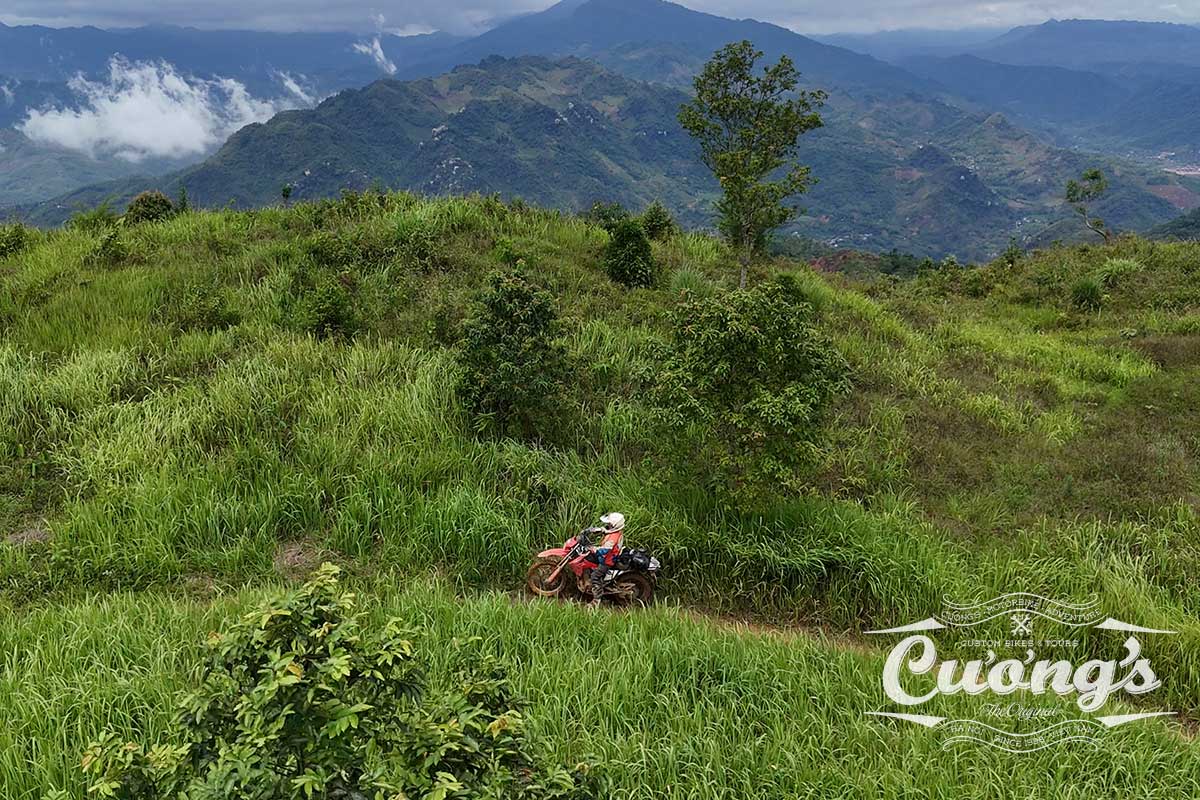
The Definitve Guide to Riding the Ho Chi Minh Trail and Northern Vietnam
The Definitve Guide to Riding the Ho Chi Minh Trail and Northern Vietnam
Let’s cut through the noise. If you are planning to ride a motorcycle through Vietnam, you are either setting yourself up for the greatest, most visceral adventure of your life, or you are about to drown in a monsoon while navigating a mudslide on a single-lane mountain pass. There is no in-between. Vietnam’s geography doesn’t care about your vacation calendar. If you show up at the wrong time, the mountains will lock you out with thick fog, and the coastal plains will flood you out with typhoons.
You need hard facts, precision timing, and zero fluff. This is the aggressive, no-nonsense blueprint for conquering Northern Vietnam’s high passes—like Ha Giang and the Northwest loop—and blasting down the legendary Ho Chi Minh Trail from Hanoi all the way to Saigon via Hoi An. If you want to experience the raw, unfiltered freedom of two wheels, you need to book the right ride at the absolute perfect time. Check out the elite routes directly via Cuong’s Motorbike Adventure to see what a real expedition looks like.
The Unforgiving Climate Matrix: Regional Weather Breakdown
Vietnam is narrow, elongated, and split by massive mountain ranges. This means while one region is experiencing bone-dry, golden autumn days, another region just a few hundred kilometers away is getting hammered by tropical depressions. To survive and dominate this terrain, you must understand the microclimates of the Northwest, Ha Giang, and Central Vietnam.
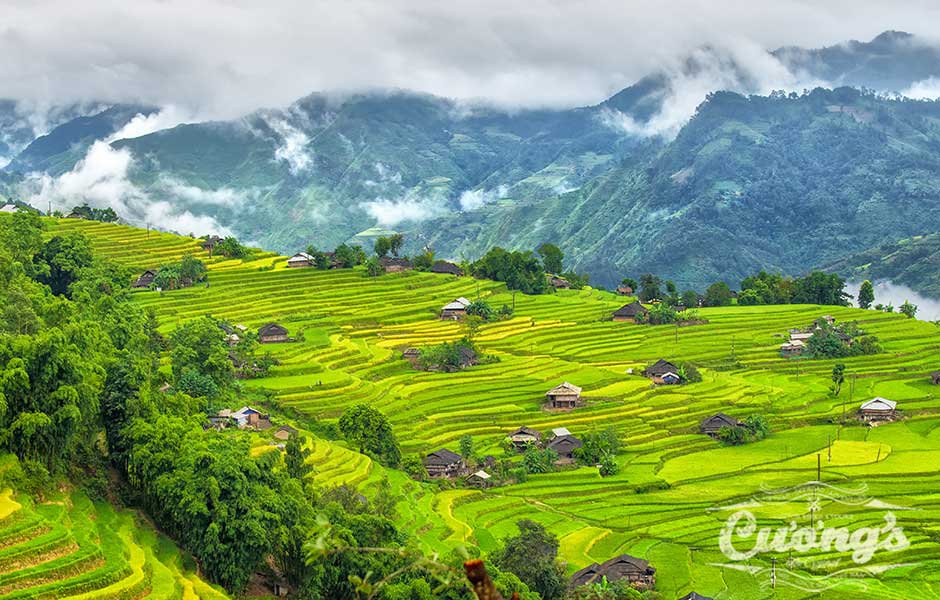
1. The Northwest (Sapa, Mu Cang Chai, Dien Bien Phu)
The Northwest is a landscape of colossal proportions, defined by the Hoang Lien Son mountain range and Vietnam’s highest peak, Fansipan. Here, winter (December to February) brings biting cold and heavy mist that drops visibility to near zero. Summer (June to August) unleashes ferocious downpours that turn dirt tracks into slick clay traps. Your golden window here is Autumn (September to October) when the terraced rice fields turn a brilliant, blinding gold right before harvest.
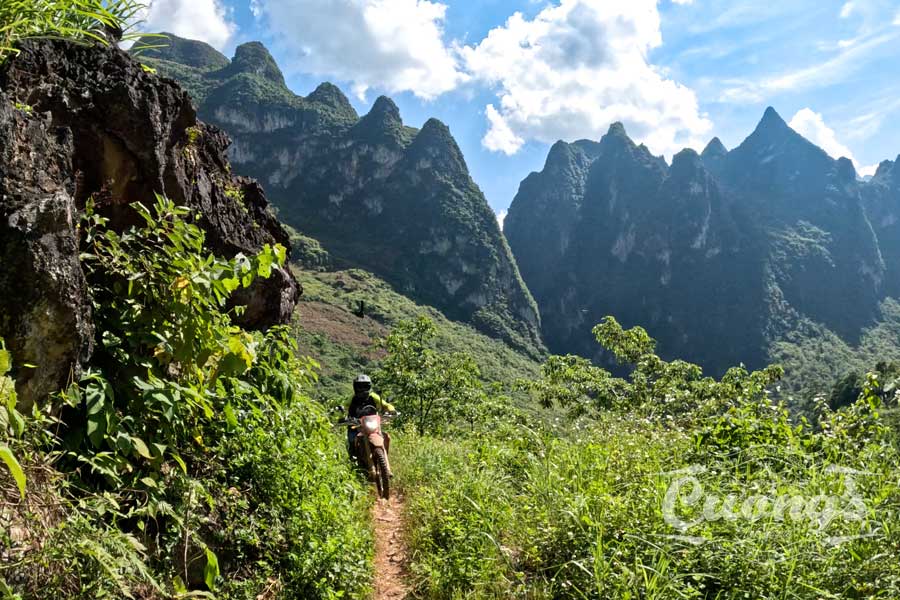
2. Ha Giang (The Extreme North)
Ha Giang is the holy grail of adventure riding. The Ma Pi Leng Pass and the iconic karst plateaus demand absolute concentration. If you attempt this loop in July or August, you are gambling with flash floods and landslides. Go from October to December when the skies clear up, exposing the dramatic, jagged limestone peaks in all their brutal glory, complemented by fields of buckwheat flowers blooming across the valleys.

3. Central Vietnam (Phong Nha, Hue, Da Nang, Hoi An)
Once you cross into Central Vietnam along the Ho Chi Minh Trail, the weather dynamic shifts entirely. This region gets slammed by typhoons and relentless rain from October to mid-December. Riding the Truong Son cemetery routes or the coastal passes during this window is miserable and dangerous. Central Vietnam shines brightest from February to May, offering warm temperatures, clear skies, and dry asphalt.
The Ultimate Seasonal Comparison Matrix
Don’t guess your gear requirements. Use this data-driven breakdown of weather patterns across the key motorcycle zones to plan your assault.
| Region | Peak Season (Best Months) | Average Temperature | Average Rainfall | Overall Riding Conditions |
|---|---|---|---|---|
| Northwest Vietnam | September – November March – May | 15°C – 28°C (59°F – 82°F) | Low to Moderate | Dry asphalt, exceptional visibility, golden rice terraces in Autumn. High traction. |
| Ha Giang Extreme | October – December March – April | 10°C – 22°C (50°F – 72°F) | Very Low | Cool, crisp air. Crisp mountain views, dry rocky passes. Winter can be highly cold but clear. |
| Central Vietnam | February – August | 24°C – 35°C (75°F – 95°F) | Low (Spring) / High (Autumn) | Perfect riding from Feb-May. Excellent coastal breezes. Avoid Oct-Dec due to severe typhoons. |
Conquering the Ho Chi Minh Trail: Hanoi to Saigon
Riding from Hanoi down to Saigon is a rite of passage. This isn’t just a road; it’s a historic network of trails carved through the spine of the Truong Son Mountains. To conquer it successfully without getting caught in seasonal traps, you need to execute a tactical south-bound movement during the optimal weather windows.
The journey kicks off from Hanoi, heading down through the spectacular limestone valley of Mai Chau before connecting to the historical trail sections. Your first major milestone is the unmatched cave country of Phong Nha-Ke Bang National Park, a UNESCO World Heritage site containing some of the largest caverns on earth. For official updates on conservation and access, you can cross-reference the Vietnam Government Web Portal.
From Phong Nha, the trail splits into the East and West branches. The Western Ho Chi Minh Trail is a remote, petrol-scarce stretch of pure concrete ribbons cut through primary jungle. It scales immense ridges before dropping you down into the ancient imperial capital of Hue, leading right into the legendary Hai Van Pass. This stunning coastal ribbon drops you straight into Da Nang and the historic lantern-lit streets of Hoi An.
But the adventure doesn’t stop there. Continuing south from Hoi An takes you deep into the Central Highlands via Kon Tum, Pleiku, and Buon Ma Thuot—the coffee capital of Vietnam. These sweeping highlands offer fast, uncrowded roads that eventually descend into the bustling, high-octane energy of Saigon (Ho Chi Minh City).
The Sweet Spot: When to Book Your Expedition
If you want to stitch the entire country together—combining the northern mountain loops with the full length of the Ho Chi Minh Trail all the way to Saigon—your ultimate calendar window is March to April or October to November.
- The Spring Window (March – April): You catch the tail end of the dry winter in the north, enjoy completely perfect, clear, dry weather through Central Vietnam, and hit the South before the oppressive summer monsoon heat kicks in.
- The Autumn Window (October – November): You experience the absolute best riding conditions in Ha Giang and the Northwest. While you must stay alert for late-season rains as you cross Central Vietnam, the overall journey offers crisp mountain air and stunning visual clarity.
Lock In Your Ride with the Masters of the Terrain
Do not attempt to navigate these complex weather zones and brutal mountain passes on a cheap, unmaintained rental scooter. The Ho Chi Minh Trail demands reliable machines, expert mechanical backing, and routes designed by people who live and breathe these roads.
Ready to turn this ultimate blueprint into reality? Explore professionally guided and tailored expeditions designed to hit these regions at the absolute peak of their seasons:
- Dominate the northern frontiers with targeted North Vietnam Motorbike Tours.
- Conquer the ultimate bucket-list ride with comprehensive Ho Chi Minh Trail Motorbike Tours tracking all the way from Hanoi to Saigon.
The roads are waiting. Stop planning endlessly, watch the seasons, pick your window, and get on the saddle.
Untrustworthy Tour Companies | Safety, Trust & Adventure Travel
When a Tour Company Cuts Corners in Marketing, What Else Are They Cutting?
The internet is full of promises. Every tour company claims to be the best, the safest, and the most authentic. But sometimes, the way a company markets itself tells you everything you need to know about how it operates behind the scenes.
When a business relies on dodgy SEO tactics—copying content, creating fake reviews, spamming keywords, impersonating competitors, or manipulating search engines—it raises an uncomfortable question:
If they are willing to cheat to get your attention, what else are they willing to compromise once they have your money?
Adventure motorbike tours are not ordinary holidays. Riders put their trust in their guide, their motorcycle, and the company behind the trip. Safety isn’t optional. It is everything.
Will they save money by using old tyres with little tread left?
Will they delay replacing worn brake pads?
Will they hire inexperienced guides because they are cheaper?
Will they rush maintenance schedules to maximise profits?
Will they cut costs on accommodation or meals?
Most riders will never know until they are halfway up a mountain pass, crossing a river in Laos, or riding a rocky trail near the Chinese border.
The reality is that running a quality adventure tour company is expensive. Proper bike maintenance costs money. Experienced guides cost money. Support vehicles, safety equipment, good accommodation and quality food all cost money.
Companies that focus only on growth and quick profits have to find savings somewhere.
And that is why integrity matters.
A company’s attitude towards competition often reflects its attitude towards customers. If competitors are simply obstacles to be crushed by dishonest tactics, perhaps customers are also seen as transactions rather than people.
Adventure riders are not numbers on a spreadsheet.
They are guests, often travelling thousands of kilometres and placing their safety in the hands of strangers. They deserve honesty, transparency, and a company that values long-term reputation over short-term gains.
The best tour companies do not need tricks.
They build trust over years.
They invest in their bikes.
They train their guides.
They answer questions honestly.
And when something goes wrong, they stand behind their customers.
Because in adventure travel, reputation isn’t built by algorithms.
It’s built one rider at a time.
So before booking your next adventure, don’t just ask:
“How cheap is the tour?”
Ask:
“Who am I trusting with my safety?”
That answer may be worth far more than the price you pay.
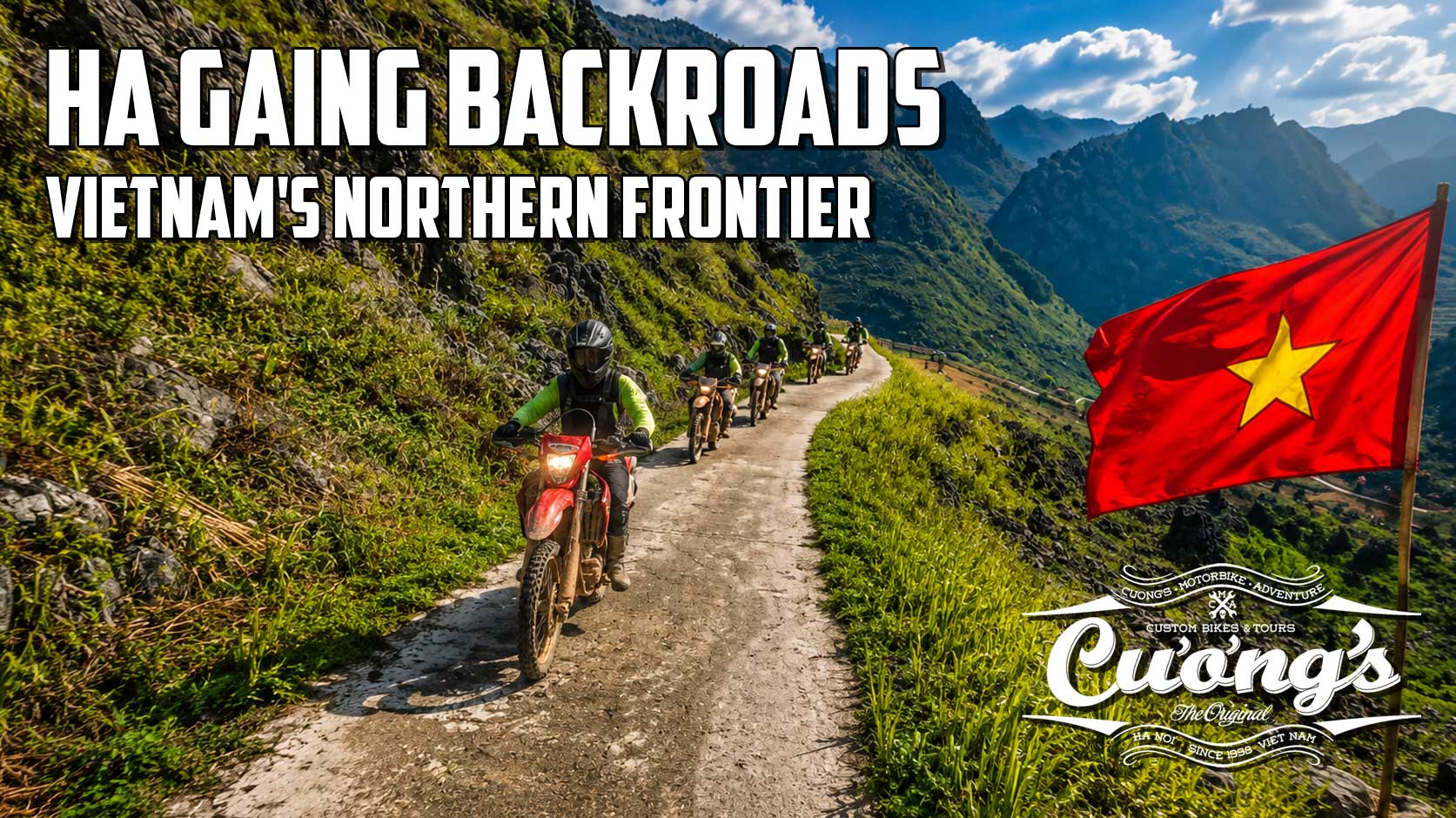
Ha Giang Border Ride | Vietnam's Wildest Off-Road Motorbike Adventure
Most riders stop at the Ha Giang Loop. We keep riding.
This Ha Giang Border Ride takes you far beyond the tourist route and deep into the remote mountains of northern Vietnam. Ride rugged off-road trails, hidden valleys, mountain passes and isolated ethnic minority villages along Vietnam’s northern frontier with China.
This is not the standard Ha Giang Loop. This is the wild side of Ha Giang.
Join Cuong’s Motorbike Adventure, Vietnam’s longest-running guided motorbike tour company, as we explore some of the most spectacular and least-visited roads in Southeast Asia. Ride Honda CRF250L and CRF300L motorcycles with experienced local guides and full support.
Ha Giang Off-Road Border Ride Tour:
Ha Giang Border Ride Tour Details
More Vietnam Motorbike Tours: Cuong’s Motorbike Adventure Website
This adventure features:
- Remote off-road trails
- Mountain passes and limestone karsts
- Border roads near China
- Ethnic minority villages
- Hidden valleys beyond the Ha Giang Loop
- Expert local guides and support crew
If you are looking for a real Vietnam motorbike adventure away from the crowds, this is the ride.
https://cuongs-motorbike-adventure.co…
Subscribe for more:
• Vietnam Motorbike Tours
• Ha Giang Off-Road Adventures
• Laos Motorbike Tours
• Hidden Roads of Vietnam
https://cuongs-motorbike-adventure.co…
#HaGiang #HaGiangLoop #HaGiangOffRoad #VietnamMotorcycleTour #OffRoadMotorbike #AdventureMotorcycling #DirtBikeVietnam #CuongsMotorbikeAdventure