
Vietnam Motorcycle Tour Itinerary: How to Choose the Right Route
Vietnam is an undisputed paradise for motorcycle touring. Across its length and breadth, narrow mountain ribbons cling to vertiginous limestone karsts, coastal roads trace turquoise waters, and ancient jungle paths cut through primary rainforests. Every year, thousands of adventurous travelers travel to Hanoi or Ho Chi Minh City with dreams of throttle-blasting across one of the most culturally vibrant, geographically diverse countries in Southeast Asia.
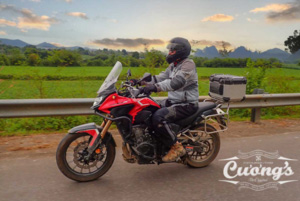
However, motorcycling across Vietnam is far from a one-size-fits-all holiday. The country spans over 1,600 kilometers from north to south, encompassing completely different climate systems, road topologies, traffic cultures, and technical demands. A route that delights a seasoned enduro enthusiast who lives for loose gravel and off-camber hairpins could quickly turn into a grueling, high-stress ordeal for a rider used to smooth weekend highway cruising.
Choosing the right itinerary comes down to matching your technical riding ability, fitness, mental stamina, and preferred travel pace with the right region and season.
This comprehensive guide breaks down everything you need to plan your journey: an honest self-assessment of your riding abilities, a detailed deep-dive into Vietnam’s premier riding regions—the rugged Northwest, the iconic Ha Giang province, and the historic Ho Chi Minh Trail—as well as comprehensive weather breakdowns, bike selection guidelines, and route selection tips.
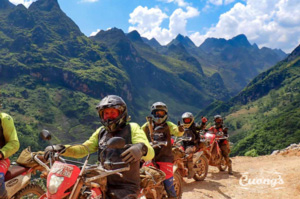
Table of Contents
- Route 1: Northwest Vietnam – The Roof of Indochina
Terrain and Topography
Skill Level and Technical Demands
Highlights and Iconic Passes
Ideal Seasons and Weather Hazards
- Route 2: Ha Giang Loop – The Frontier of Limestone Karsts
Terrain and Topography
Skill Level and Technical Demands
Highlights and Iconic Passes
Ideal Seasons and Weather Hazards
- Route 3: The Ho Chi Minh Trail – History, Jungles, and Open Cruising
Terrain and Topography
Skill Level and Technical Demands
Highlights and Iconic Passes
Ideal Seasons and Weather Hazards

1. The Philosophy of Route Planning in Vietnam
The biggest mistake riders make when designing a motorcycle tour in Vietnam is relying strictly on digital map distances and speeds.
In Western countries, covering 300 to 400 kilometers (180 to 250 miles) in a single day on a mid-sized dual-sport or touring motorcycle is a relaxed, half-day jaunt on open highways. In Vietnam, that exact same distance can easily translate into ten to twelve grueling hours in the saddle.
Why? Because road reality in Vietnam is shaped by:
- Topography: The northern and central mountains feature non-stop radius-changing switchbacks, hairpins, and steep gradients.
- Variable Pavement Quality: Smooth asphalt can abruptly turn into loose gravel, deep rutted mud, unexpected potholes, or diesel-slicked concrete.
- Mixed Traffic Dynamics: Roads are shared by roaming water buffalo, wandering children, slow-moving overloaded farm tractors, fast-moving sleeper buses cutting the apex, and thousands of scooters.
- Weather Fluctuations: Mountain passes are microclimates unto themselves; dense fog, sudden tropical deluges, and flash mudslides can halve your travel speed in a matter of minutes.
When planning your route, average your travel speed between 30 to 45 km/h (18 to 28 mph) in the northern mountains, and 45 to 60 km/h (28 to 37 mph) on central highways. A safe, sustainable daily distance is roughly 150 to 200 kilometers. Planning around realistic physical limits allows you to absorb the scenery, stop in remote villages, drink roadside cà phê sữa đá (Vietnamese iced coffee), and arrive at your evening homestay with enough energy to enjoy the culture.
2. Evaluating Your True Riding Skill Level
Be brutally honest with yourself about your riding proficiency. Riding in your home country—where lanes are strictly respected and traffic laws are uniformly enforced—does not fully prepare you for the chaotic flow of Southeast Asian transport.
Beginner / Novice
- Profile: You have held a motorcycle license for under two years or ride sporadically. You are comfortable on paved roads, can manage clutch and throttle inputs reliably, but have minimal experience with low-speed balance, tight uphill hairpins, off-road gravel, or dynamic hazards.
- What you should avoid: Technical single-track, off-road muddy passes, high-altitude cliffside routes with high exposure, and navigating heavy metropolitan traffic in Hanoi or Ho Chi Minh City without an experienced guide.
- Recommended Route: Select stretches of the paved Ho Chi Minh Road (Central Vietnam), coastal loops, or guided tours that run at an easy pace on forgiving tarmac.
Intermediate
- Profile: You ride regularly and have several thousand kilometers under your belt across various bikes. You understand counter-steering, trail braking, body-weight positioning, and clutch slipping. You have tackled occasional gravel, broken asphalt, and steep hill climbs, and you maintain your cool when traction shifts unexpectedly.
- What you should tackle: The Northwest loops, major mountain passes (like O Quy Ho and Khau Pha), and paved sections of the Ha Giang Loop.
- Recommended Route: Northwest Vietnam Motorbike Tours or
- Recommended Route: Northwest Vietnam Motorbike Tours or well-paced Ha Giang Motorbike Tours.
Advanced / Expert
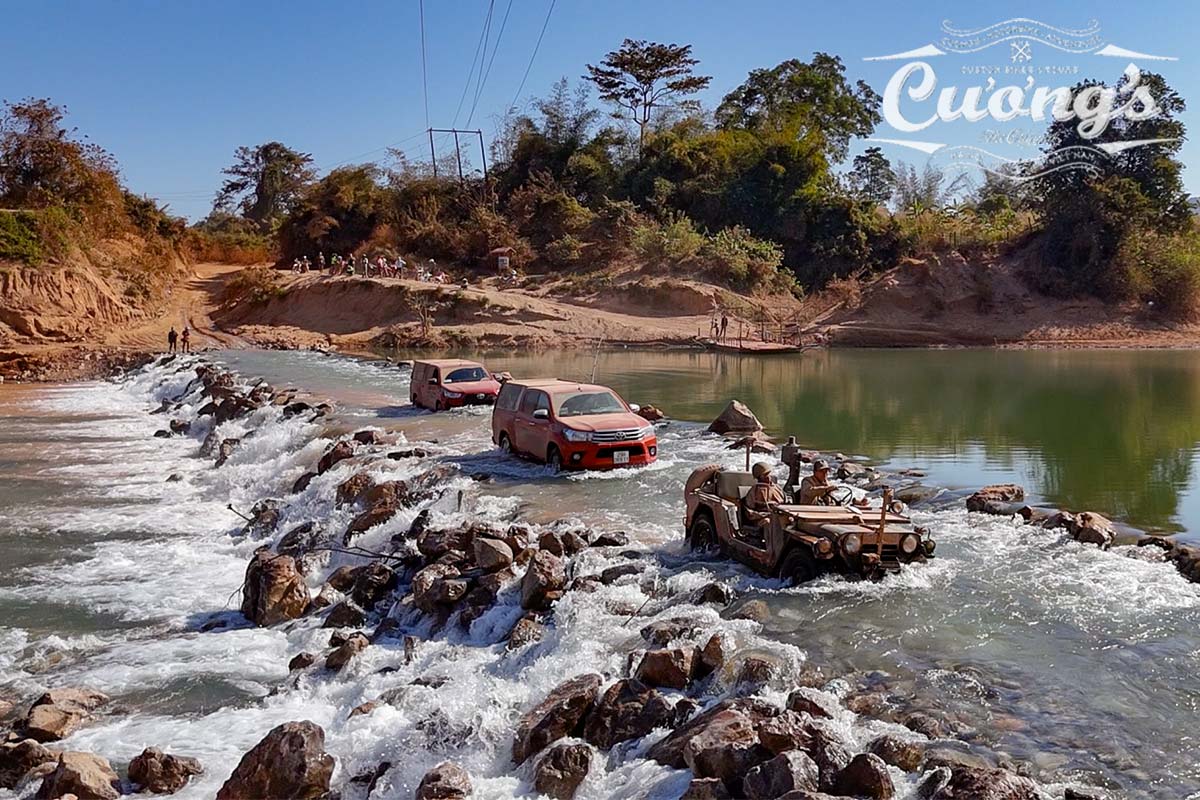
- Profile: You are a seasoned adventure tourer, dirt-bike rider, or enduro pilot. You are completely unfazed by rear-wheel slides, deep rutted mud, stream crossings, loose boulder fields, rainstorms, and blind hairpins flanked by hundreds of meters of vertical drop.
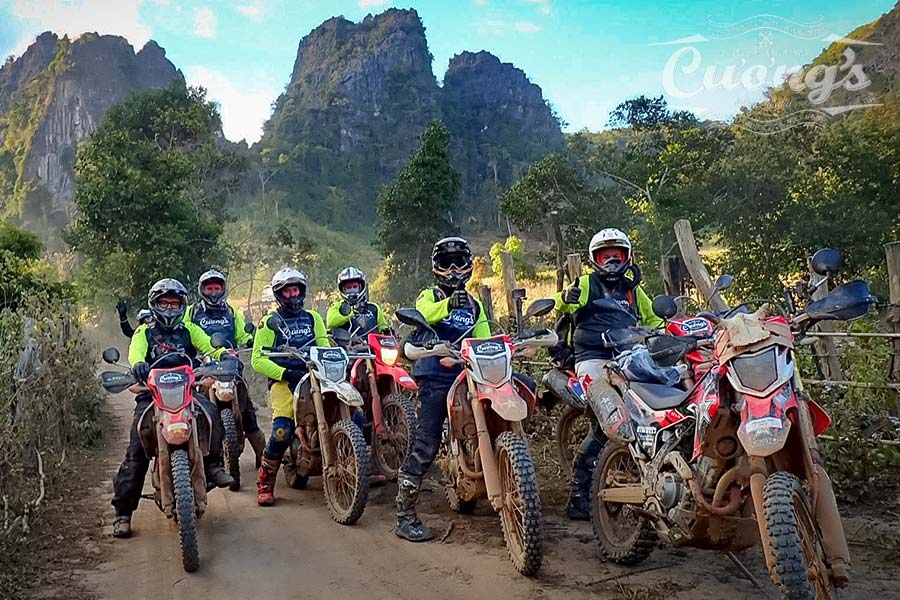
- What you should tackle: Remote border trails, off-the-beaten-path single-track connecting ethnic minority villages, the rugged high-elevation passes of the northern frontier, and the technical bypasses of Ha Giang and Northwest Vietnam.
- Recommended Route: Specialized enduro extensions in Northwest Vietnam, extreme backroads of Ha Giang, and remote branches of the western Ho Chi Minh Trail.
3. Master Comparison: Regions, Difficulty, and Riding Seasons
| Region / Route | Best Experience Level | Dominant Terrain & Road Types | Daily Distance Average | Primary Scenery & Culture | Best Riding Seasons | Seasons to Avoid / Caution |
|---|---|---|---|---|---|---|
| Northwest Vietnam | Intermediate to Advanced | High alpine passes, stepped valley roads, broken asphalt, optional enduro tracks | 150 – 220 km | Grand mountain ranges (Fansipan), rice terraces (Mu Cang Chai), Black H’mong & White Thai ethnic culture | Sept – Nov (Harvest/Dry) March – May (Spring bloom) | July – Aug (Peak monsoon/landslides) Dec – Jan (Freezing drizzle/fog) |
| Ha Giang Loop | Advanced (or Experienced Intermediate) | Sheer limestone karsts, tight switchbacks, steep elevation gains, narrow canyon ledges | 120 – 180 km | UNESCO Dong Van Karst Plateau, Ma Pi Leng Pass, Tu San Canyon, authentic frontier markets | Oct – Dec (Clear skies/Buckwheat) Feb – April (Spring warmth/flowers) | June – Aug (Intense downpours/flash floods) Jan (Extreme cold and heavy mist) |
| Ho Chi Minh Trail | Beginner to Intermediate | Smooth sweeping asphalt, undulating jungle hills, rolling mountain ribbons | 180 – 260 km | Truong Son Mountain range, Phong Nha karst caves, Vietnam War battlegrounds, lush jungle | Jan – May (Mild temps, low rain) Feb – April (Prime conditions) | Sept – Nov (Typhoon season in Central Vietnam, localized flooding) |
4. Route 1: Northwest Vietnam – The Roof of Indochina
The Northwest of Vietnam represents the pinnacle of alpine riding in Southeast Asia. This region is dominated by the Hoang Lien Son mountain range, which contains Fansipan, the highest peak on the Indochinese Peninsula at 3,147 meters. For riders seeking sweeping vistas, ancient culture, and roads that carve endlessly through massive mountain shoulders, Northwest Vietnam Motorbike Tours offer an unparalleled playground.
Terrain and Topography
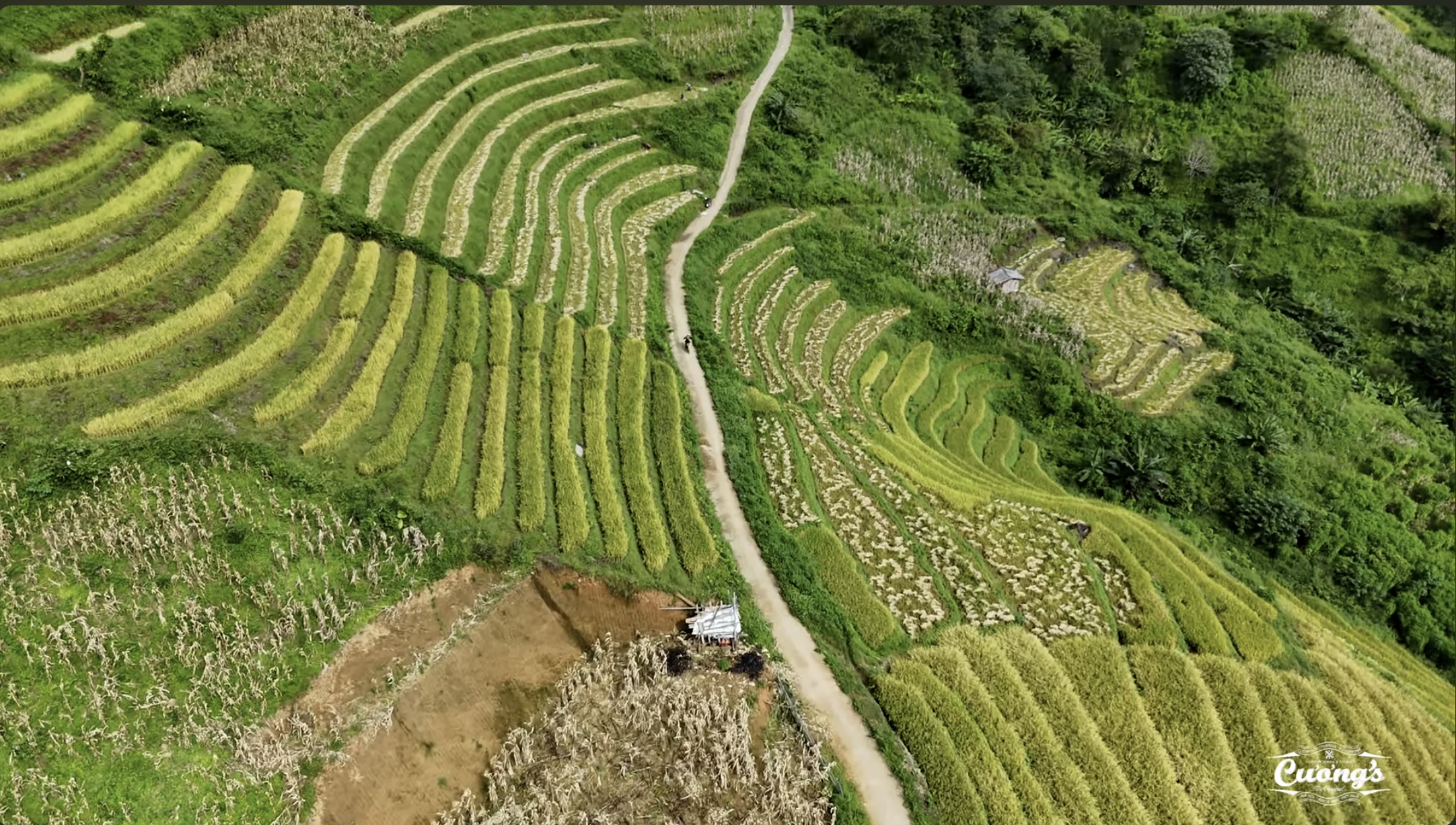
The topography here is immense. Unlike the abrupt, jagged limestone pillars found in Ha Giang, the Northwest features massive tectonic massifs, wide agricultural river valleys, and deeply layered valleys etched with tiered rice paddies.
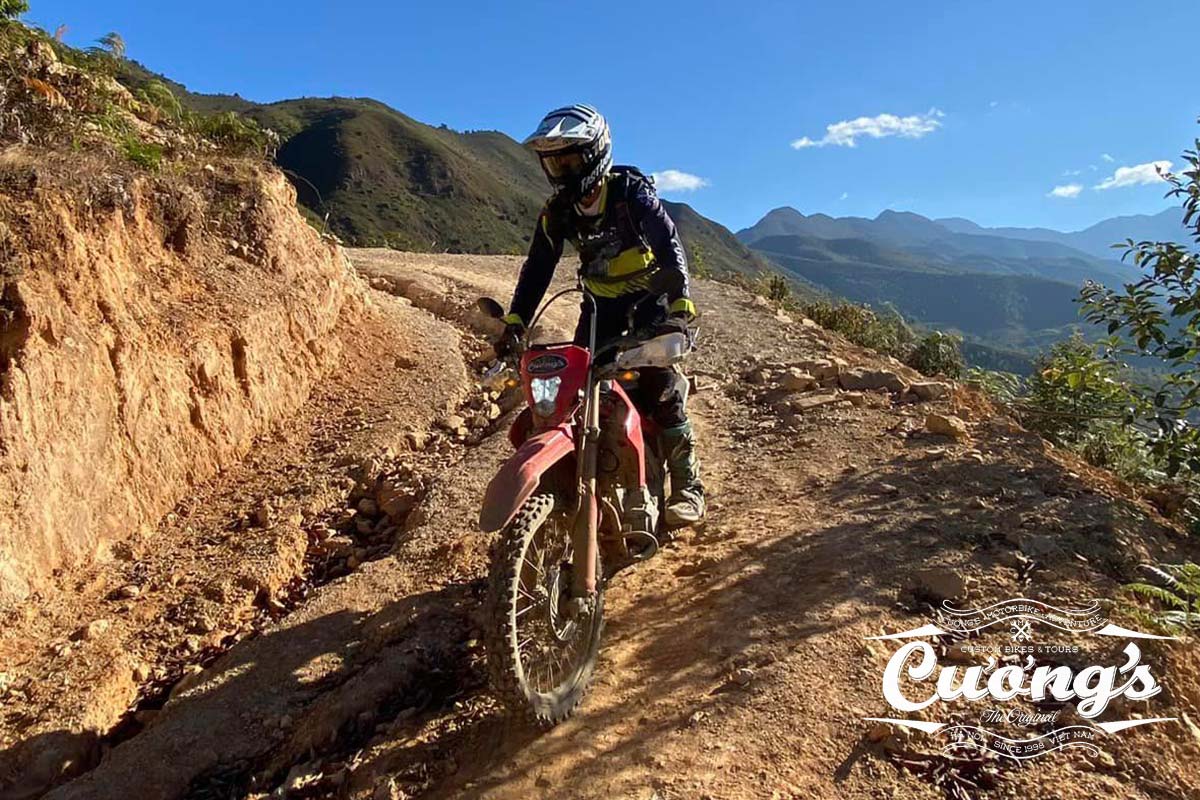
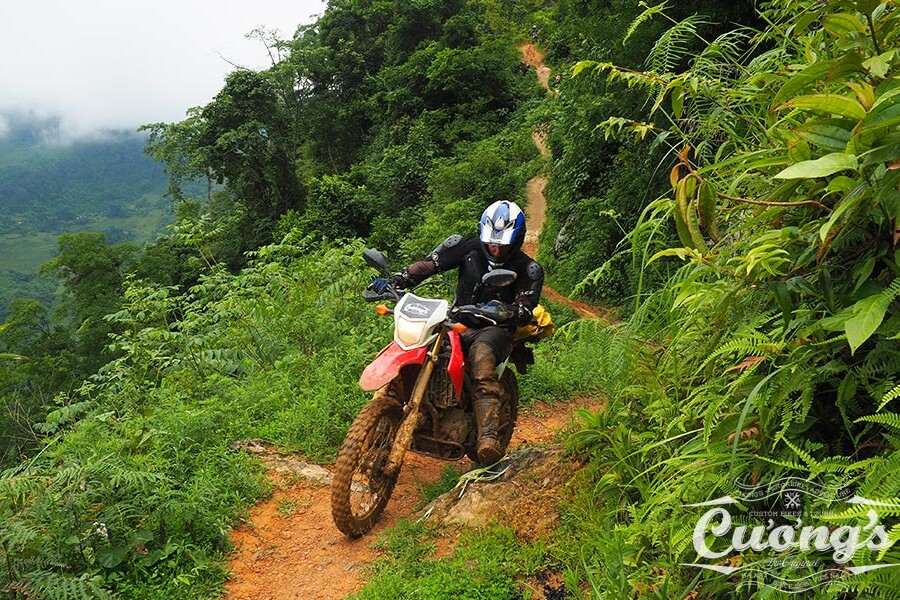
Road conditions vary dramatically. Main arterial links such as Highway 32 and Highway 4D are largely paved, but ongoing exposure to heavy rainfall and tectonic shifts means you will regularly encounter roadworks, sections stripped to rough bedrock, patches of red clay mud, and loose aggregate. If you diverge onto the provincial “TL” routes or rural trails linking higher-altitude villages around Bac Ha, Sin Ho, or Mu Cang Chai, expect technical dual-sport riding.
Skill Level and Technical Demands
- Rating: Intermediate to Advanced.
- Demands: Northwest touring requires sound cornering technique, throttle control, and continuous situational awareness. You will ascend and descend long alpine gradients that can overheat your brakes if you don’t utilize engine braking.
- Physical Stamina: High. Riding through the Northwest often involves sustained 6 to 8-hour days in changing microclimates, transitioning from humid 30°C (86°F) valley floors to chilly 10°C (50°F) mountain ridges.
Highlights and Iconic Passes
- Khau Pha Pass: One of Vietnam’s legendary “Big Four” passes, Khau Pha spans roughly 30 kilometers, rising out of the mist above terraced fields in Mu Cang Chai. The road climbs through dense mountain jungle, often shrouded in cloud near the summit, testing your composure in low-visibility conditions.
- O Quy Ho Pass: The longest mountain pass in Vietnam, spanning nearly 50 kilometers across the spine of the Hoang Lien Son range between Lao Cai and Lai Chau provinces. It climbs to an elevation of over 2,000 meters, presenting steep drops, dramatic sunset horizons, and sweeping wind currents.
- Mu Cang Chai Terraces: A designated National Heritage site, these staircased rice paddies cascade thousands of feet down valley walls, sculpted over generations by the H’mong people.
- Mai Chau Valley: A peaceful basin carpeted in emerald rice paddies and dotted with White Thai stilt houses, serving as the quintessential gateway between the lowlands and the high northern ranges.
Ideal Seasons and Weather Hazards
- The Golden Harvest (September to Late October): This is widely considered the ultimate window to ride the Northwest. The terraced paddies turn vibrant gold before the harvest, and the summer monsoon gives way to stable, crisp mountain air with high visibility.
- Spring Awakening (March to May): A sublime time to ride. Wild peach and plum blossoms carpet the hillsides, temperatures are comfortable, and precipitation remains low.
- Hazards to Watch For: Avoid July and August if you dislike riding in heavy rain. The summer monsoon can unleash massive downpours, leading to landslides that block roads for days. During December and January, Arctic cold fronts pushing down from China can turn the Northwest passes bitterly cold, often accompanied by dense fog with visibility dropped to under five meters.
5. Route 2: Ha Giang Loop – The Frontier of Limestone Karsts
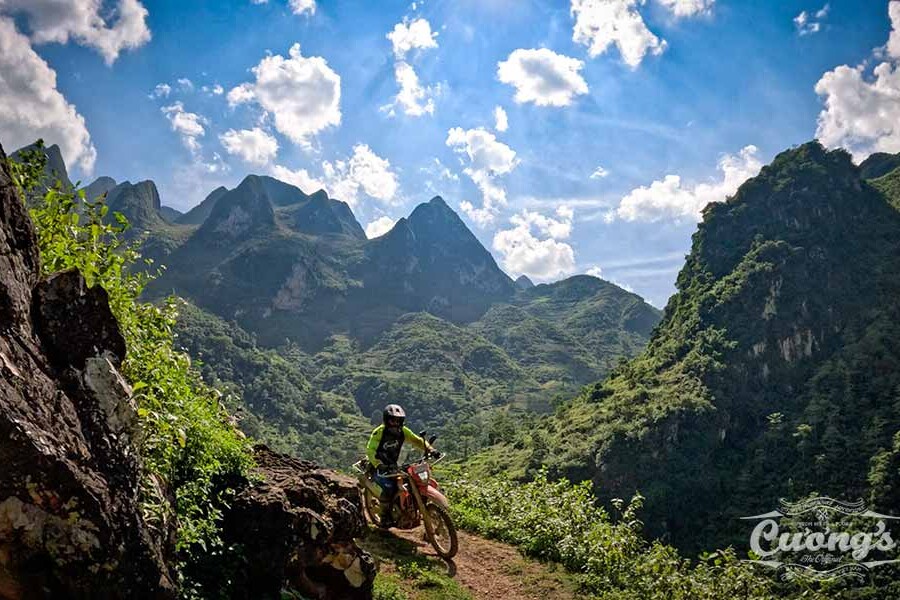
Tucked directly against the northern border with China, Ha Giang is the stuff of two-wheeled legends. It is home to the UNESCO-protected Dong Van Karst Plateau Geopark, a surreal lunar landscape dominated by black limestone peaks, canyon gorges, and vibrant frontier trade culture.
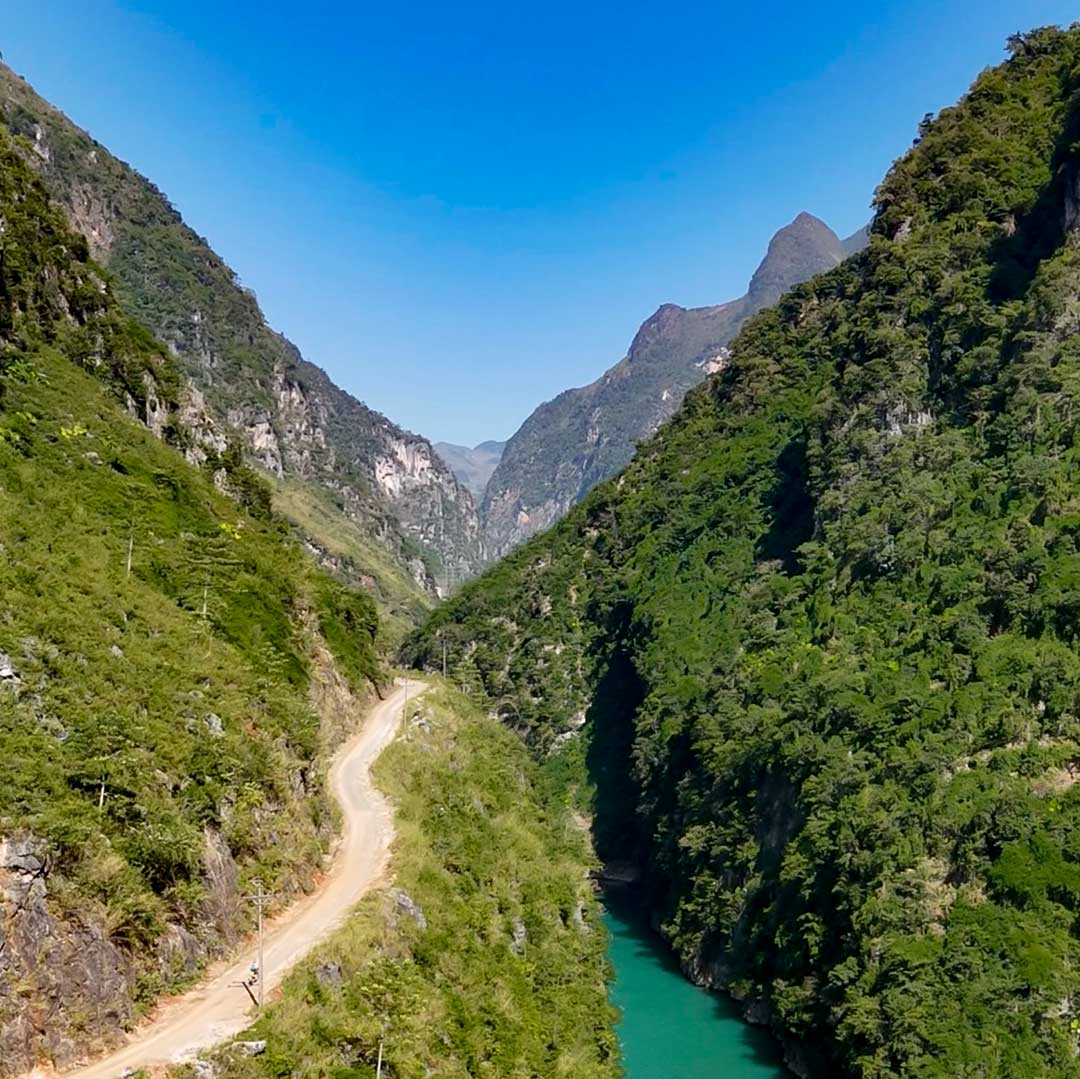
If your heart yearns for roads that defy structural logic, carved directly into towering cliff faces above emerald rivers, check out the specialized options on Ha Giang Motorbike Tours.
Terrain and Topography
Ha Giang’s geology is fundamentally unique: it features vertical limestone spires, collapsed dolines, deep fissures, and vertical drops. The road network was carved out by hand through massive civic works projects (such as the “Happiness Road”) in the mid-20th century.
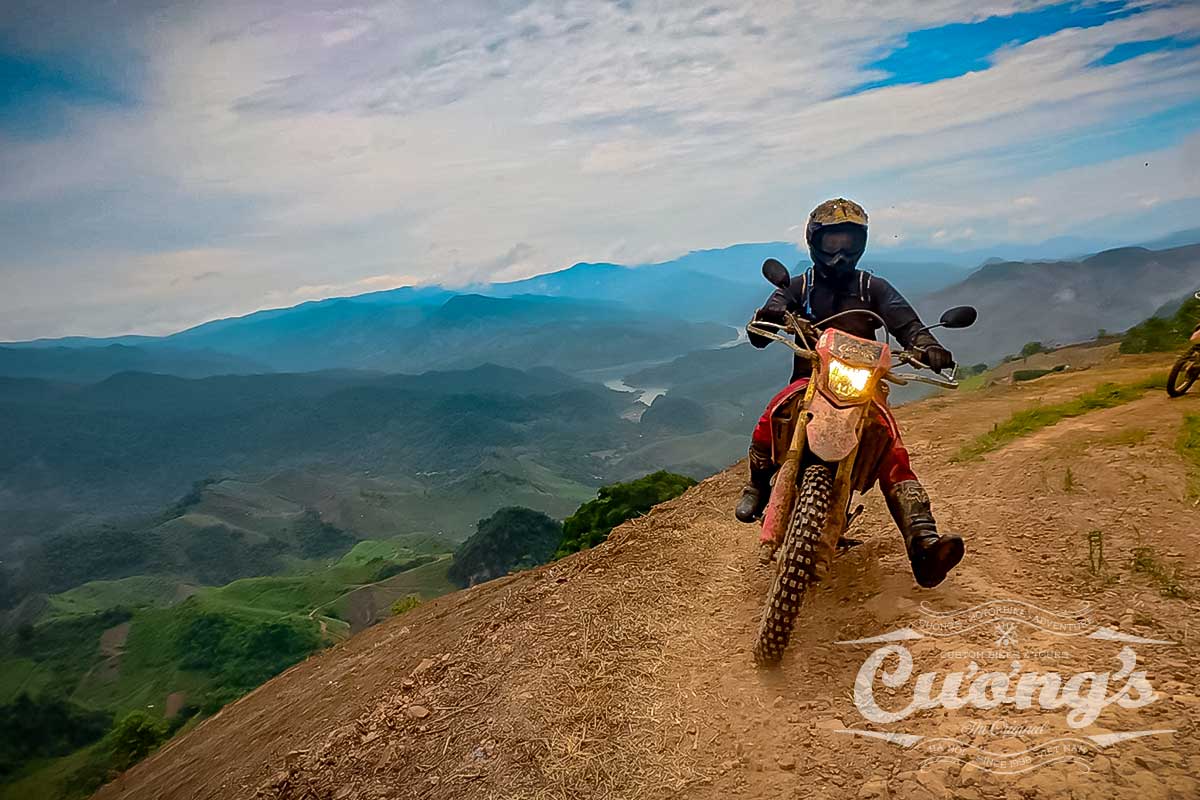
The roads here are narrow, exceptionally twisting, and run alongside sheer drops that rarely feature modern crash barriers. The asphalt surface is frequently polished smooth by heavy local transit and mountain moisture, reducing traction. You will encounter sudden off-camber hairpins, 15% gradients, roaming farm animals around blind corners, and single-lane bottlenecks where oncoming trucks demand the right of way.
Skill Level and Technical Demands
- Rating: Advanced (or Very Confident Intermediate).
- Demands: Ha Giang does not tolerate target fixation or lazy cornering. The rider must possess crisp trail-braking capabilities, comfort with tight, uphill/downhill 180-degree switchbacks, and the ability to maintain spatial composure despite dizzying vertical drop-offs.
- Caution: In recent years, the classic loop has seen a rise in inexperienced backpackers renting low-powered scooters, creating unpredictable road hazards. Staying alert and maintaining control over your speed is paramount.
Highlights and Iconic Passes
- Ma Pi Leng Pass: The undisputed crown jewel of Vietnamese mountain roads. Stretching approximately 20 kilometers along a cliff face between Dong Van and Meo Vac, it overlooks the Nho Que River snaking through the 800-meter-deep Tu San Canyon below. Riding this stretch on a clear afternoon is a world-class motorcycling experience.
- Quan Ba Heaven’s Gate: The dramatic mountain portal leading into the high-altitude plateau. The climb up through dozens of switchbacks treats you to views of the iconic Fairy Bosom Hills.
- Tham Ma Pass: A photogenic series of nine snake-like switchbacks carved into a steep mountain ridge, acting as the historic trial of strength for horses and machines alike.
- Lung Cu Flag Tower: The northernmost outpost of Vietnam, offering panoramic views across the mountainous Chinese border.
Ideal Seasons and Weather Hazards
- Autumn Buckwheat Season (October to December): The premier season for Ha Giang. Temperatures are cool and dry, rainfall is minimal, and the terraced valleys are colored by blooms of pink buckwheat blossoms (tam giác mạch).
- Post-Tet Spring (February to April): The landscape bursts into life with white plum blossoms and brilliant red kapok flowers. Clear mountain skies and moderate temperatures provide optimal traction on the technical passes.
- Hazards to Watch For: Winter (late December through January) brings penetrating cold, damp cloud inversions, and slippery, grease-like moisture onto the polished stone surfaces. Summer (June to August) brings heavy convective storms that can trigger rockfalls across the narrow canyon roads.
6. Route 3: The Ho Chi Minh Trail – History, Jungles, and Open Cruising
For riders who crave sweeping, open miles, pristine wilderness, and historical resonance, no road holds a candle to the Ho Chi Minh Trail.
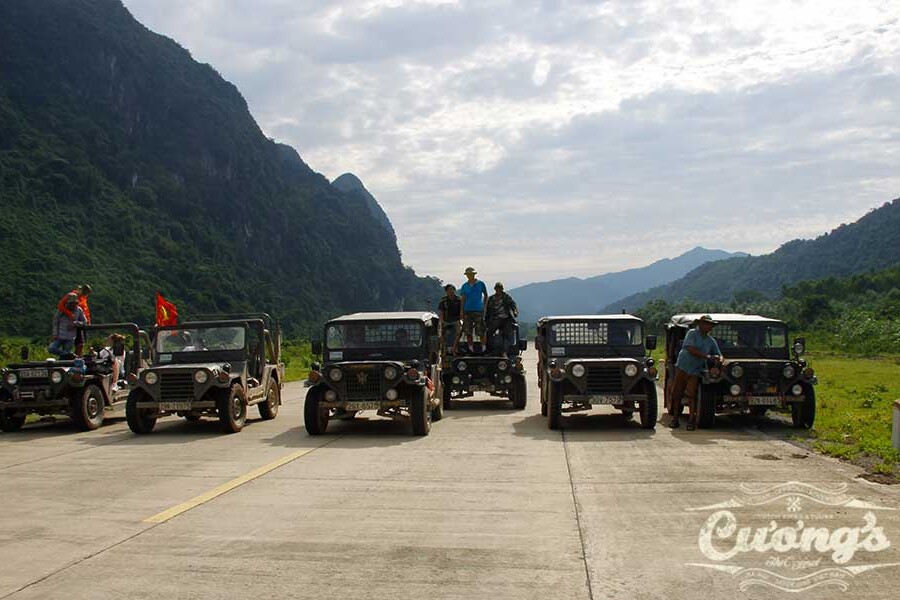
Historically a clandestine network of supply corridors cut through the Truong Son Mountain range to support logistical movements during the Vietnam War, today the route has been developed into the paved Ho Chi Minh Highway (QL14 and associated branches). It offers some of the smoothest, most serene touring in Asia.
To explore routes tracing this historic network from Hanoi down to Hoi An and beyond, dive into Ho Chi Minh Trail Motorbike Tours.
Terrain and Topography
The Ho Chi Minh Highway transitions through undulating limestone hills, broad agricultural valleys, and dense jungle mountain passes.
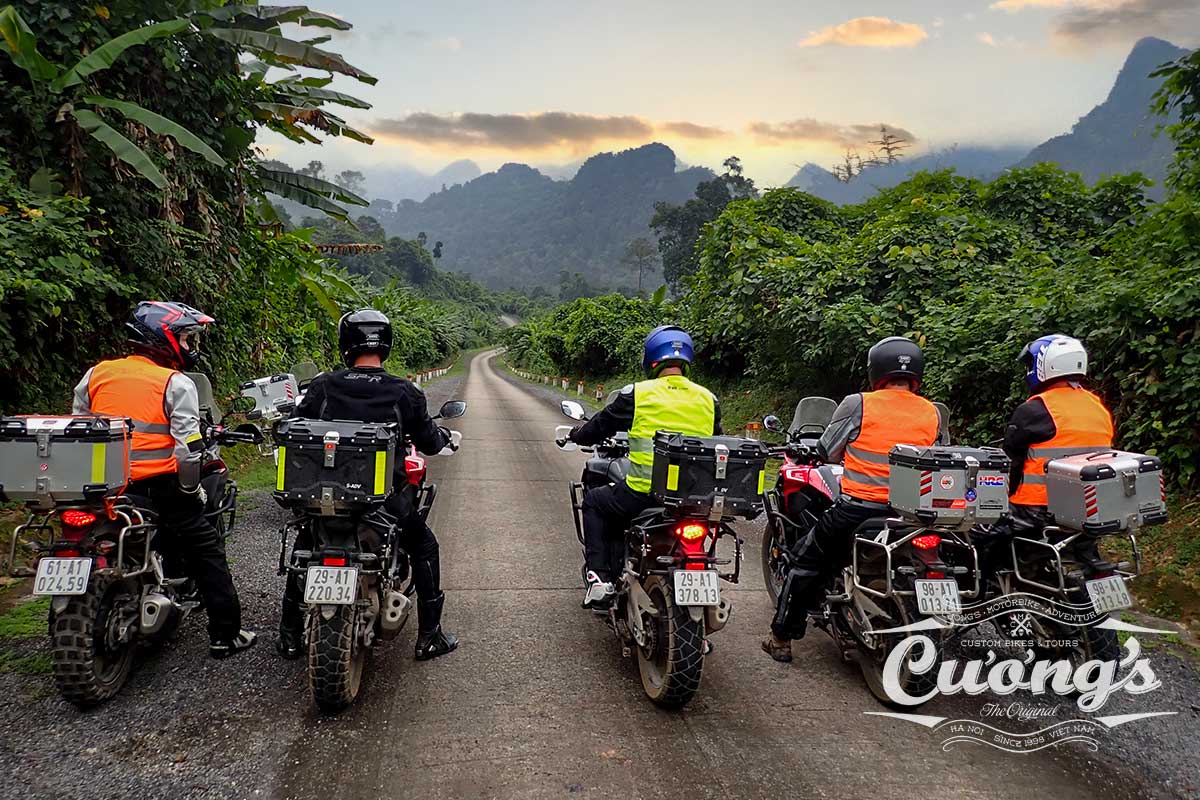
The crown jewel of this network is the Western Branch (Ho Chi Minh Highway West), stretching between Phong Nha-Ke Bang National Park and Khe Sanh. Here, the road narrows to a two-lane concrete and asphalt path carved into the primary jungle. Traffic is practically nonexistent—you can ride for fifty kilometers without seeing another automobile, sharing the road only with curious macaques, hornbills, and the hum of cicadas.
Skill Level and Technical Demands
- Rating: Beginner to Intermediate.
- Demands: On the main branches, the gradients are gentle, corners feature open sightlines, and asphalt quality is generally high. It is the ultimate route for developing smooth touring cadence, long-distance saddle stamina, and high-speed flow.
- Logistical Demands: While technically accessible, the Western Branch requires disciplined route planning. Gas stations are sparse (spanning 150 to 200 km stretches without commercial services), phone reception can be intermittent, and emergency support is hours away.
Highlights and Iconic Passes
- Phong Nha-Ke Bang National Park: A UNESCO World Heritage site home to the oldest karst mountain systems in Asia and the largest cave networks on Earth (including Son Doong and Paradise Cave).
- The Western HCM Branch: Hundreds of kilometers of uninhibited twisties carving through primary tropical rainforest along the Lao border.
- Khe Sanh Combat Base and DMZ: Deeply poignant historical sites from the Vietnam War, including the battlegrounds of Khe Sanh, the Rockpile, and the subterranean Vinh Moc Tunnels.
- Hai Van Pass (The Pass of Ocean Mists): Connecting Hue with Da Nang, this world-renowned coastal pass sweeps up over a coastal mountain spur, offering views of the South China Sea, curved viaducts, and sweeping hairpins made famous across international motoring media.
Ideal Seasons and Weather Hazards
- The Dry Window (January through May): Central Vietnam shines in the spring. Temperatures are mild to warm, the humidity has not reached its mid-summer peaks, and the mountain asphalt remains dry and grippy.
- Hazards to Watch For: Beware the Central Vietnam Monsoon and Typhoon Season (September through November). While northern regions are drying out, central provinces experience heavy downpours, localized river flooding, and powerful storms blowing in off the Pacific. Plan your central crossing outside this window.
7. Choosing the Right Motorcycle for the Terrain
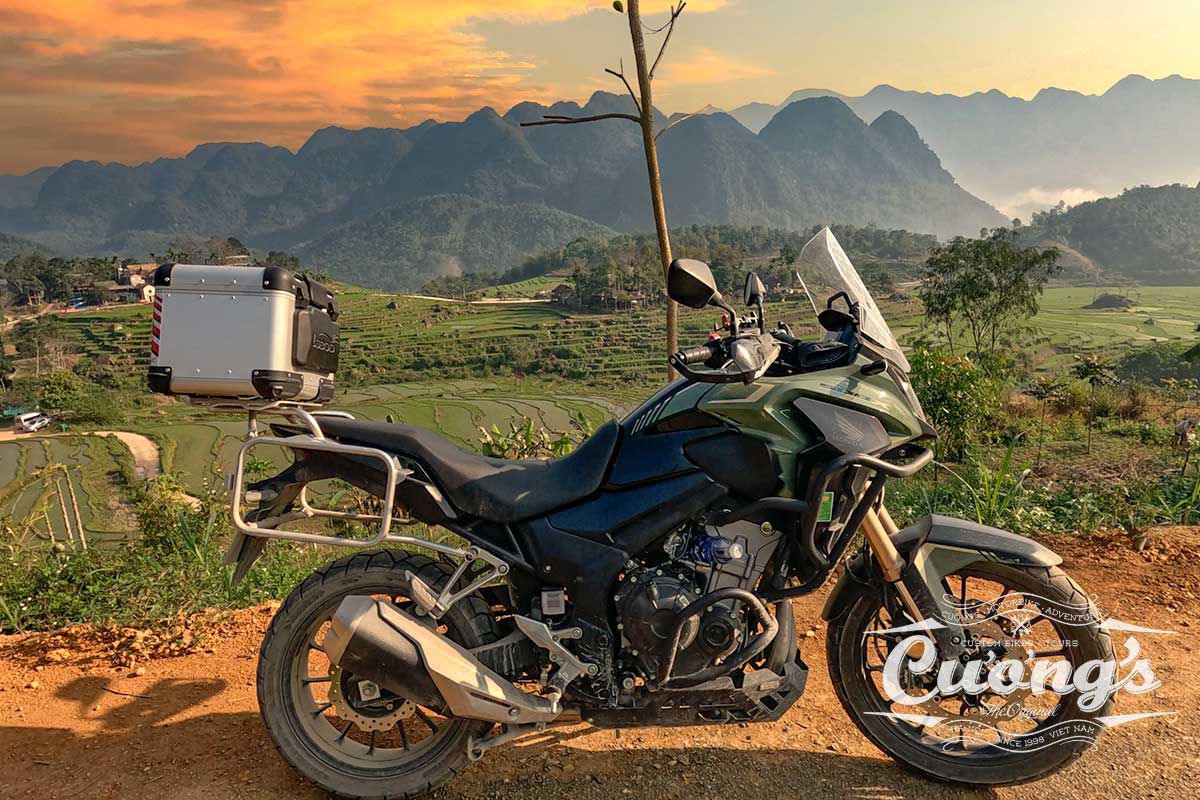
Your choice of steed will shape your touring experience. The unique topography and road conditions of Vietnam demand lightweight, nimble, and reliable machinery over heavy big-bore adventure bikes.


8. Surviving and Thriving in Vietnamese Traffic
Riding a motorcycle in Vietnam is fundamentally different from riding in Europe, North America, or Australasia. It operates on an organic, fluid philosophy often described as “school of fish” dynamics.
To ride safely, internalize these core rules of the road:
- The Flow State (Don’t Be a Wall): Traffic in Vietnam flows like water around obstacles. Do not make erratic, sudden stops or sharp, un-signaled lateral maneuvers. Move predictably, smoothly, and deliberately. If an oncoming scooter pulls out of a minor lane, they expect you to adjust your line slightly to flow around them, rather than coming to a dead, panic-braking halt.
- The Hierarchy of Mass: On Vietnamese roads, the right of way is often governed by physical size rather than road signs. In order of priority:
Sleeper Buses and Heavy Quarry Trucks (King of the road)
Commercial Delivery Vans and Medium Trucks
SUVs, Cars, and Taxis
Motorcycles and Scooters
Bicycles and Pedestrians
Water Buffalo (True Kings of the road—never assume they will yield)
Always assume that a sleeper bus overtaking an oncoming truck on a blind corner will use your entire lane. Ride with reserve margins and keep an escape path open. - Master the Horn: In Western cultures, leaning on the horn signifies aggression or annoyance. In Vietnam, the horn is a safety tool. A short double-tap (
beep-beep) translates to: “I am here, sharing this space with you, please do not make sudden lateral moves.” Tap your horn whenever you approach a blind hairpin, overtake a farmer on an overloaded scooter, or enter a narrow village alley. - Beware of Road Surfaces: Look out for loose rice spread out on the tarmac by farmers drying their harvest in the sun, fine red silt left by construction trucks, and slick diesel spillages on switchbacks.
9. Packing, Safety Gear, and Practical Touring Logistics
Safety Gear: All the Gear, All the Time (ATGATT)
Vietnam’s tropical heat tempts many riders into wearing shorts, t-shirts, and open-face helmets. This is a massive mistake. A low-side slide on gravel at 30 km/h will ruin your trip if you lack protection.
- Helmet: A proper DOT/ECE-certified full-face or dual-sport adventure helmet. Do not rely on $15 plastic half-helmets bought at tourist street stalls.
- Jacket & Pants: Mesh adventure gear with integrated armor. Modern textile mesh allows maximum airflow to manage tropical humidity while retaining abrasion resistance and impact shielding at your shoulders, elbows, back, and knees.
- Boots: Sturdy adventure or off-road boots with solid ankle support. Ankle and foot injuries are the most common trauma sustained in low-speed mountain drops.
- Gloves: Lightweight, perforated leather or reinforced mesh gloves.
- Hydration: A hydration backpack (CamelBak) is essential. Riding in high heat and humidity drains fluids quickly, leading to fatigue and slow reaction times.
Documentation and Legal Requirements
- International Driving Permit (IDP): Vietnam formally recognizes the 1968 Convention on Road Traffic. Ensure your home-country license has a valid motorcycle endorsement, and that your IDP is the 1968 version.
- Travel Insurance: Verify that your medical evacuation and travel insurance policy covers motorcycle operation at your engine displacement. Read the fine print regarding licensing compliance.
- Border Permits (Ha Giang): Because Ha Giang borders China, foreign travelers must hold a Provincial Border Travel Permit to enter certain restricted areas (such as Dong Van and Meo Vac). These are easily procured for a nominal fee at the immigration office in Ha Giang City or arranged via your tour operator or homestay.
10. Guided vs. Self-Guided: Which Is Right for You?
One of the final choices in your route planning is deciding whether to strike out independently or book an organized, professional guided tour.
When to Go Self-Guided
If you are an experienced mechanic, comfortable using translation apps, relish navigating via GPS tracks, and have an open-ended travel window that allows for days lost to repairs or weather disruptions, a self-guided journey offers unmatched freedom.
When to Book a Guided Expedition
If you are constrained by a limited holiday schedule, want to experience the best off-the-grid trails without hours of map cross-referencing, and prefer the security of having an experienced lead rider, sweep mechanic, and pre-vetted homestays, a guided tour is worth every cent. Professional guides monitor local weather stations and road conditions in real-time, redirecting your group around dangerous landslides before you find yourself stuck at the edge of a washed-out pass.
11. Conclusion: Designing Your Ultimate Vietnamese Adventure
Motorcycle touring in Vietnam is transformative. There are few feelings on earth comparable to rounding a high-altitude karst bend in Ha Giang as the morning mist lifts, or winding your throttle open through the untamed jungle valleys of the Western Ho Chi Minh Trail.
To make the most of your adventure:
- Match your route to your skill level. If you are an intermediate rider seeking mountain passes and vibrant indigenous culture, plan for the Northwest Loops.
- If you crave high-altitude drama, narrow cliffside roads, and can confidently control your bike on steep switchbacks, conquer the Ha Giang Loop.
- If you want a smooth, scenic journey through historical battlegrounds and untouched jungles, ride the Ho Chi Minh Trail.
Assess your limits, ride within your sightlines, invest in quality gear, and choose the right season. Vietnam’s roads are waiting—mount up, drop the clutch, and enjoy the ride.


Related Motorbike Tours
Explore our most popular Vietnam motorbike tours, including guided on-road and off-road adventures through Ha Giang, Northwest Vietnam, Pu Luong, and the legendary Ho Chi Minh Trail. These tours are designed for riders looking for authentic routes, experienced support crews, and unforgettable mountain riding across Vietnam.