New Vietnam Off-Road Motorbike Routes for 2026 (Cuong’s Motorbike Adventure)
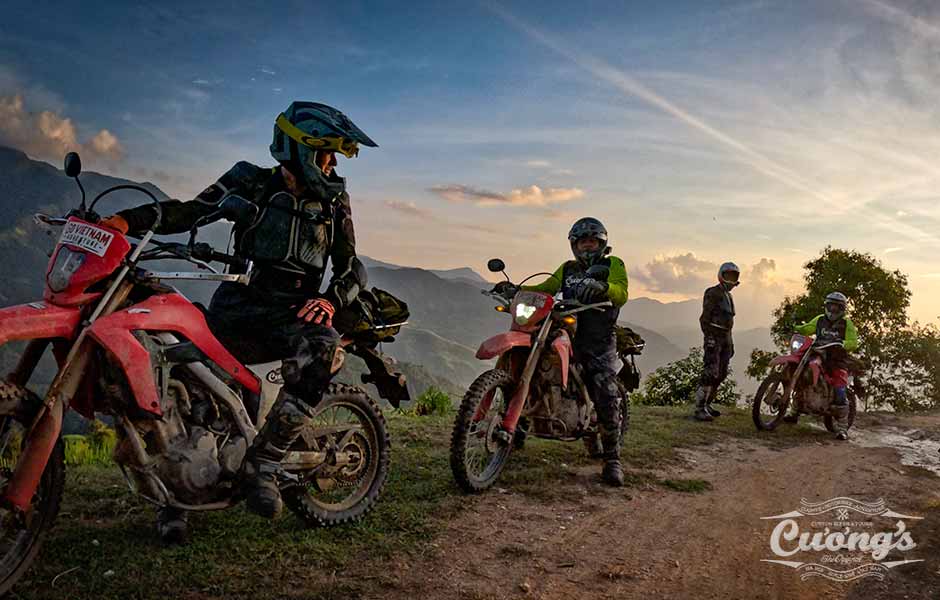
Why 2026 is the year to ride beyond the obvious
If you’ve ever ridden in Vietnam, you already know the moment that changes everything: the pavement ends, the air cools,
the hills tighten into mountains, and your front wheel starts telling stories again. Vietnam is famous for its big names—
Ha Giang, Sapa, Ban Gioc, Mu Cang Chai—but most riders still experience them the same way: a fast blast on main roads,
a few photo stops, then back to traffic and tour-bus gravity.
For 2026, Cuong’s Motorbike Adventure
is doing it differently: new route scouting, smarter trail connectors, and day designs that put you where you came to be—
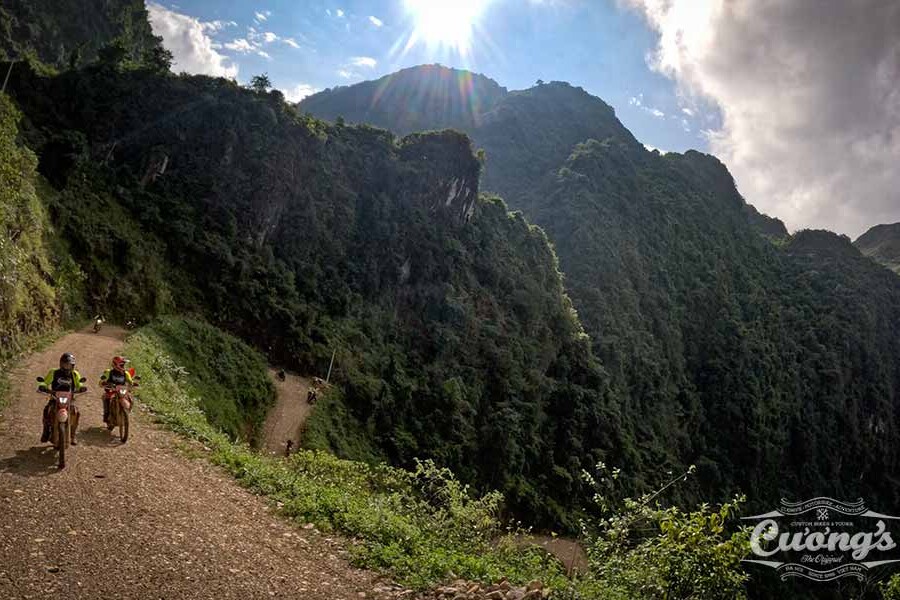
on quiet dirt, mountain backroads, and village lanes that feel personal, not packaged. The goal isn’t just “more distance.”
It’s better riding: more flow, more variety, and more time in places that still feel like Vietnam did before the crowds.
These 2026 routes follow three powerhouse regions in Northern Vietnam: the terrace-and-ridge playground of the North West,
the karst borderlands of the Northeast, and a full Northern Loop that stitches Ha Giang’s dramatic plateau to the markets,
the rice terraces of Hoang Su Phi, and the highlands near Y Ty on the Chinese border.
If you want a ready-to-book version of these ideas, start here:
Cuong’s Motorbike Tours.
Or check timing and group options via
Scheduled Departures.
1) North West Off-Road Trails: Mai Chau → Moc Chau → Tu Le → Mu Cang Chai → Sapa
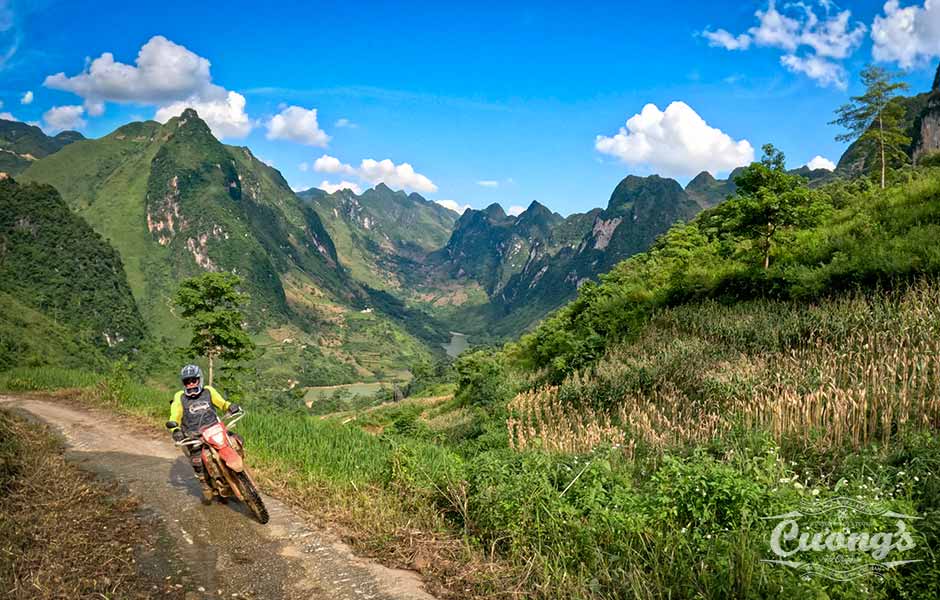
The North West is where Northern Vietnam starts flexing—limestone ridges, deep green valleys, tea hills, hot springs,
and rice terraces stacked like dragon scales. For 2026, the route concept is simple: ride through the region,
not just to it. That means stitching together dirt connectors, ridge roads, and hidden valleys so the ride feels
like one continuous adventure instead of a highlight reel with boring gaps.
You’ll pass iconic places like
Mai Chau,
Moc Chau,
Mu Cang Chai,
and
Sapa,
but the real magic is what happens between them: the tracks you don’t find on a standard map and the villages where the day
slows down and gets real.
What’s new in 2026 (North West upgrades)
- More dirt connectors between key towns to reduce main-road drag and keep the ride adventurous.
- Optional “spice loops” each day—choose smoother big-bike lines or more technical dirt depending on the group.
- Better timing for viewpoints, markets, and weather windows—so you’re not arriving after the magic is gone.
- More local food stops—small kitchens, roadside grills, and market breakfasts that become tour legends.
Mai Chau: the soft landing that still feels like a ride
Mai Chau is the warm-up that doesn’t feel like a warm-up. The valley opens wide, the roads relax, and your riding brain
switches from city survival to mountain rhythm. The 2026 approach is designed to avoid the dull “get-there” sections and
roll you onto countryside lanes and dirt that immediately feels like Vietnam’s backcountry.
Culturally, Mai Chau is strongly associated with Thai communities (often White Thai), known for stilt-house homes,
woven textiles, and a gentle valley pace. The best way to experience it is respectfully and quietly: roll in slow, greet people,
and let the place come to you.
Moc Chau: tea hills, cool air, and trails that flow
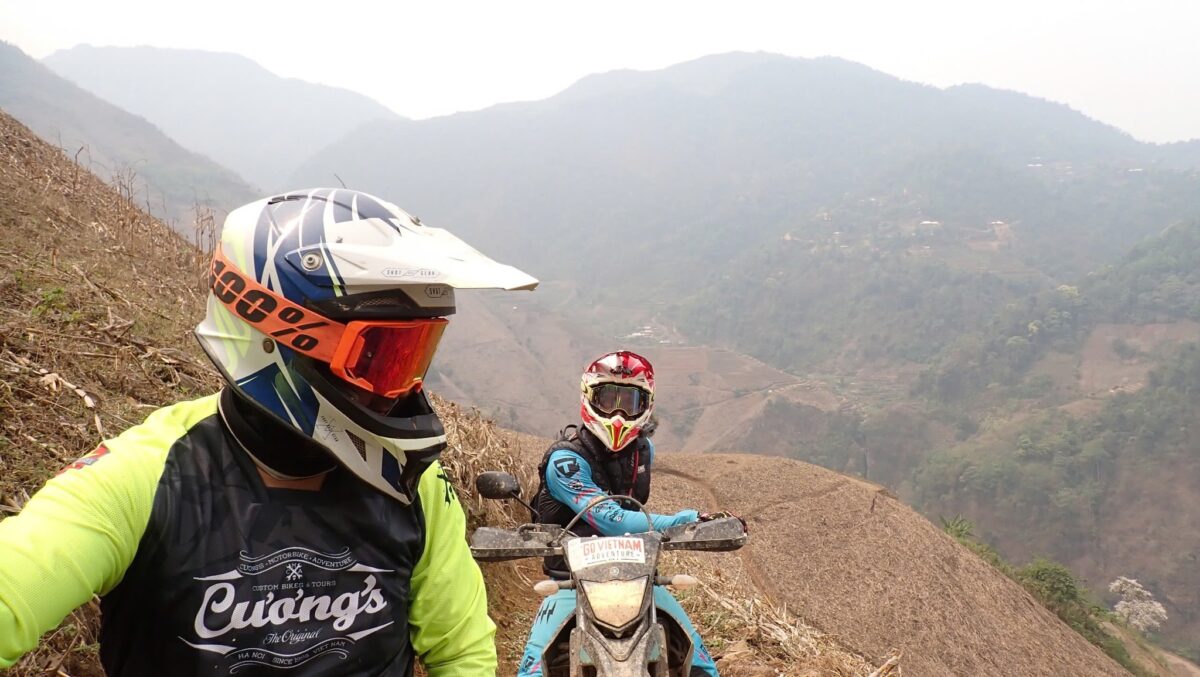
As you climb toward Moc Chau, the air cools and the scenery changes from valley greens to rolling plateaus.
Moc Chau is famous for tea hills and big skies, and 2026 scouting focuses on stitching together the best backroads between
those views—dirt ridges, small farm lanes, and forest tracks that keep you away from busy traffic.
Ethnic communities here can include H’Mong, Thai, and Muong in different pockets.
You’ll see it in the patterns on clothing, the way markets run, and the style of houses and farm life. Ride through with respect:
no loud throttle shows in villages, no pointing cameras in faces—always ask or smile first.
Tu Le: terrace gateway, valley light, and hot-spring recovery
Tu Le is where the trip starts feeling cinematic. You’ll ride from ridge to valley, and the light changes constantly—misty peaks,
warm valley sun, then cool shade again under forest lines. In 2026, Tu Le is also a key hub for “stacking” off-road options:
add a loop if the group is hungry for more dirt, or keep it smooth and scenic if you’re touring on bigger ADV bikes.
Tu Le is also near the legendary riding corridor that includes the Khau Pha Pass, often described as one of the
most thrilling mountain passes in the region.
On the right day, this is one of those rides you remember for years—the kind where you stop at a viewpoint and just laugh,
because the terraces look too perfect to be real.
Mu Cang Chai: terrace heaven and proper off-road variety
If the North West has a headline act, it’s Mu Cang Chai. The terraces here are world-famous, but riders love it for another reason:
the terrain offers real variety—dirt climbs, rocky switchbacks, narrow tracks, and ridge roads where the horizon stacks into layers.
This is where riders level up: throttle control, balance, reading the road surface, managing fatigue, and still having enough focus
left to stop for photos that don’t look real.
In and around Mu Cang Chai you’ll often meet or pass through communities associated with the H’Mong.
Their highland farming knowledge is visible everywhere in the terraces and steep-slope cultivation. When you pass through villages,
keep the ride calm—these are working communities, not a theme park.
Sapa: mountain drama, cloud riding, and the perfect finish
Sapa is famous, yes—but in 2026 the emphasis is on arriving the right way: via mountain backroads and ridge lines where possible,
not by fighting traffic and tour buses. The mountains here feel sharper and wilder, and the weather can flip in minutes. One moment
you’re riding in sunlight; the next you’re inside a cloud, visor cracked open, listening to your engine echo into mist.
Sapa’s surrounding areas include ethnic groups such as H’Mong, Dao (Red Dao), Giay,
and others. Markets and village life can be vibrant, but it’s important to keep interactions respectful—buy locally if you can,
ask before photographing, and remember that “authentic” means people living their normal lives.
For a related ride concept that already blends several North West highlights (and includes places like Pu Luong, Moc Chau, Tu Le,
Tram Tau, Mu Cang Chai, Sapa and Y Ty), see this story page on Cuong’s site:
8 Days on a CRF300 through Northwest Vietnam.
2) Northeast Vietnam: Ba Be → Cao Bang → Ban Gioc → Northern border regions

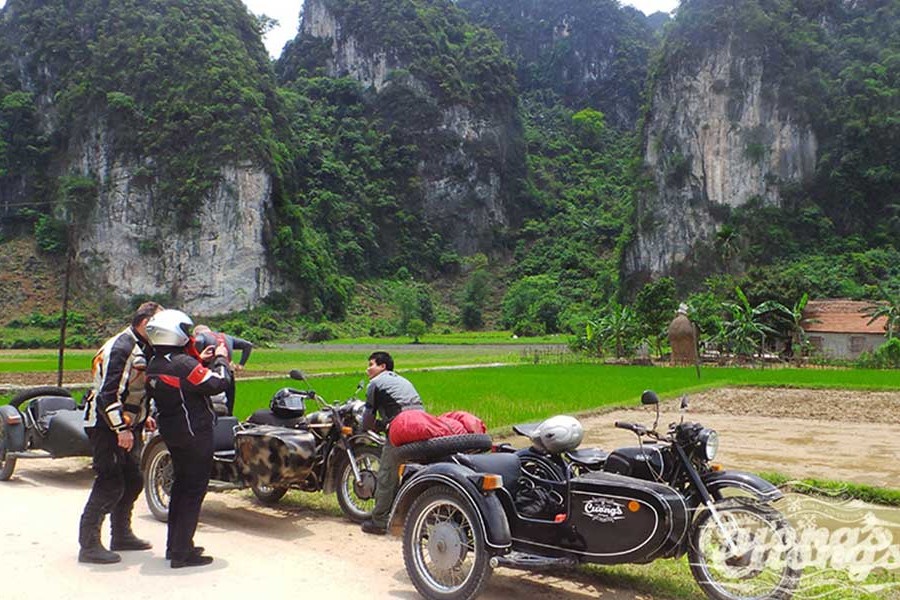
The Northeast is a different flavour of Northern Vietnam—less “big-name bustle,” more quiet power. Think karst pinnacles erupting
from rice fields, rivers cutting through limestone, and border roads where you can ride for long stretches and see more water buffalo
than cars. In 2026, Cuong’s new routing idea here is to combine the region’s greatest natural hits with backroads that feel secret:
lake country, karst valleys, and borderland tracks that stay close to the pulse of local life.
Start in the cool green calm of
Ba Be Lake,
then push into
Cao Bang
and onward to
Ban Gioc Waterfall
near the China border—one of Vietnam’s most impressive waterfalls.
What’s new in 2026 (Northeast upgrades)
- More border-adjacent backroads—quieter lines that run through valleys and small communities instead of busy corridors.
- More “ride + explore” pacing—time to stop at viewpoints, small markets, and short walks without rushing the day.
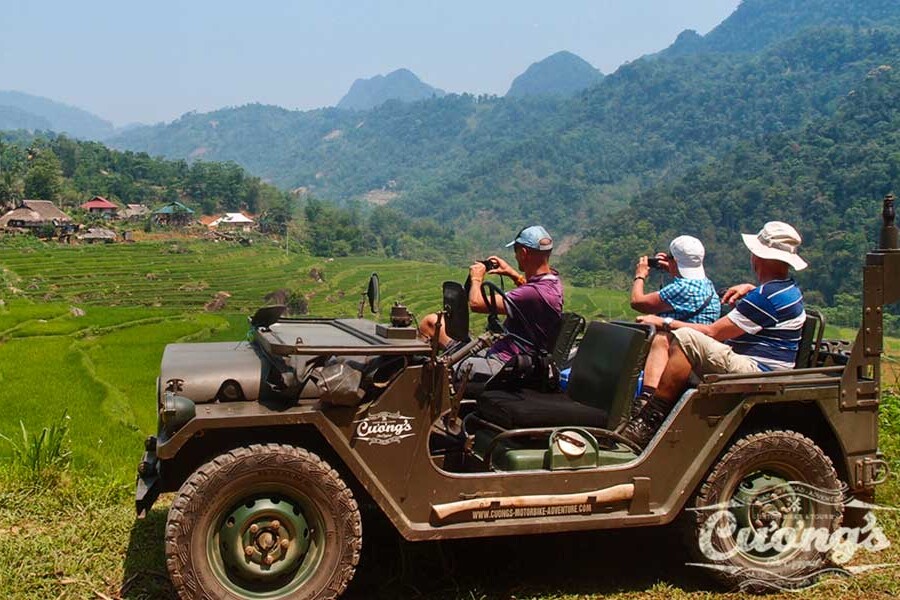
- Flexible vehicle formats—this region suits motorbikes, but also works brilliantly for 4×4/Jeep styles in some seasons.
Ba Be Lake: jungle edges and the calm before the cliffs

Ba Be is a reset button. Water, jungle-covered slopes, and that quiet feeling you only get far from big cities.
On the bike, the approach can include small paved lanes and dirt connectors depending on conditions.
Off the bike, a swim can be a game-changer in warm months, and lakeside evenings are perfect for recovering legs and hands.
Communities around Ba Be include ethnic groups such as Tay, among others, with strong traditions of stilt-house living
and river-valley agriculture. If you stay in homestays, a simple respectful attitude goes a long way: greet elders, be mindful at night,
and support local food and crafts where possible.
Cao Bang: karst labyrinth and the best kind of “middle of nowhere”
Cao Bang feels like a hidden province because so few riders give it the time it deserves. The roads—especially the quiet ones—thread
through karst landscapes that look like a fantasy film set. In 2026, the emphasis is on stitching together the calmest, most scenic
lines: river valleys, limestone corridors, and borderland viewpoints that don’t require fighting crowds.
Ethnic groups in Cao Bang can include Nung and Tay, among others. You’ll notice different languages,
different market energy, and local architecture that shifts as you move through valleys and up into higher ridges.
Ban Gioc Waterfall: the grand finale (and a perfect picnic day)
Ban Gioc is one of those places that delivers even if you’ve seen a thousand photos. The sound hits you first, then the spray,
then the full view—wide curtains of water dropping through green cliffs near the border.
For a tour page on Cuong’s site that covers Ba Be and Ban Gioc in the Northeast, see:
Northeast Vietnam Border Ride (5D/4N). :contentReference[oaicite:4]{index=4}
If you’re also interested in a non-motorbike format for the same region (useful in certain seasons or for mixed groups),
there’s also:
Ban Gioc – Ba Be Jeep Tour (5D/4N).
The Northeast section is also a key ingredient inside Cuong’s longer “link-it-all” concept that runs along the border with China:
Vietnam Off-Road Loop Motorbike Tour (11D/10N).
That tour description specifically mentions Ba Be Lake, Ban Gioc, border backroads, and continuing into Ha Giang province.
3) The Northern Loop: Dong Van → Markets → Ha Giang City → Hoang Su Phi → Xin Man → Sapa → Y Ty
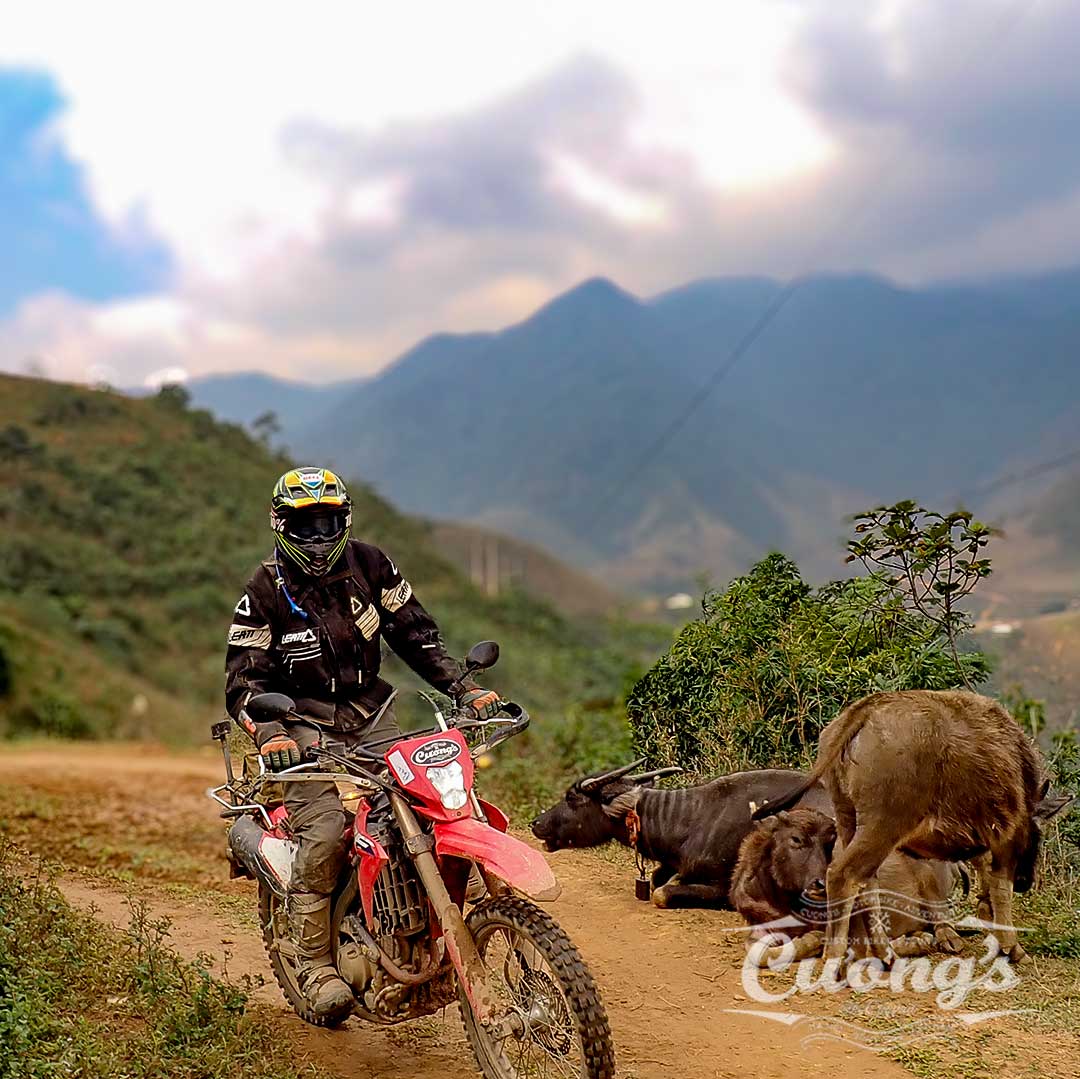
If you want the “all killer, no filler” Northern Vietnam experience, the Northern Loop is the dream: Ha Giang’s dramatic limestone
plateau, hill-tribe markets, deep canyons, remote rice terraces, and border highlands that feel like the edge of the map.
For 2026, the routing concept is to keep the loop feeling wild while improving flow—more backroads, smarter overnight placement,
and optional dirt lines so different rider levels can share the same journey without stress.
A strong starting point to understand this vibe is Cuong’s Ha Giang-focused tour pages:
Ha Giang Border Tour (7D/7N) :contentReference[oaicite:8]{index=8}
and
Ha Giang Off-Road Border Ride (10D/10N). :contentReference[oaicite:9]{index=9}
Both emphasize border riding, Dong Van, and getting off the main road onto dirt tracks. :contentReference[oaicite:10]{index=10}
Ha Giang City: last big breath before the mountains
Ha Giang City is the gateway—your final moment to adjust gear, settle into the bike, and mentally switch to mountain mode.
In 2026, the ride design focuses on getting you into the good terrain quickly: less urban drag, more climbing, and early viewpoints
that set the tone for the days ahead.
Ethnic diversity in Ha Giang province is enormous. As you move out of the city and into higher ground, you’ll start seeing different
clothing styles, market goods, and languages. This is one of the reasons the loop feels so rich: you’re not just changing landscapes;
you’re moving through distinct cultural regions.
Dong Van Plateau: limestone cathedrals and canyon roads

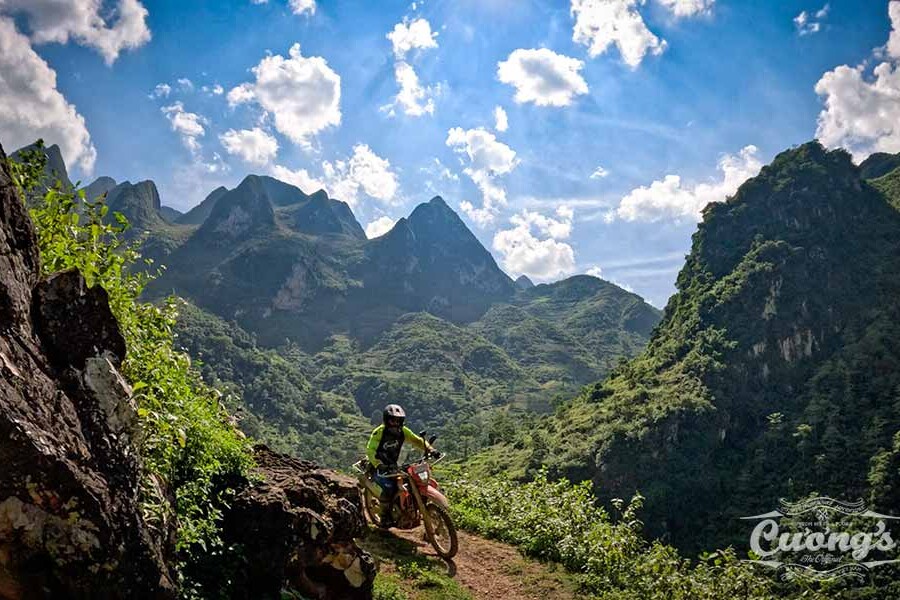
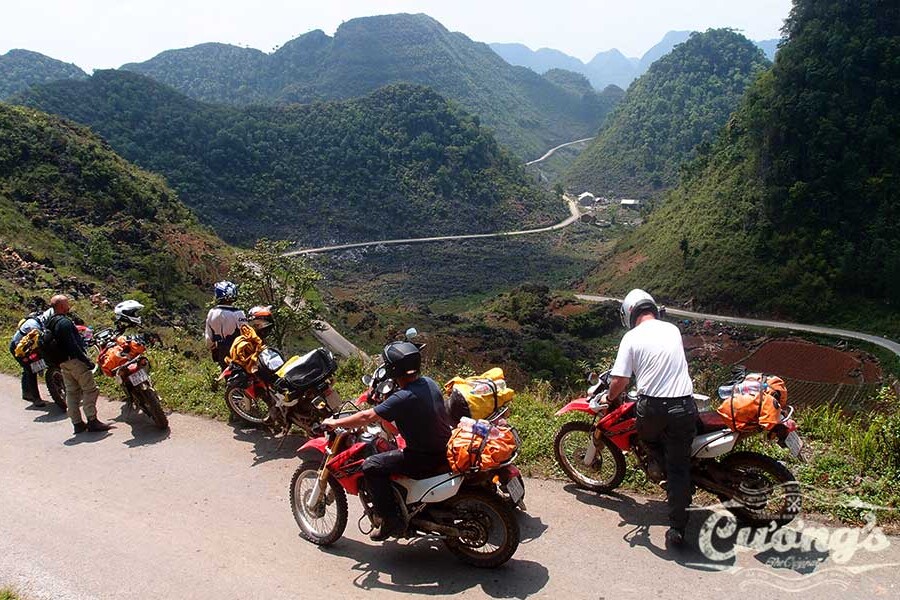
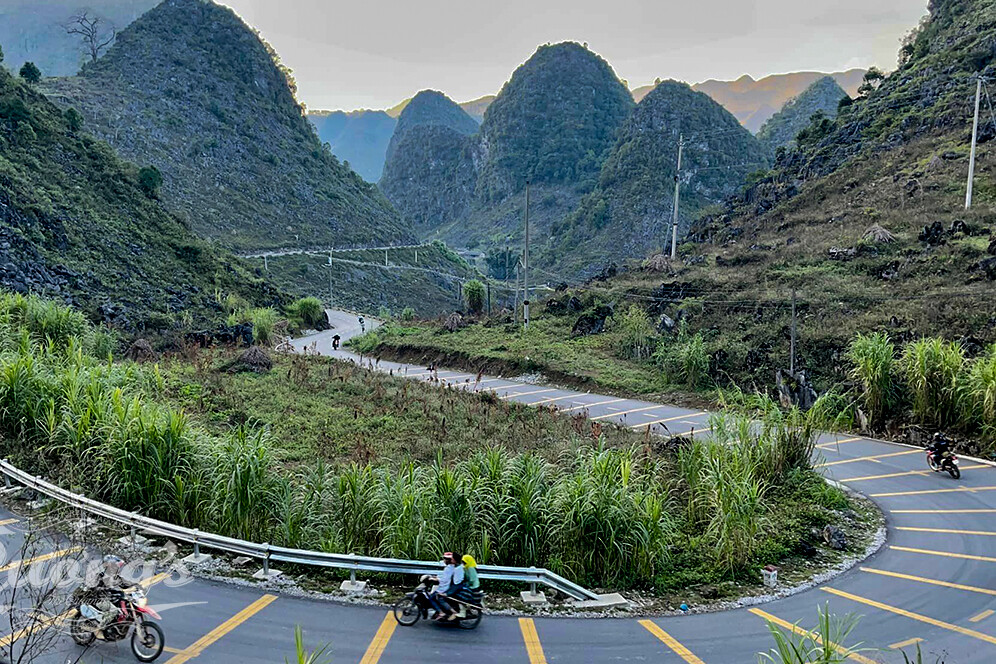
The Dong Van region is where Vietnam looks like another planet—limestone spires, tight valleys, and roads that cling to cliffs.
Riders love it for the technical rhythm: switchbacks, elevation changes, and those “don’t look down” moments that somehow make you
feel more alive. If the weather turns, it becomes even more dramatic—fog in the canyons, wet rock, and a slower, more precise ride.
You’ll commonly associate this plateau region with communities such as the H’Mong (among many others). You’ll see
stone fencing, highland crops, and villages built to survive mountain realities. Passing through, ride gently, keep noise down,
and treat markets as living community spaces, not photo stages.
Hill-tribe markets: colour, trade, and weekly rhythm
Markets are not “attractions”—they’re the weekly heartbeat. People arrive early, trade livestock and produce, share food, and catch up.
For riders, markets are a perfect cultural break between big riding sections. In Ha Giang and nearby regions, you may encounter markets
where different groups gather—each with distinctive textiles and language.
The key: be respectful. If you want photos, ask first (a smile and gesture goes a long way). If you want to support people, buy something
small—fruit, snacks, simple textiles—rather than treating the market like a free museum.
Hoang Su Phi: terraces that feel hand-built by giants
Hoang Su Phi is terrace country at its most dramatic. The hills fold into each other, and the rice fields wrap around steep slopes
in endless curves. In 2026 route planning, Hoang Su Phi plays a special role: it breaks up the limestone drama with lush river valleys
and gives you a different kind of riding—more rolling terrain, more green corridors, and incredible terrace viewpoints.
Ethnic communities in this broader region can include groups such as the Dao and H’Mong, among others.
You’ll notice distinctive headwear, embroidery styles, and market goods that shift as you move between valleys.
Xin Man: remote highland energy and lively local markets
Xin Man is where the loop starts feeling truly remote—less polished, more raw, more “we’re out here.” It’s known for lively local markets
and rugged highland scenery. Cuong’s Ha Giang Border Tour description specifically calls out the “lively markets of Xin Man” alongside
Hoang Su Phi’s terraces. :contentReference[oaicite:11]{index=11}
Markets in this region can draw a mix of ethnic groups, and that mix is part of the magic: different languages in the air, different
textiles, different food stalls, and a real sense that you’re watching daily life—not a performance.
Sapa: the reset day and the “civilisation” recharge
After remote riding, Sapa can feel like a recharge station—hot showers, strong coffee, and a rest that lets you ride harder the next day.
But 2026 planning treats Sapa as more than a tourist stop: it’s a base to reach quieter village lanes and to set up the next push toward
the border highlands near Y Ty.
Y Ty Highlands: border air, cloud seas, and highland cultures
Near the Chinese border, the highlands around Y Ty bring a different atmosphere—cooler air, wide views, and mornings that can turn into
seas of cloud. This is a region where riders often slow down just to absorb the scale. You’re up high, far out, and the world below looks
soft and distant.
Ethnic communities around Y Ty include groups such as the Ha Nhi (among others). You may notice distinct architecture
and traditional clothing styles, and villages that feel built for mountain weather and borderland life.
If you want a “one description that ties it all together,” Cuong’s longer loop tour page mentions continuing past Hoang Su Phi and the rice
terraces, wild rivers and trails to Xin Man and over to Sapa, plus border riding and markets—matching this Northern Loop concept:
Vietnam Off-Road Loop Motorbike Tour (11D/10N).
Practical 2026 rider notes (the stuff that makes the trip feel easy)
Bike choice
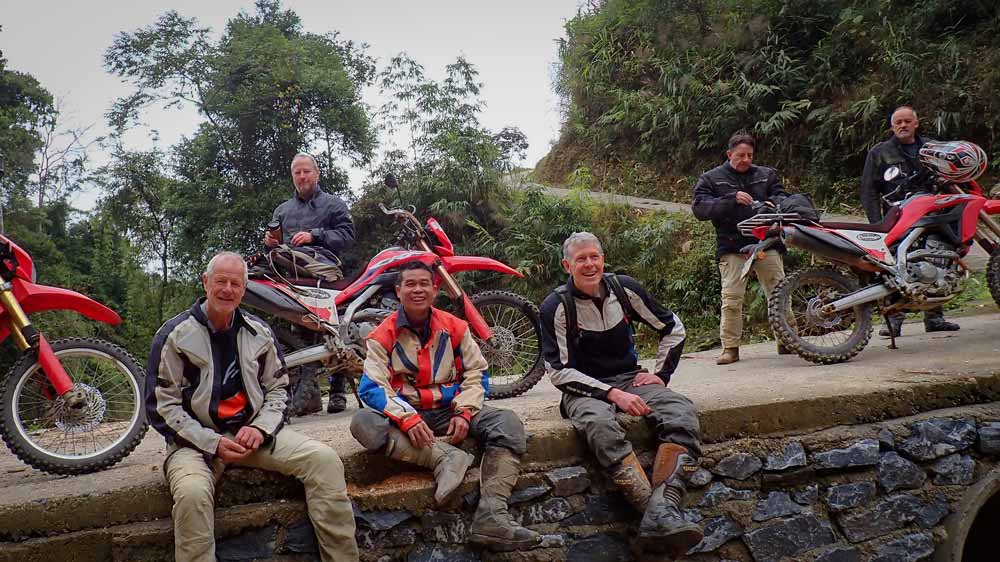
These 2026 routes can be tailored for different bikes, but the dirt gets more enjoyable the lighter and more off-road-ready you are.
If you’re on a bigger ADV bike, the route should prioritize wider dirt roads and avoid the nastier technical climbs after heavy rain.
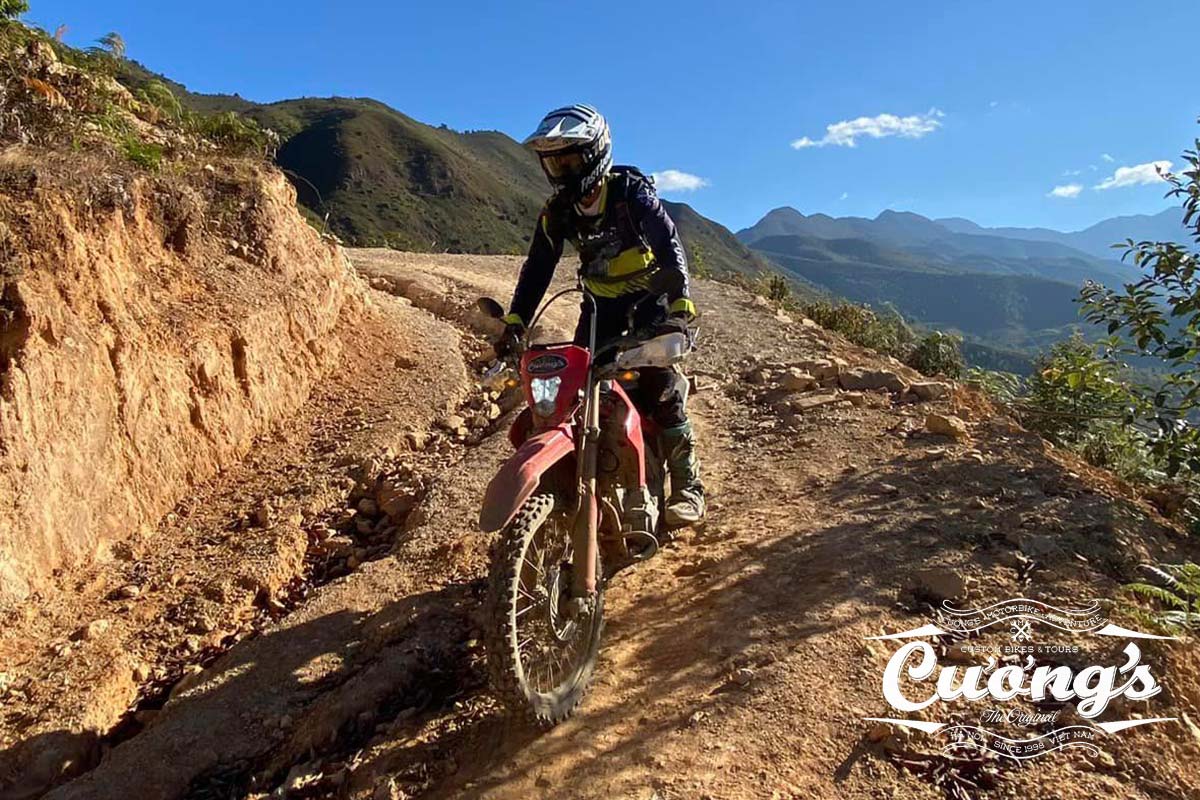
If you’re on a CRF/enduro style bike, you can add more “spice lines” and explore deeper trail connectors.
Weather and timing
Northern Vietnam has real seasons. Fog, rain, and cold snaps can appear fast in the mountains. Pack layers, waterproof gloves,
and plan for a range of temperatures in one day—especially on the high ridges around Ha Giang, Sapa, and Y Ty.
Respect in villages and markets
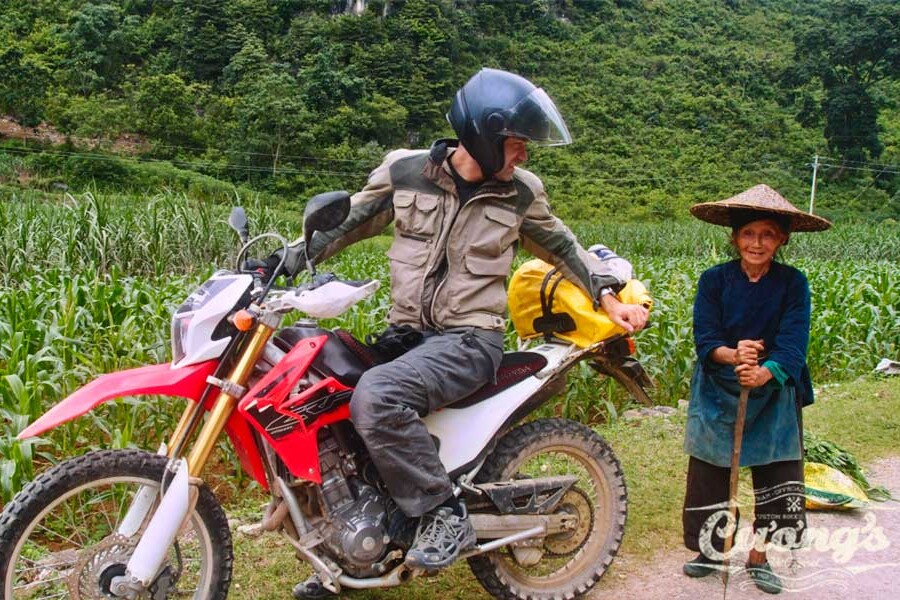
Your best experiences come from moving respectfully. Slow down through villages. Don’t rev for attention. Ask before photographing people.
Buy snacks or small goods at markets if you want to support locals. And remember: “remote” doesn’t mean “empty”—it means people live here.
Where to book / browse on Cuong’s site


Related Motorbike Tours
Explore our most popular Vietnam motorbike tours, including guided on-road and off-road adventures through Ha Giang, Northwest Vietnam, Pu Luong, and the legendary Ho Chi Minh Trail. These tours are designed for riders looking for authentic routes, experienced support crews, and unforgettable mountain riding across Vietnam.